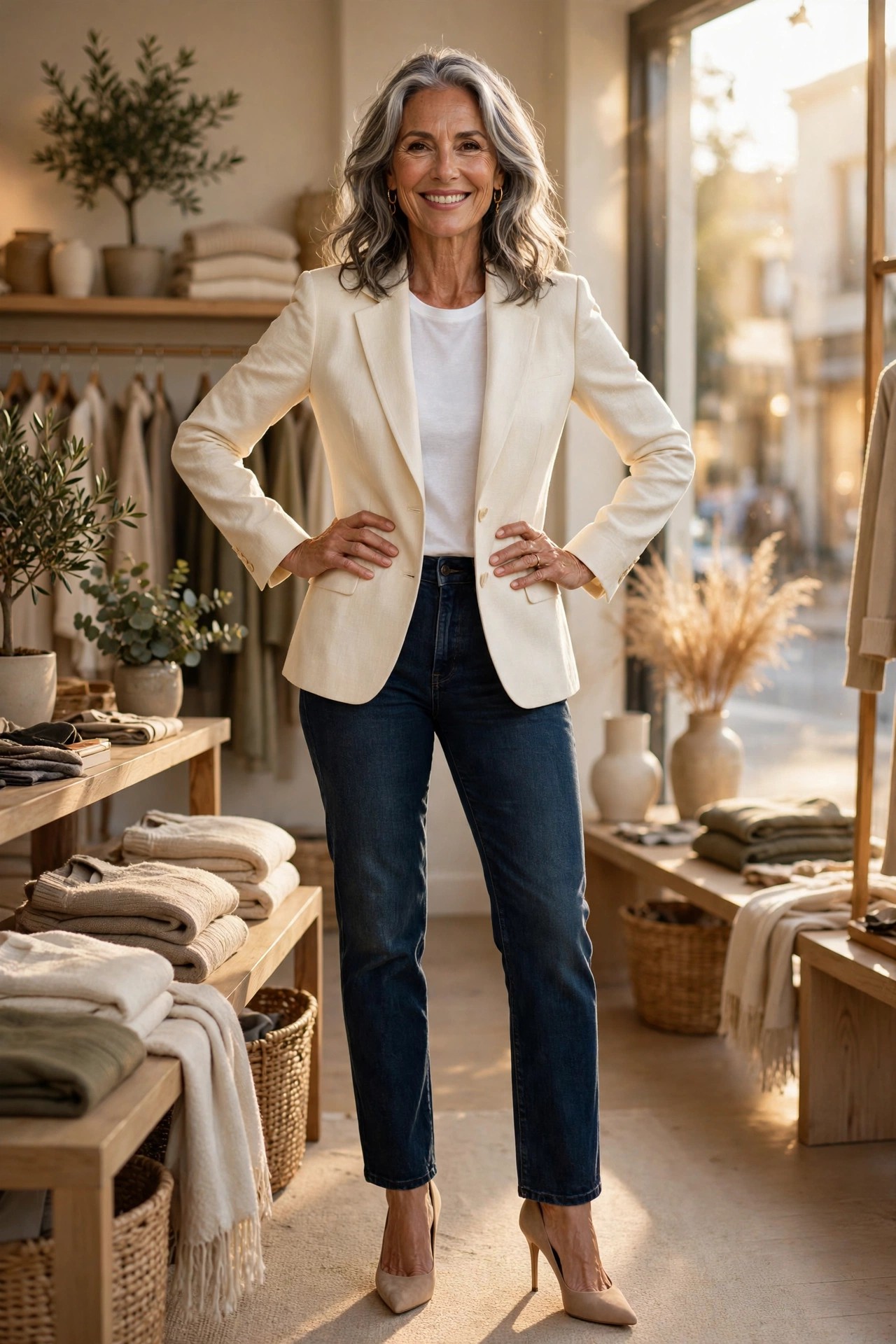
STYLE ADVICE • 7-MINUTE READ
How to Dress With Confidence Over 50,
Even When Your Body Has Changed
Your body isn’t the problem. Your closet’s outdated game plan is. Here’s the former buyer’s playbook for dressing the woman you actually are — and looking like a million while you do it.
Confidence isn’t a size. It’s a fit strategy — and it starts the moment you stop arguing with the mirror.
Let me tell you something twenty-five years of buying clothes taught me: every single woman, at every age, has walked out of a fitting room convinced her body had somehow committed a betrayal overnight. The waistband that used to glide now negotiates. The blazer that once nipped now pulls. And the voice in your head says the same tired thing: I need to change.
Here’s what I want you to hear instead, straight from a woman who has dressed thousands of bodies in every size the industry makes: your body didn’t fail the clothes. The clothes failed your body. Bodies change — that’s the contract we all signed. What changed quietly in the background is that nobody updated your style strategy to match.
Confidence after 50 isn’t about chasing 30 again. It’s about eight small, deliberate decisions that make every outfit look like it was made for exactly the body you’re standing in today. Let’s go through them.
At a Glance: The Confidence Playbook
| The Shift | The Old Habit | The New Move |
|---|---|---|
| Fit first, always | Buying the “right” size off the rack | Buy for your largest measurement, tailor the rest |
| Fabric as strategy | Stretchy = safe | Drape forgives; stretch clings |
| Proportions | Tops and bottoms meet in the middle | The 1/3–2/3 rule |
| Structure | One-and-done outfits | Always add the third piece |
| Focus | Camouflaging everything | Featuring one thing |
1. Stop Dressing for the Body You Had — Dress for the One You Have
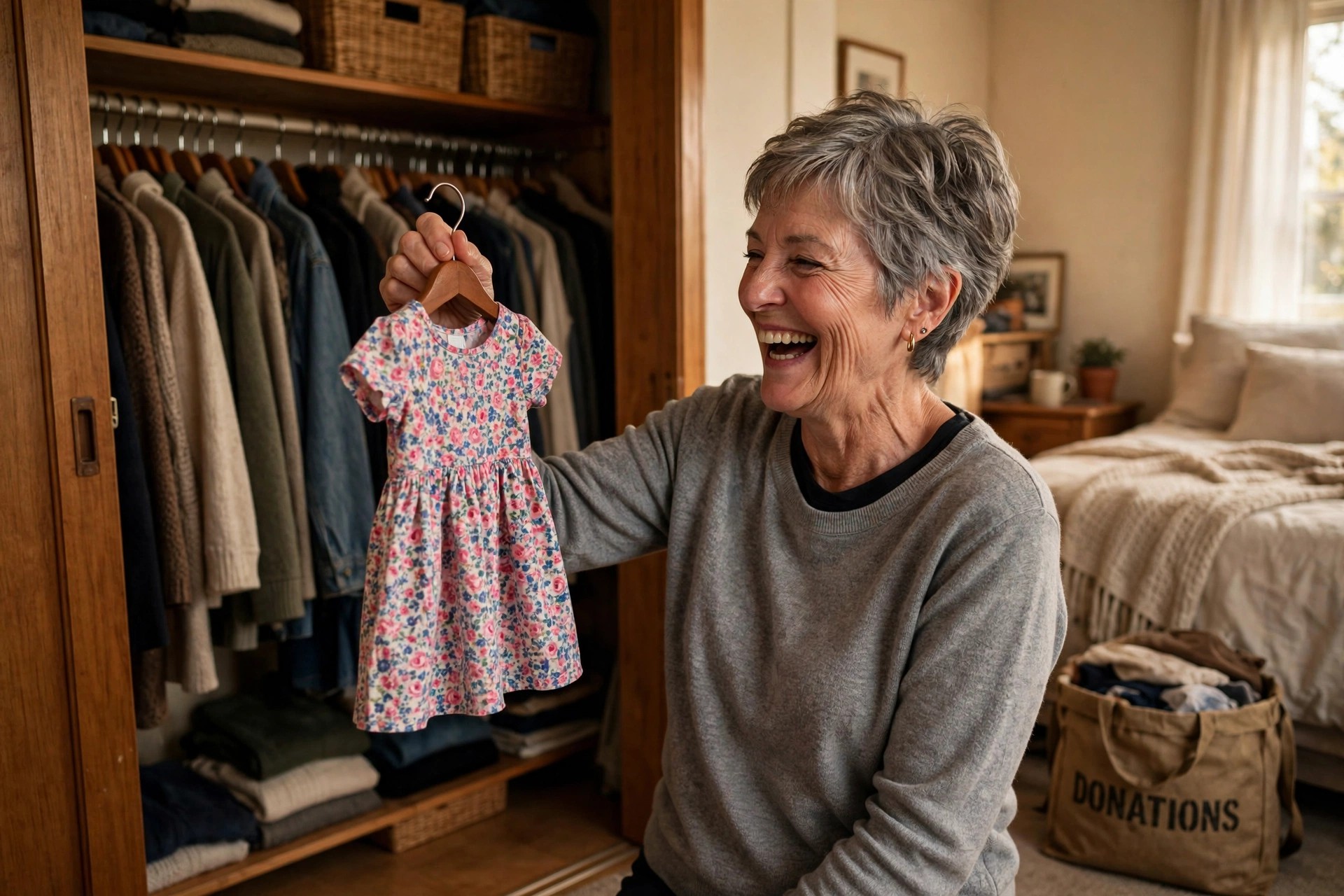
The single hardest — and most freeing — step: letting go of the clothes that grade you on a curve.
This is where confidence actually starts, and it happens in your closet, not a store. Pull out every piece that makes you suck in, tug down, or negotiate with a mirror. You know the ones. They’re not “motivation.” They’re saboteurs with shoulder pads.
Here’s the buyer truth nobody tells you: clothes that don’t fit your current body will never make you feel like your current self. Every morning you wrestle with a pair of jeans from a decade ago, you start the day with a tiny defeat baked in. Box them up. Donate them. Whatever version of you wore them has already had her run.
And notice what happens the day after: getting dressed stops being a negotiation and starts being a choice. That’s not vanity. That’s physics — and it’s worth more than any “flattering” trick in this article.
2. Make a Tailor Your Secret Weapon
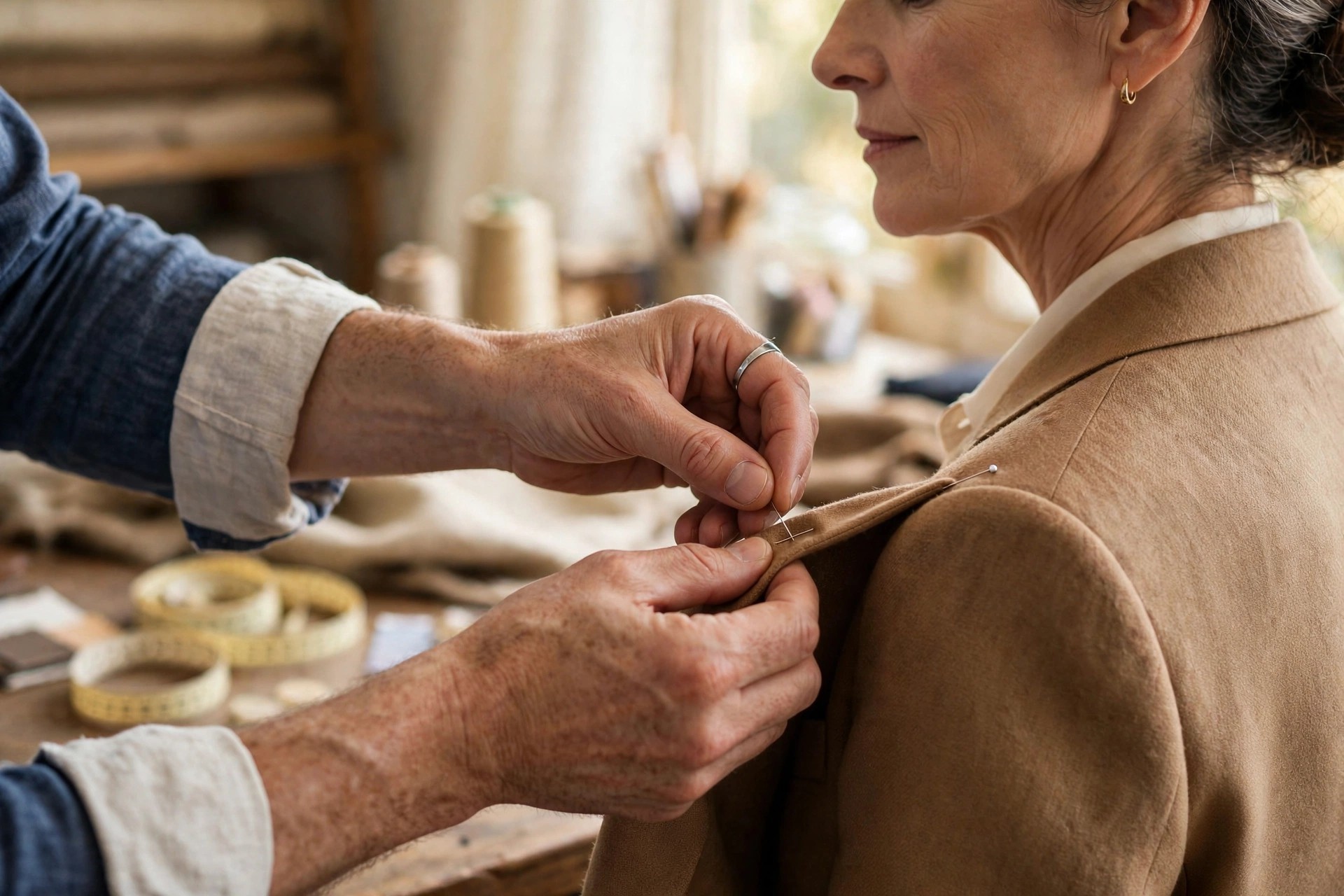
The most expensive-looking women you know rarely pay the most. They just finish what the factory started.
Off-the-rack clothing is cut for an imaginary average body that approximately no one has. After 50, when shoulders, waists, and hips have each written their own memoirs, “close enough” reads as sloppy — while two minutes at a tailor reads as wealth.
The five alterations that pay for themselves a hundred times over: hemming trousers to exactly your shoe, taking in a blazer at the waist, shortening sleeves to show a half-inch of cuff, narrowing a shoulder seam, and moving a single button. Each one costs less than the takeout you’ll order this week.
Buy for your largest measurement and tailor down. A dress that fits your shoulders and is taken in at the waist looks custom. A dress that pulls at the shoulders looks like a mistake. This one habit will do more for your confidence than any trend ever will.
3. Let Fabric Do the Forgiving
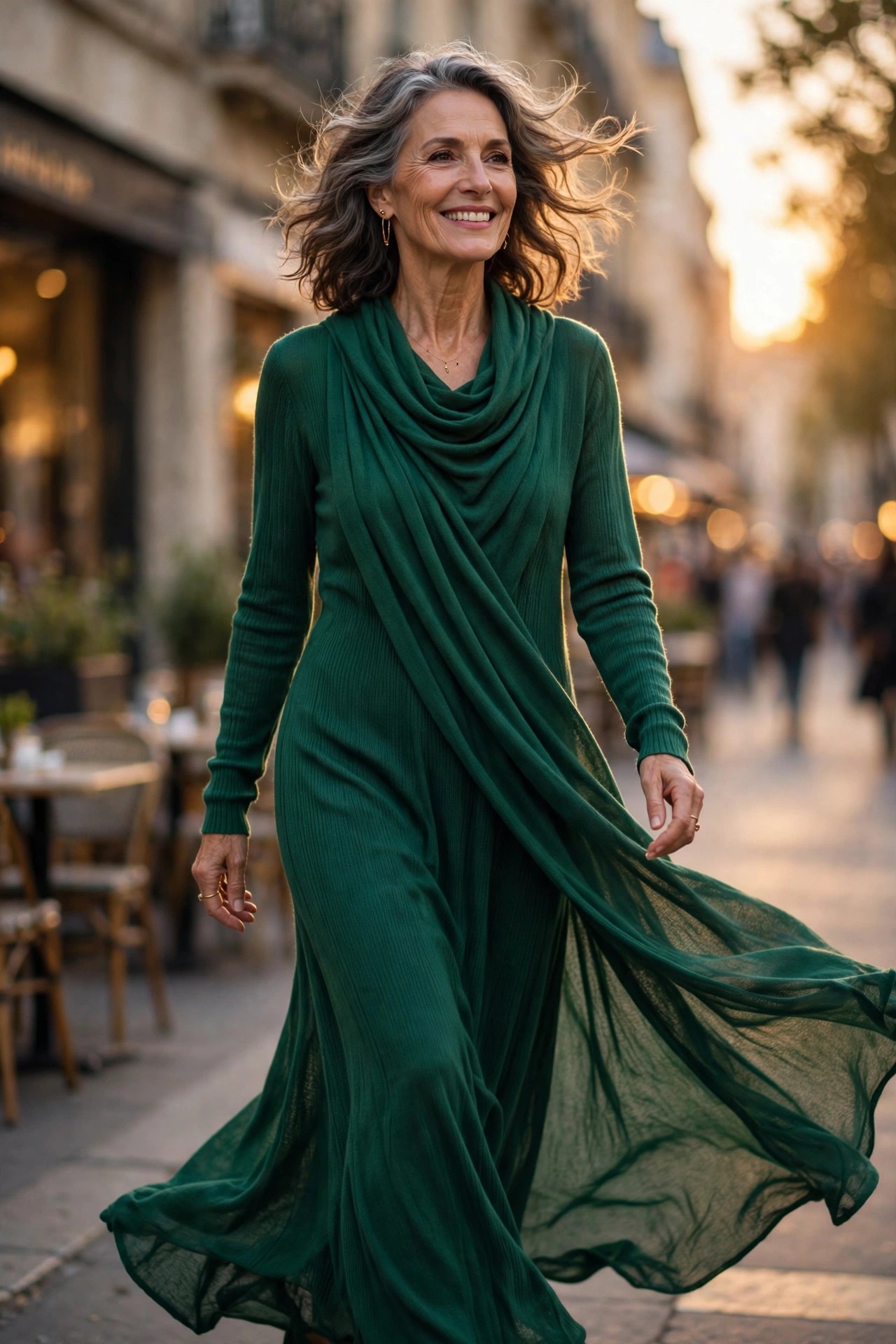
Stretch reveals. Drape conceals. The difference between “tight” and “flattering” is usually just the fabric.
After decades of buying, I can spot the confidence-killer fabric from across a room: thin jersey that clings to every contour and broadcasts a body map you didn’t ask to share. Women reach for stretch because it feels like control. In the mirror, it usually reads as struggle.
What you want instead is drape — fabric with enough body and movement to skim rather than stick. Ponte knit, crepe, washed silk, a good wool gabardine, double-faced fabrics. They fall in a clean line from shoulder to hem and let the eye travel smoothly, which the brain reads as “elegant” before it reads anything else.
Quick fitting-room test: pinch the fabric at the thigh or waist. If it springs back and grips, put it down. If it falls back into place with a soft fold, that’s your fabric. The garment is literally doing the confidence work for you.
4. Use the 1/3–2/3 Proportion Rule
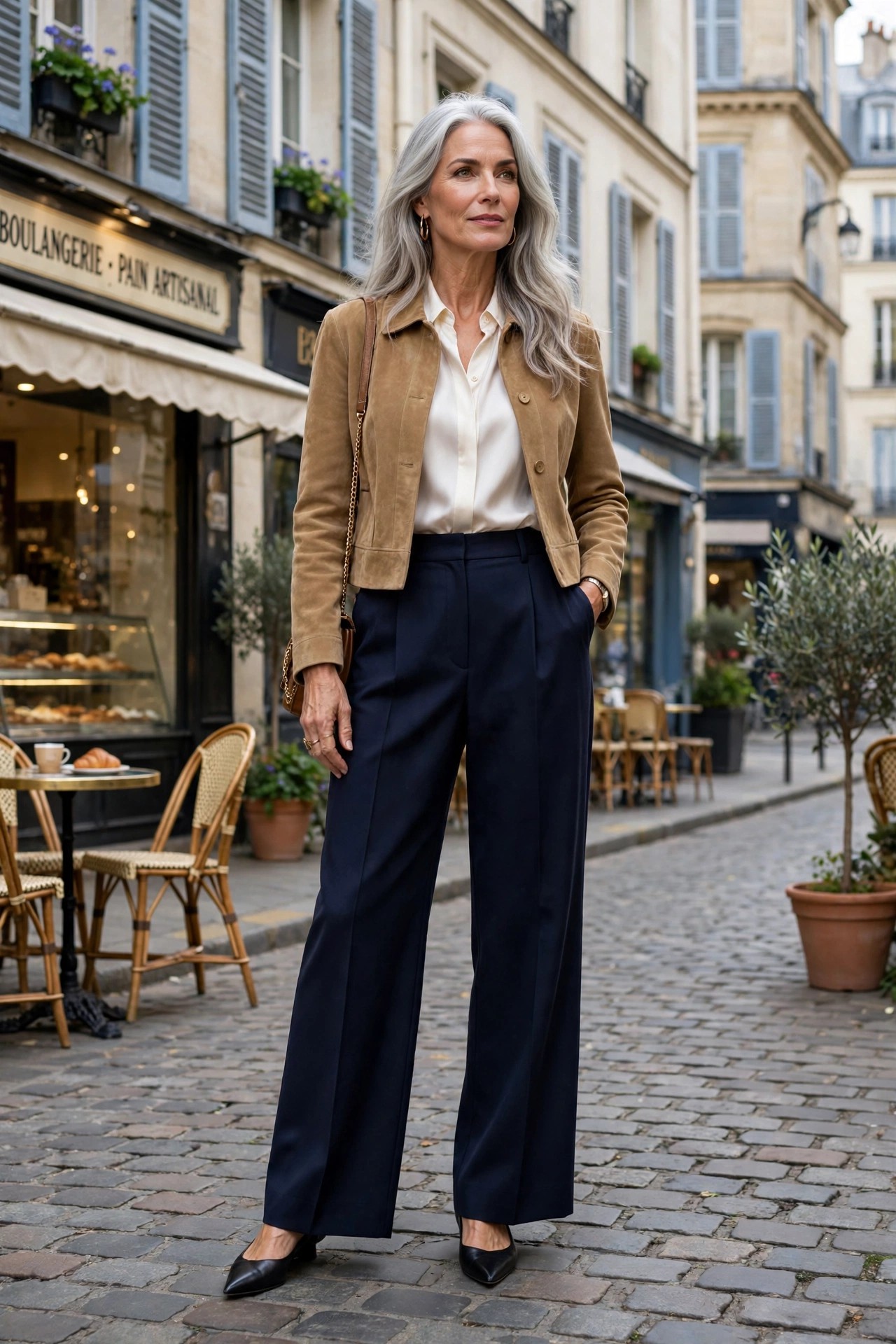
The longest-looking bodies on earth aren’t tall. They’re just divided well.
This is the single most powerful visual trick in a buyer’s kit, and it costs nothing. The eye finds a body divided one-third to two-thirds more appealing than one split dead center. Half-and-half — a long top over long pants, a tunic that ends mid-thigh over leggings — shortens everything it touches.
How to do it: define your waist, even loosely. A blouse tucked or half-tucked into high-rise trousers. A belt over a dress at your natural waist (not your hip — your actual waist, wherever it lives now). A cropped jacket over a longer top. You’re placing the “break” at the one-third line, and suddenly legs look longer, torsos look balanced, and the whole silhouette reads intentional.
Wherever your waist is today is exactly where it belongs. This rule doesn’t ask you to find the waist of 1998. It asks you to mark the one you have, proudly.
5. Never Skip the Third Piece
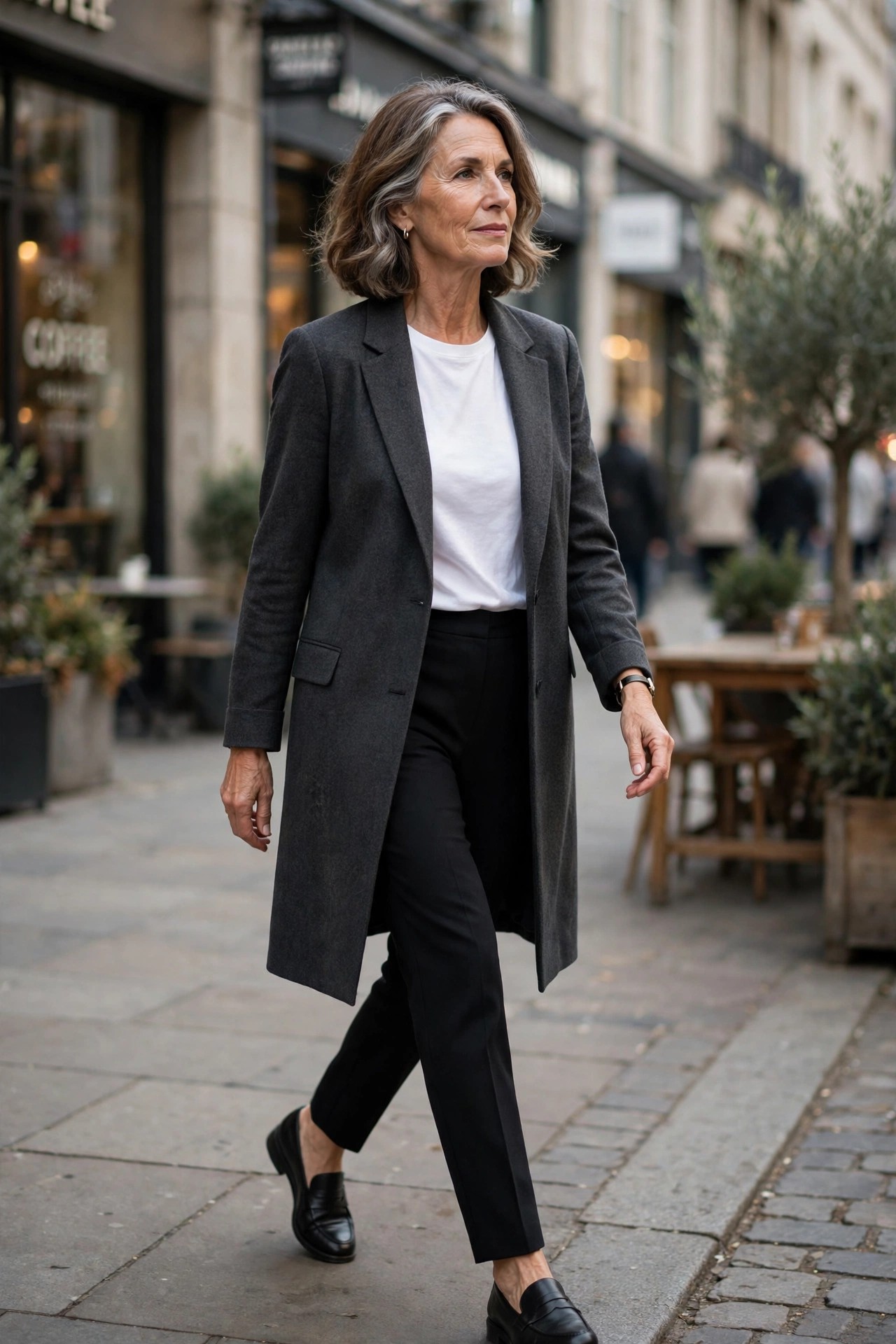
Top plus bottom is an errand. Top plus bottom plus a third piece is an entrance.
Watch what happens when a woman adds one structured layer — a blazer, a long vest, a cropped jacket, even a great scarf worn like a shawl — over a simple base. The eye stops skimming the middle of her body and starts traveling vertically. Lines lengthen. Edges sharpen. The whole outfit suddenly has architecture.
The third piece is also the great equalizer for a changing body. It creates a long, unbroken line over the torso, which is precisely where most women over 50 feel least sure. It doesn’t hide you — it frames you. Like a good gallery wall, the frame makes everything inside look more important.
Keep three in rotation: a tailored blazer, a soft long cardigan or vest, and one “personality” piece — a denim jacket, a leather blazer, a printed kimono. With any simple base underneath, you’re dressed. Every time.
6. Feature One Thing, Don’t Camouflage Everything
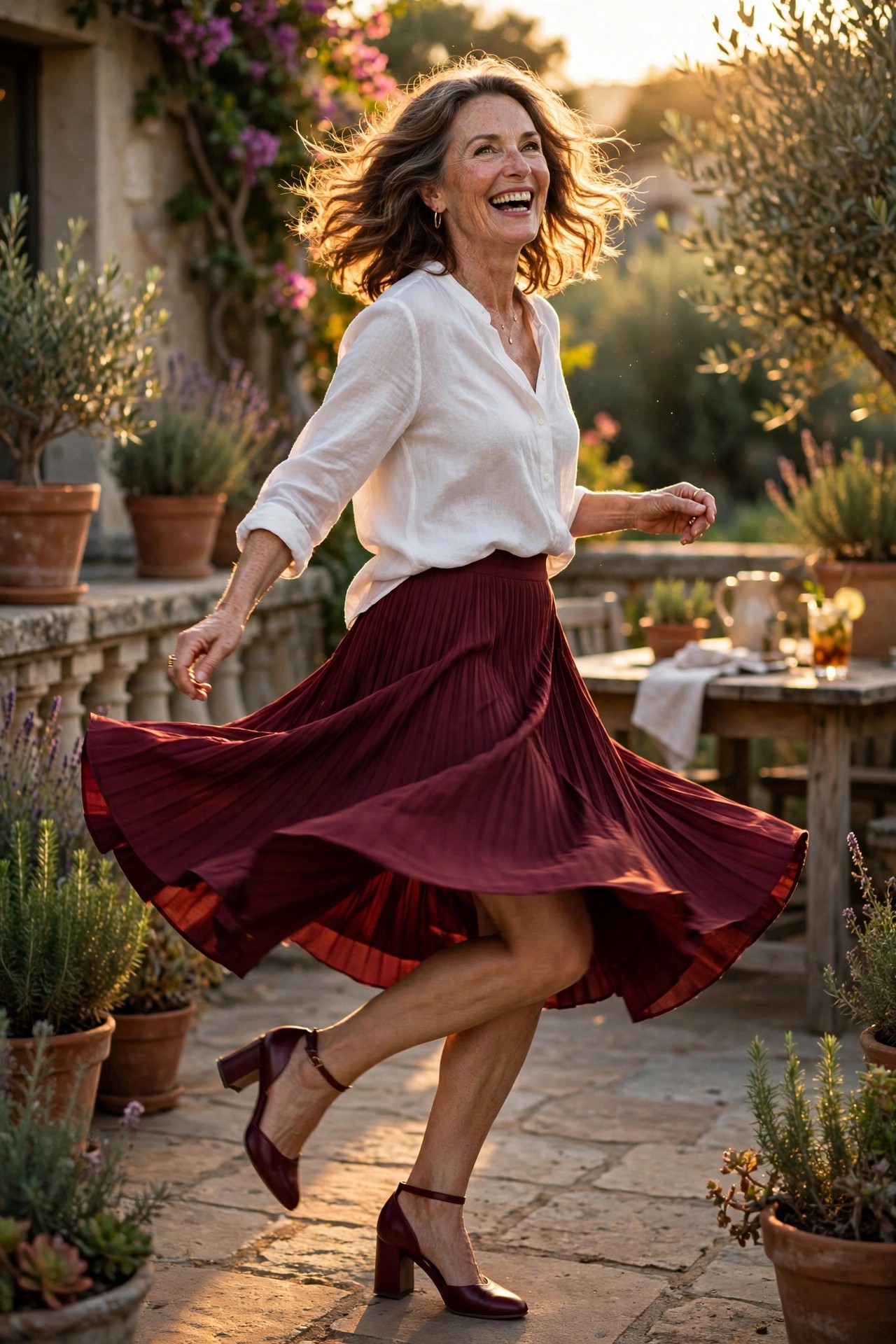
Dressing to hide everything hides the good stuff too. Pick your feature and let it headline.
The camouflage instinct — big shapeless tops, all-black everything, sleeves to the wrist in July — backfires spectacularly. When you cover the whole body, the eye has nowhere to land, and the brain fills the blank with “hiding something.” Confidence reads as direction, not disappearance.
Instead, ask one question: what’s the part of my body I actually like right now? Great legs? A beautiful neck? Terrific shoulders? Lovely ankles? Build the outfit around it. Show the legs in a midi skirt, open the neckline with a V or a scoop, go sleeveless with a great jacket over it. Give the eye one confident destination and it will follow you there — past every so-called trouble spot.
This is the move stylists use on red carpets, and it works on a Tuesday at the grocery store too. One feature, featured. Everything else plays support.
7. The 60-Second Mirror Test
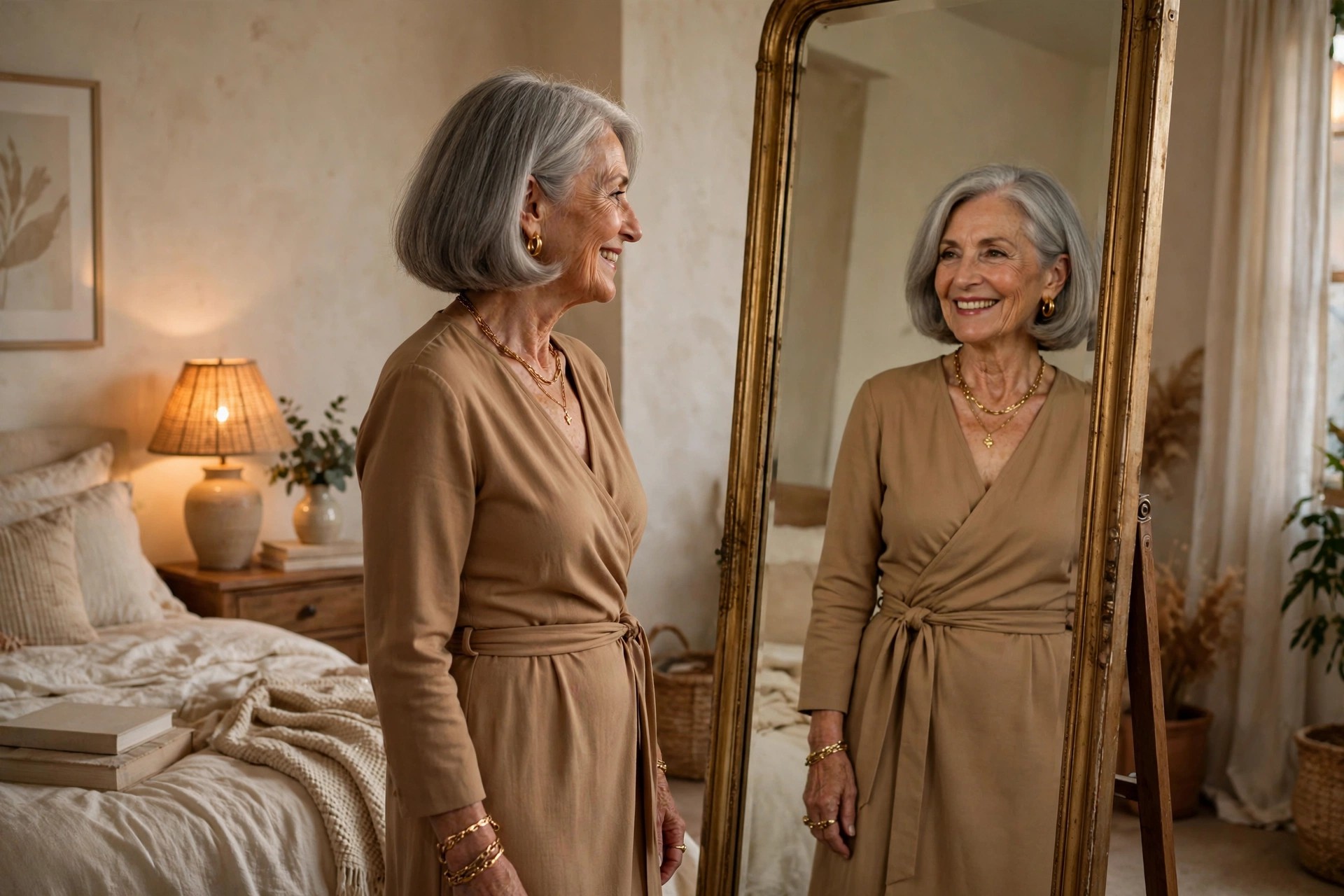
The mirror isn’t the judge. It’s the intern. Give it sixty seconds and a clear job description.
Before you leave, stand in front of a full-length mirror and run this exact check. It takes one minute and it will save you from a hundred days of tugging at a hem in public.
Sit down. Does anything pull, ride, or gap? Turn around — the back view is what the world actually sees most. Raise your arms; if the whole outfit migrates north, it fails. Then ask the only question that matters: do I look like I meant this?
Intentionality is the entire game. A tucked shirt, a rolled sleeve, a belt, a visible necklace — small signals that say choices were made here. Nobody scrutinizes your waistline when your outfit is clearly on purpose. They just think: she looks great.
8. When Nothing Fits, Take the Reset Week

Sometimes the problem isn’t the body or the clothes. It’s that the closet is full of ghosts.
Every few years, your body will shift enough that a whole category of your wardrobe stops working at once. That’s not a crisis — it’s a natural renovation. The mistake is trying to shop your way out of it one confused purchase at a time.
Instead, take one week. Try on everything. Keep only what fits today’s body and today’s life — not the gala you might attend, not the size you might be. You will likely end up with a smaller closet, and that is the point: a small closet where everything fits beats a full one where nothing does.
Then — and only then — shop for the gaps with the rules from this article in hand. Five intentional pieces that fit now will out-perform fifty that almost do. Your mornings get shorter. Your mirror gets kinder. And your confidence? It was never gone. It was just buried under clothes that belonged to someone else.
The Do / Don’t Cheat Sheet
| Do This | Not This |
|---|---|
| Buy for your largest measurement, tailor the rest | Squeeze into the smaller size “for motivation” |
| Choose fabrics with drape and body | Clingy thin jersey that maps everything |
| Mark your waist with a tuck, belt, or cropped layer | Split yourself in half with a long tunic over leggings |
| Add a third piece for instant architecture | Stop at top-plus-bottom and call it done |
| Feature the part you love most | Camouflage everything and show nothing |
| Keep only what fits today’s body | Keep “someday” clothes as daily judges |
Frequently Asked Questions
What if I’ve gained weight and nothing in my closet fits?
Take the reset week from step 8 — try on everything, keep only what fits and flatters now, and donate the rest without guilt. Then buy five intentional pieces using the rules above before you buy anything trendy. A small, working wardrobe rebuilds confidence faster than any single “miracle” garment.
Is it too late to develop personal style after 50?
It’s actually the best time. By now you know what you like, what you hate, and what you’ll actually wear — that’s decades of market research most 25-year-olds would kill for. Style after 50 isn’t about learning rules; it’s about finally trusting your own data.
Should I avoid certain colors or prints as I get older?
No — but placement matters more than ever. Wear your most flattering colors near your face (they reflect light upward and brighten your skin), and let deeper or louder prints live below the waist or in accessories. The rule is proximity, not prohibition.
How much should I spend on tailoring?
Less than you think. Most everyday alterations — hems, waist take-ins, sleeve shortening — cost less than a casual dinner out, and each one gets worn dozens of times. Tailor the pieces you wear most; don’t tailor anything you only kind of like.
What if I just don’t feel like dressing up anymore?
Then don’t dress “up” — dress intentionally. The third-piece rule works with jeans and a tee. A tucked shirt and a good belt work with sneakers. Confidence doesn’t require effort; it requires one or two deliberate choices. Comfort and polish are not enemies — they’re teammates when the fit is right.
The real secret? Confidence was never something your body had to earn. It’s something your clothes have to earn — every morning, on the body you actually woke up in. Dress that woman like she’s the main character, because she is. And when the fit is right, the fabric drapes, and the proportions land, the mirror stops being a critic and starts being a fan. I know, because I’ve watched it happen thousands of times. You’re next.