EVERYDAY STYLE • 9-MINUTE READ
Burgundy Outfits for Women Over 50
The Color That Says You’re Not Done —
and the 8 Formulas That Wear It Best
Burgundy is the color of good decisions made late: the second glass of red, the book you finally read, the wardrobe that finally feels like you. It flatters mature skin like nothing else, and it announces — quietly, firmly — that style doesn’t fade with age. Here’s how to wear it.
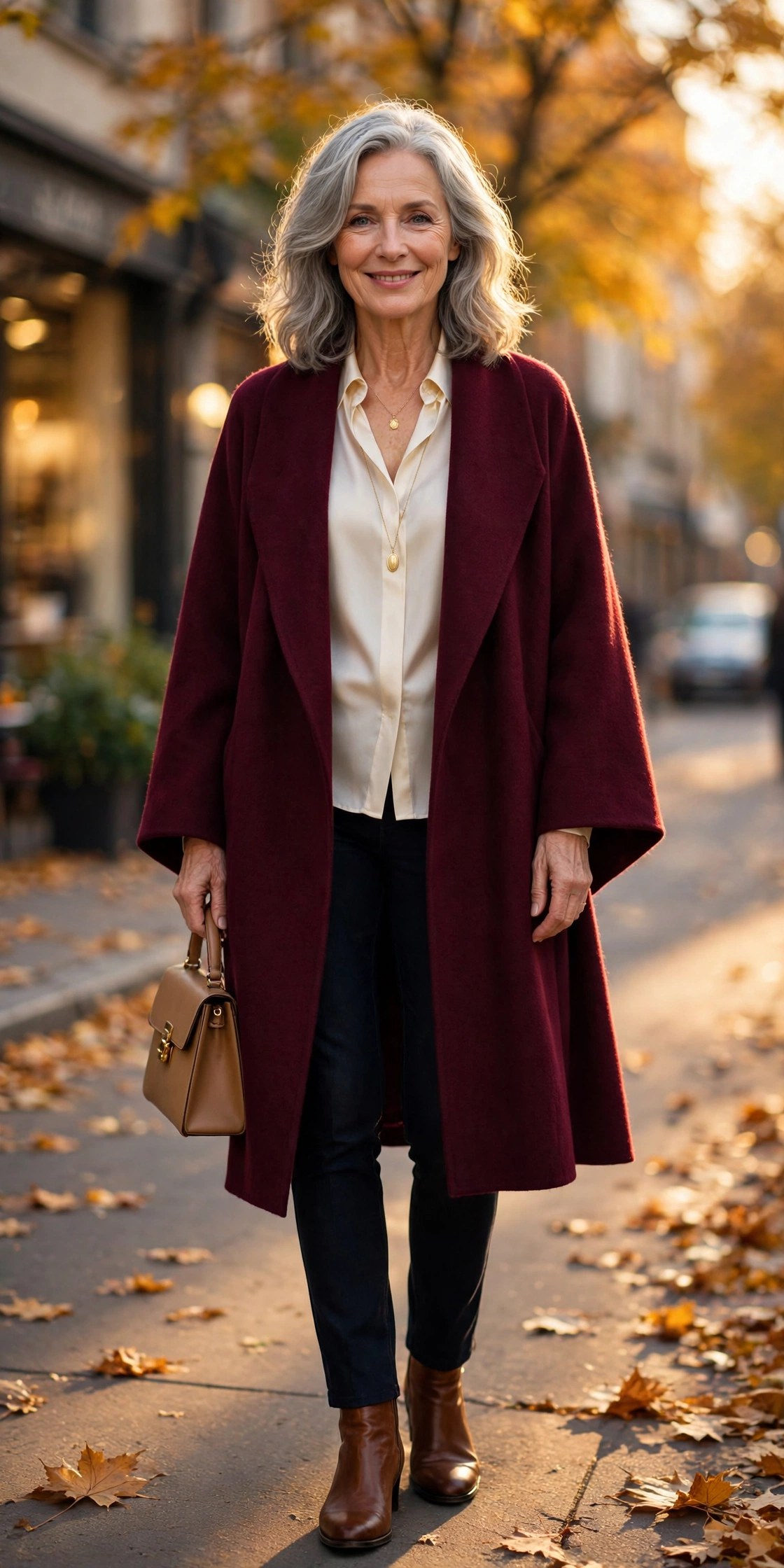
A burgundy coat over cream silk and dark trousers — the richest neutral-adjacent move you’ll make this season.
Let me confess something from my buying years: I used to overlook burgundy. It sat between the neutrals and the colors on the rack, easy to miss, easy to underestimate. Then one fitting-room afternoon, a woman in her sixties tried on a burgundy blazer and the whole room went quiet. Her face lit up. Her posture changed. The color did something no black blazer ever could — it gave her warmth with authority.
That is burgundy’s superpower. It is darker than red, so it never shouts. Richer than brown, so it never bores. On skin over 50, it does three things at once: it adds color to cheeks that have gone a little quiet, it makes grey hair look luminous instead of incidental, and it carries an unmistakable air of a woman who knows exactly who she is.
But burgundy rewards intention and punishes afterthought. Wear it with the wrong partner and it can look heavy or dated. So here is the complete guide — the shades, the pairings, and eight outfit formulas that work every single time.
The Burgundy Playbook at a Glance
| Burgundy Shade | Best For | Pairs Beautifully With |
|---|---|---|
| Bright bordeaux / wine | Fair to medium skin; silver hair | Black, cream, navy |
| Classic burgundy / oxblood | Every skin tone — the universal shade | Camel, grey, blush pink |
| Deep merlot / maroon | Medium to deep skin; warm undertones | Chocolate, olive, gold |
| Burgundy + texture (velvet, cashmere, suede, leather) | Everyone — texture makes it glow | Silk, denim, wool |
Golden rule from the fitting room: burgundy belongs near your face at least once a week. It’s one of the few rich colors that flatters mature skin up close. If a shade makes you look tired instead of radiant, it’s too flat — go one shade deeper and richer.
1. The Head-to-Toe Monochrome Burgundy
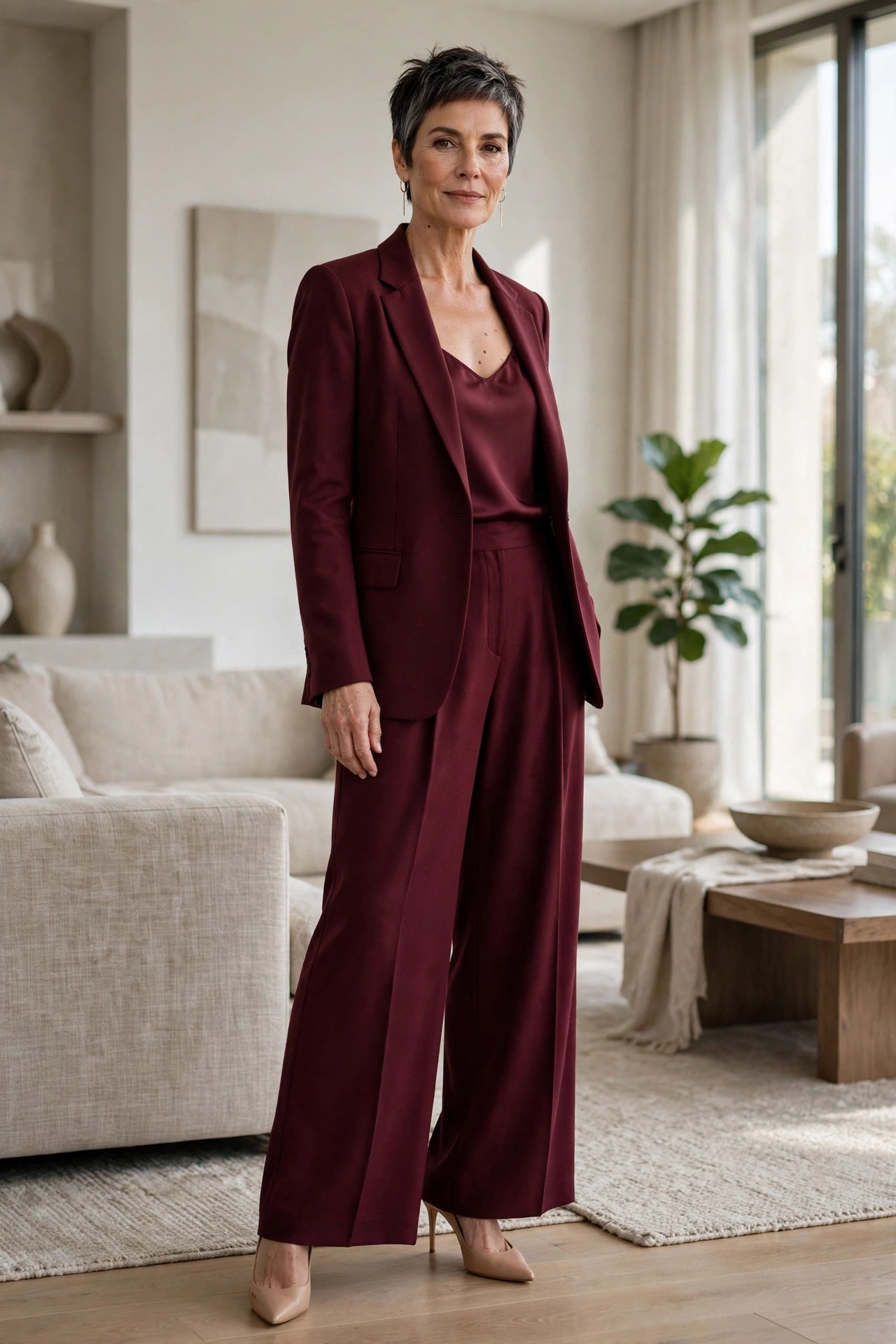
This is the power move. A tailored burgundy blazer with matching burgundy trousers and a silk camisole underneath — and suddenly you are the best-dressed woman in the room, in a color nobody else thought to wear.
Why it works after 50: monochrome dressing creates one long, unbroken column, which is the single most elongating trick in the book. In burgundy, that column also reads expensive — deep, tonal color is the visual language of luxury, and it does the talking so your accessories don’t have to.
Buyer-level detail: keep the blazer slightly open and let the camisole show a V of silk at the neck — that sliver of lighter tone keeps the rich color from swallowing you. Vary the textures (smooth trousers, textured blazer) so the monochrome has depth. Nude pointed heels finish it; black shoes are fine here, but gold jewelry is non-negotiable.
2. Burgundy Coat + Black Everything
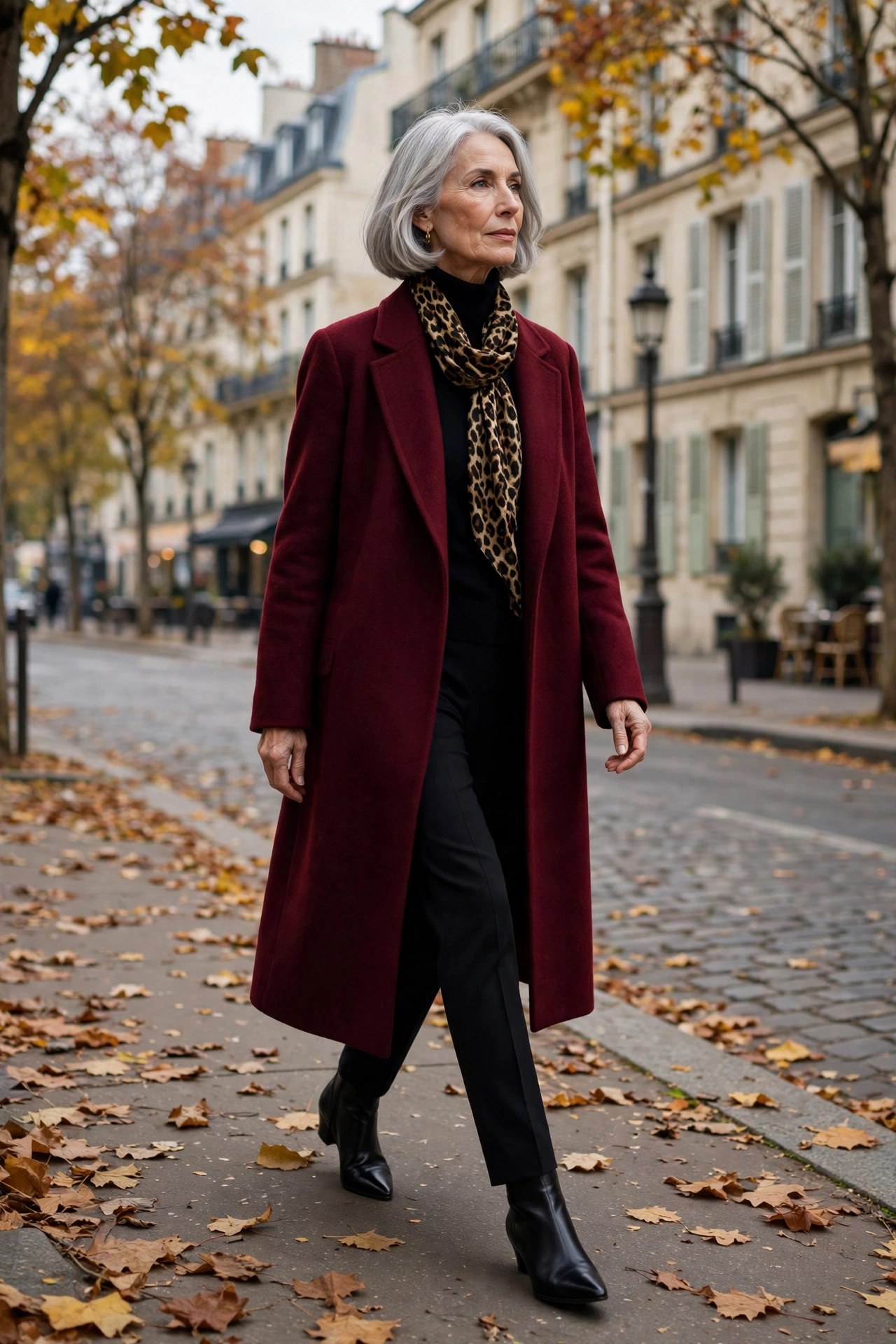
The instant classic. A burgundy overcoat thrown open over a black turtleneck and black slim trousers. You already own the black part — the coat is the one purchase that transforms a closet.
Why it works after 50: black near the face can drain as we age, but here the burgundy coat frames your face instead, flooding it with warmth while the black underneath does the slimming work. You get black’s polish with none of black’s pallor.
Buyer-level detail: the coat should hit mid-thigh or just above the knee, with a collar you can pop. Then add one softener at the throat — a patterned silk scarf, a gold necklace, lipstick in a warm berry. Black + burgundy with nothing warm at the neck is the only way this outfit ever looks severe.
3. Burgundy + Cream (The Soft Richness)
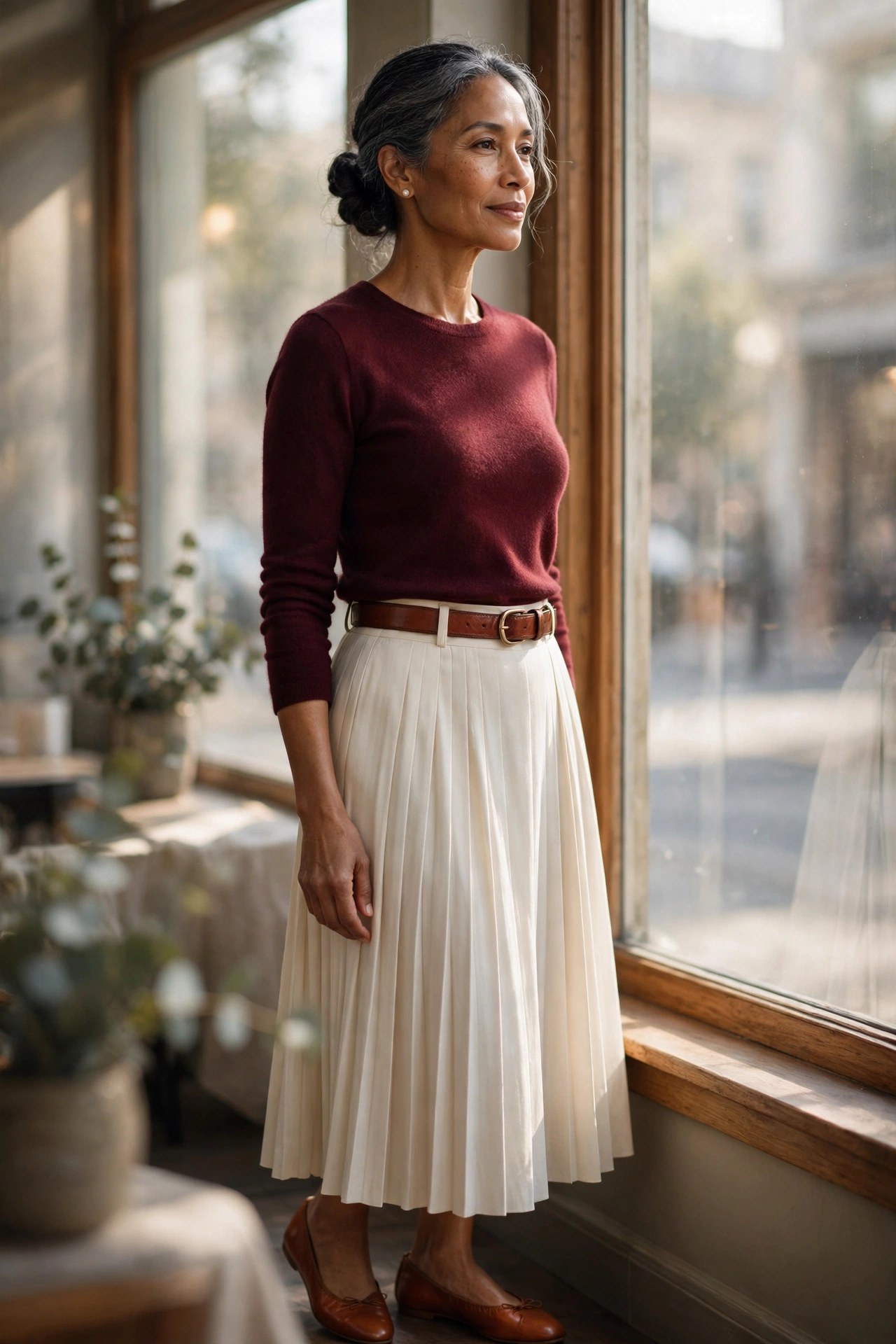
When you want to look polished and approachable at once — a deep burgundy cashmere sweater tucked into a cream pleated midi skirt. Rich meets soft, and the contrast is pure warmth.
Why it works after 50: cream near the face bounces light upward the way stark white does, but without the harshness. Against burgundy, the pairing looks like a still life — composed, inviting, quietly confident. It’s the color story of women who get asked where they bought their sweater.
Buyer-level detail: the sweater must be a true deep burgundy, not a washed-out mauve — richness is the whole point. A half-tuck shows the skirt’s waistband and keeps proportions long. Cognac ballet flats or loafers tie the palette together; avoid black shoes here, which chop the softness.
4. Burgundy + Denim (The Weekend Formula)
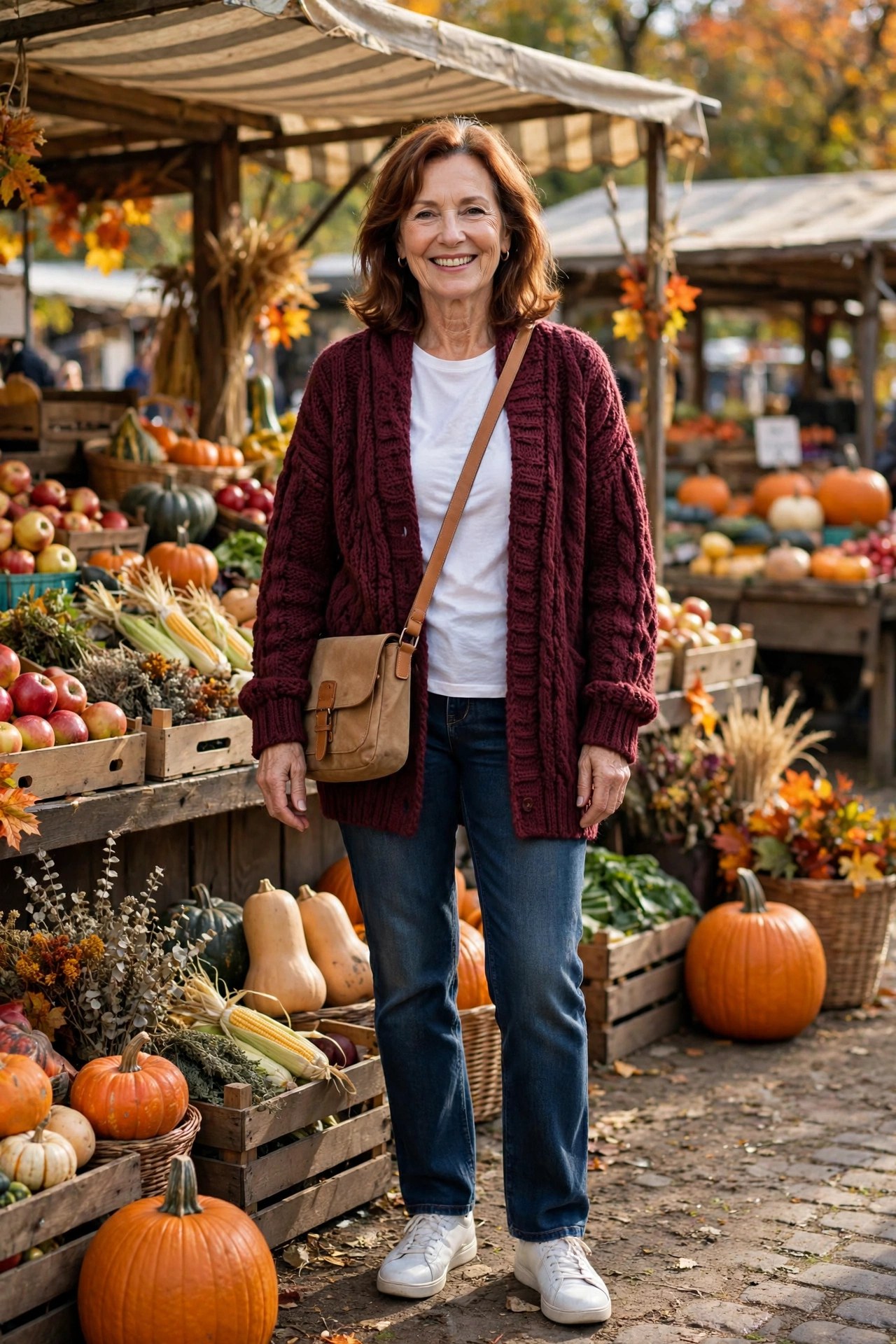
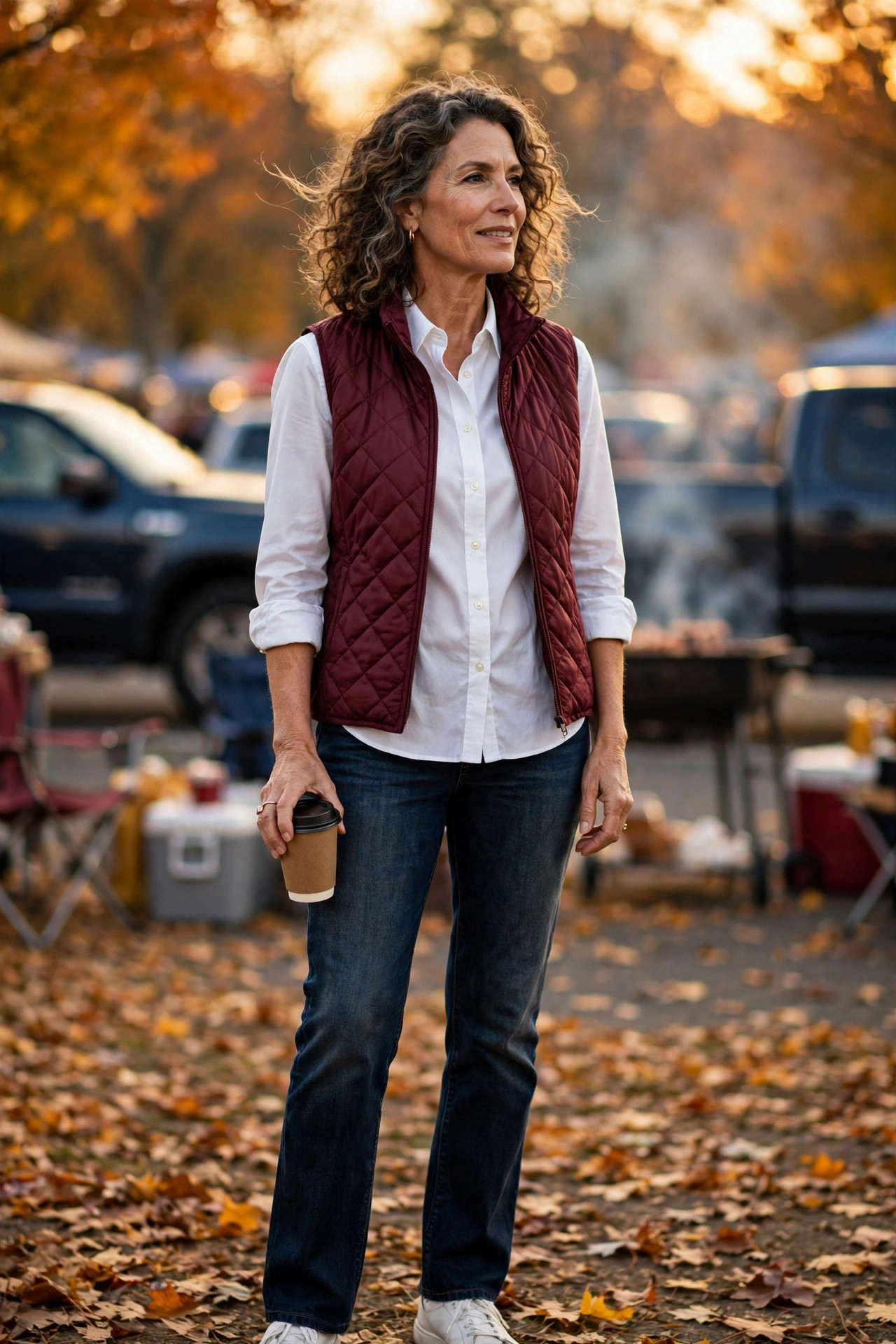
Proof that burgundy isn’t precious: a soft burgundy cardigan over a plain white tee with dark-wash jeans. Saturday errands, grandkids’ games, lunch with friends — elevated without effort.
Why it works after 50: denim is our generation’s comfort zone, and burgundy instantly upgrades it. The cardigan adds the color your face wants while the tee and jeans keep everything grounded. It’s the outfit equivalent of a knowing smile.
Buyer-level detail: choose a medium or dark wash — light-wash denim against burgundy can read a little dated. Keep the cardigan long enough to skim the hip, roll the jean cuff once, and finish with white sneakers or tan loafers. A leather crossbody keeps it practical.
5. Burgundy + Chocolate & Camel (Warm Tonal Luxury)
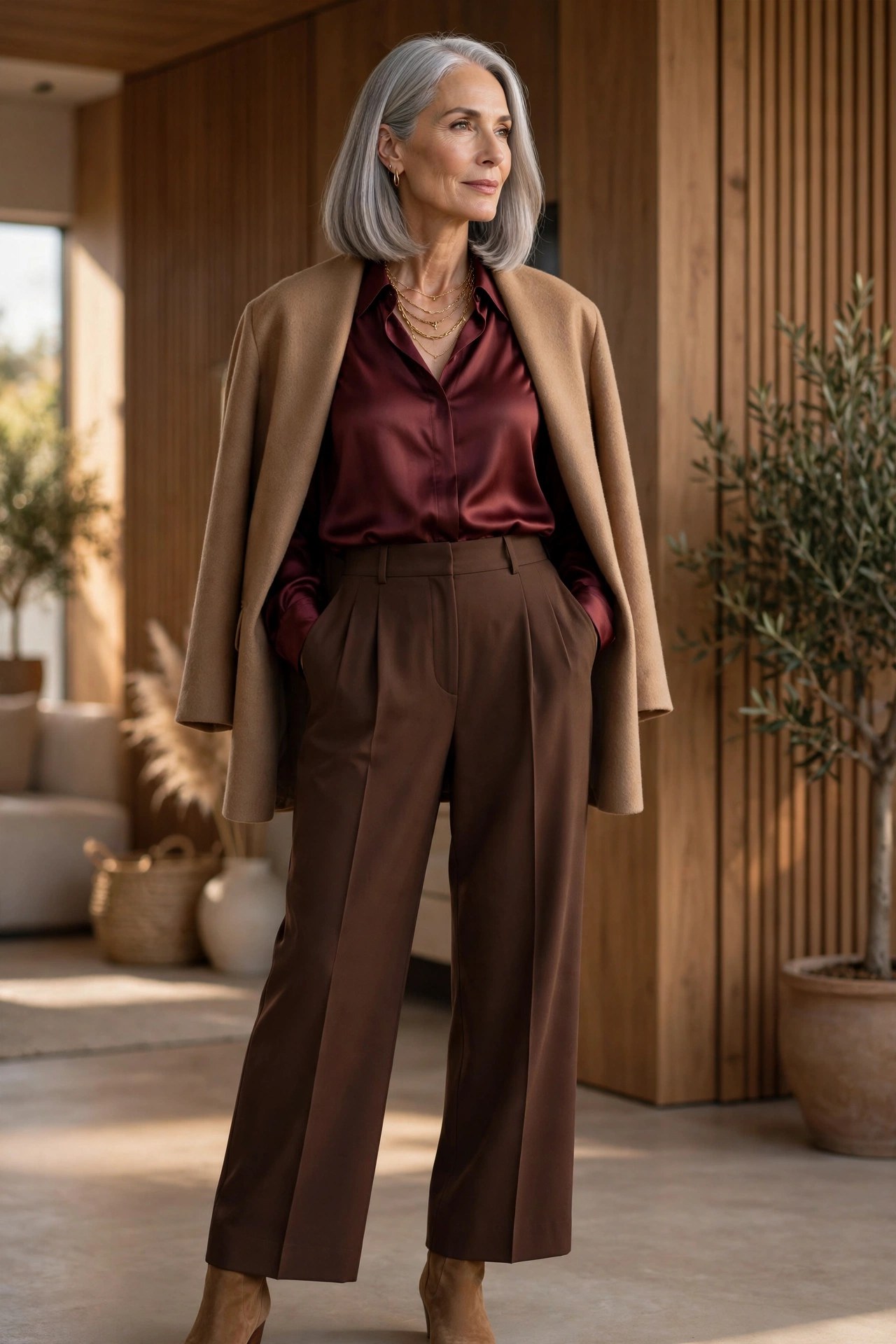
The connoisseur’s pairing. A burgundy silk blouse tucked into chocolate-brown wide-leg trousers, with a camel blazer draped over the shoulders. Three warm tones, one very rich woman.
Why it works after 50: warm tones on warm tones are extraordinarily flattering to mature skin — nothing fights, nothing contrasts harshly, the eye just glides. This is the outfit that makes people assume you have a stylist. (Now you do. It’s me.)
Buyer-level detail: keep the values distinct — the blouse should clearly read burgundy, the trousers clearly chocolate, the blazer clearly camel. If two of them blur together, the outfit loses its architecture. Gold jewelry is the natural metal here; silver would cool the whole warm story.
6. Burgundy + Navy (The After-Dark Pair)
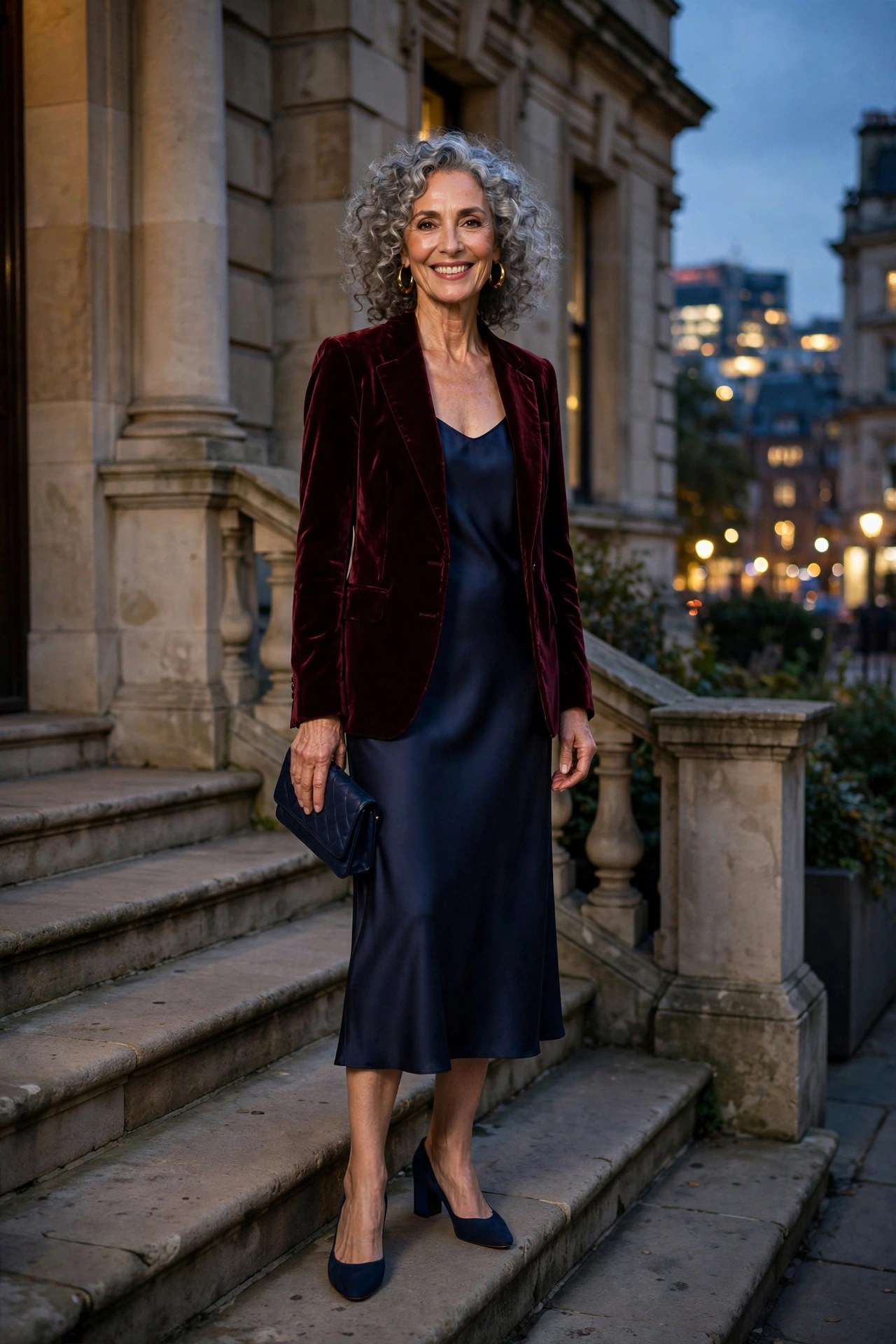
For evenings when you want to look unforgettable: a burgundy velvet blazer over a navy slip dress. Two deep jewel tones, one devastating combination.
Why it works after 50: navy is black’s kinder sister — depth and polish without the draining effect. Against burgundy velvet, it creates a richness that photographs beautifully and looks even better in candlelight. This is date-night dressing at its most confident.
Buyer-level detail: the navy must be deep — inky, almost black. A washed-out navy against burgundy looks muddy. Texture matters enormously here: velvet against silk-satin is what makes the pairing feel deliberate and luxurious rather than just dark.
7. The Burgundy Sweater Dress (One and Done)
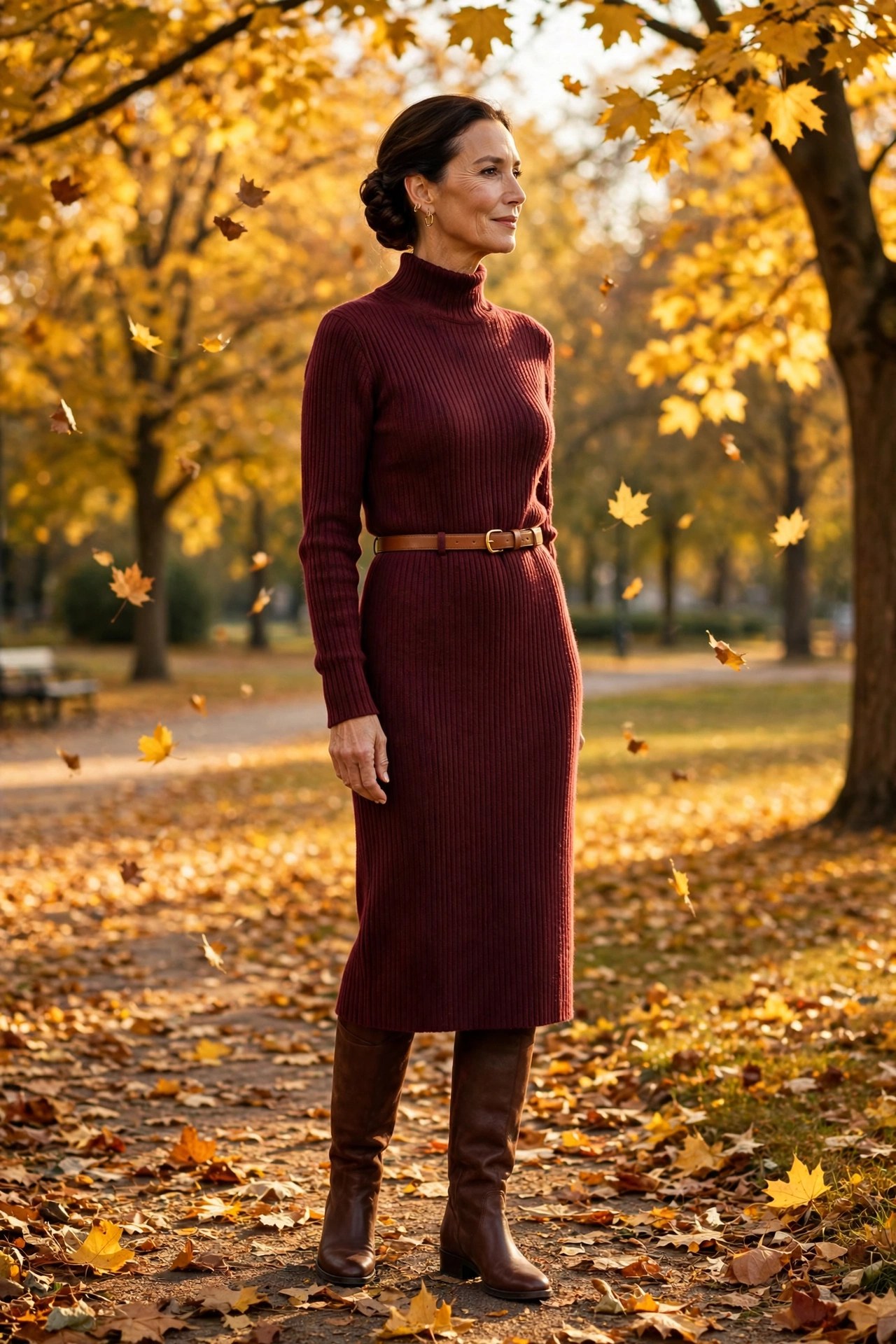
Some mornings you need one piece that does all the work. A belted burgundy ribbed-knit midi dress with knee-high boots is that piece. Dress, boots, earrings, done — out the door in six minutes looking like you planned for an hour.
Why it works after 50: a knit dress skims rather than clings, which is the silhouette sweet spot for bodies that have changed. The belt defines the waist without a waistband digging in, and the deep color gives the whole outfit an autumn richness that lighter dresses can’t touch.
Buyer-level detail: ribbed knits hold their shape far better than smooth jerseys — look for a medium-weight rib with real recovery. Boots should be chocolate or tan, never black; black boots chop the warm column of color the dress creates. A cognac belt echoes the boots and breaks the burgundy beautifully.
8. Burgundy Blazer + Blush Pink (Pattern With Restraint)
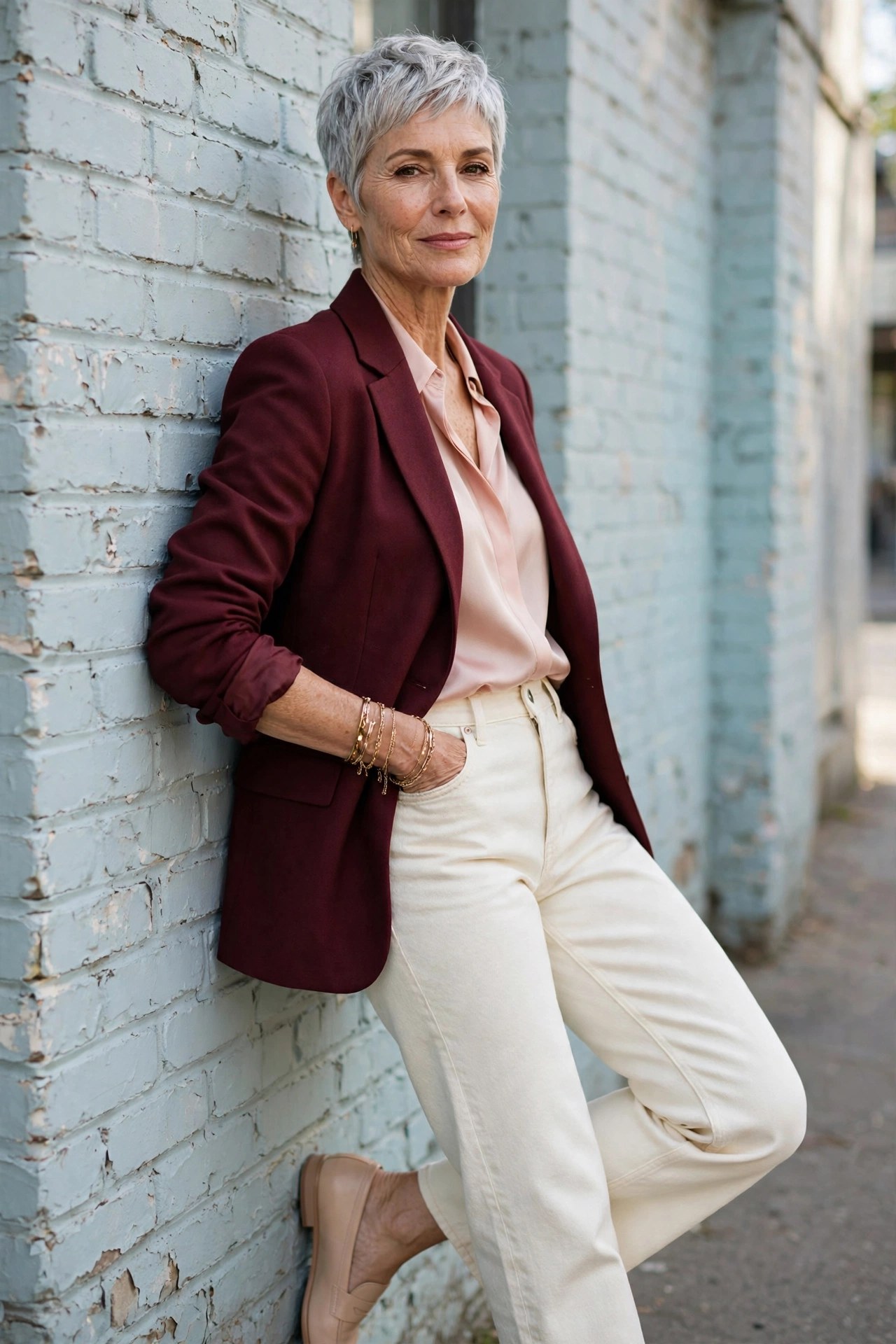
Here’s where burgundy gets playful. A burgundy blazer over a blush-pink silk blouse with cream jeans. The blush softens the burgundy; the burgundy gives the blush backbone. Neither works as well alone.
Why it works after 50: pink near the face is famously flattering to mature skin — it mimics a healthy flush. Anchored by burgundy, it never reads saccharine. It’s the outfit that proves you can wear a pastel at sixty without looking like you’re trying to be twenty-five.
Buyer-level detail: the pink must be blush — dusty, muted, sophisticated. Hot pink against burgundy is a fight; blush against burgundy is a conversation. Roll the blazer sleeves once to show a flash of blouse at the wrist, and keep jewelry simple and gold.
Burgundy Do’s and Don’ts
| DO | DON’T |
|---|---|
| Match your burgundy depth to your contrast — deeper skin, deeper burgundy | Wear burgundy with neon or electric colors — the clash is jarring |
| Use texture (velvet, cashmere, suede, leather) — burgundy loves richness | Buy flat, faded burgundy — if it looks dusty on the hanger, it will look dusty on you |
| Keep gold jewelry with burgundy — the warmth is harmonious | Default to silver — it cools a palette that wants to stay warm |
| Let one burgundy piece be the star (the coat, the blazer, the dress) | Mix burgundy with bright red in one outfit — they compete, and both lose |
| Try burgundy near your face — it’s one of the most flattering placements | Wear burgundy head-to-toe with no texture or tone variation — it needs depth |
Frequently Asked Questions
What colors go best with burgundy for women over 50?
Black, cream, camel, chocolate brown, navy, grey, blush pink, and olive are burgundy’s best partners. For the most flattering combinations after 50, lean toward cream over stark white and navy over black — both are kinder to mature skin while keeping the outfit rich.
Can women over 50 wear burgundy if they have grey or silver hair?
It’s one of the great combinations. Burgundy’s warmth makes silver hair look luminous and deliberate, like a style choice rather than an accident. Just make sure the burgundy is rich and saturated — a faded, dusty wine can look tired against grey.
Is burgundy in style in 2026?
Burgundy has been having a sustained moment since 2024 and shows no sign of leaving — it’s become a modern classic, the new neutral-adjacent color. A good burgundy coat or blazer is a multi-season investment, not a trend purchase.
What’s the difference between burgundy, bordeaux, and oxblood?
They’re siblings, not twins. Burgundy is the mid-tone wine red; bordeaux leans slightly brighter and more purple-red; oxblood is the darkest, brownest, most subdued of the three. All flatter women over 50 — pick based on how much drama you want.
Can I wear burgundy in spring and summer?
Absolutely. Switch to lighter burgundy shades in breathable fabrics — a bordeaux linen blouse, burgundy espadrilles, a wine-colored silk scarf. The color’s richness is seasonless; only the weight of the fabric changes.
Here’s the real secret, the one I’d tell you over coffee: burgundy isn’t really about the color. It’s about what the color gives you permission to stop doing. You stop reaching for safe black. You stop apologizing for taking up visual space. When you find your burgundy — the shade that lights up your face, the coat that fits like it was cut for you — getting dressed stops being a daily negotiation. You just wear the burgundy, and the day bends around you instead of the other way around.
That’s not fashion advice. That’s fifteen years in fitting rooms talking. And it’s the best thing I can give you.