STYLE ADVICE • 8-MINUTE READ
What to Wear to Play Tennis Over 50
(So You Look as Good as You Play)
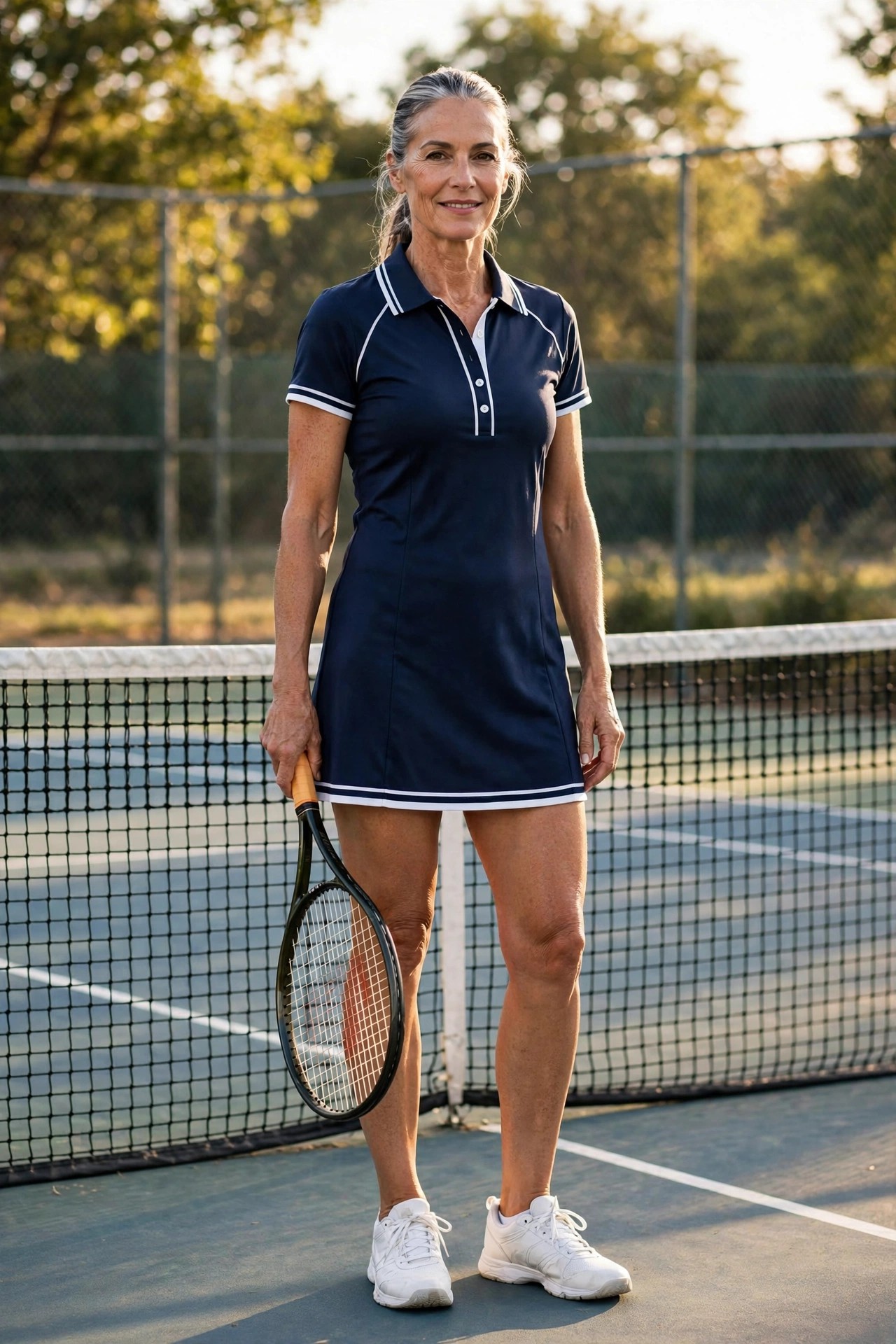
You’ve got the backhand, the footwork, and the competitive streak that terrifies women half your age. Now let’s make sure your outfit keeps up with your game — and your standards.
Forty years of fittings taught me one thing: the best-dressed player on the court is almost never the one in the trendiest outfit. She’s the one in the outfit that was chosen on purpose.
Here’s a confession from a former buyer who spent three decades deciding what thousands of women would wear: tennis apparel is where the fashion industry’s worst habits meet its best engineering. For years, the message to women over 50 was a binary — squeeze into the tiny junior sizes, or accept the sad stretchy tunic in “smoke” and call it a day. I bought for department stores through that whole era. I watched it. And I watched women our age quietly stop playing, or stop liking how they looked playing, and drift away from a game they’d loved for decades.
That’s over now. The tennis aisle has grown up — moisture-wicking fabrics that actually wick, skorts with real compression, dresses with built-in support that a buyer in 1985 would have wept over. The technology finally caught up with the woman. But the choices have exploded, and with them the mistakes: the running shoe on a hard court (ask my ankle about that one), the cotton tee that weighs four pounds by the second set, the dress that looks adorable standing still and absolutely treacherous on a sprint.
So consider this your buying guide from the woman who used to write the spec sheets. Seven pieces of the puzzle, each one tested against the only three questions that matter: does it move, does it support, and does it make you feel like the player you actually are?
| The Piece | What to Look For | Agatha’s Buyer Tip |
|---|---|---|
| The tennis dress | Built-in bra + attached shorts, A-line skim | Dark colors photograph younger; white demands confidence — earn it |
| The skort | Compression undershorts, pockets, 13″–15″ length | Thigh pocket for the second ball — it’s a non-negotiable |
| The fabric | Moisture-wicking synthetics, UPF 40–50 | If it says “cotton blend” for tennis, put it down and back away |
| The top | Built-in shelf bra or wear your own sports bra | Racerback cuts flatter arms; higher necklines flatter everything |
| The shoes | Actual tennis shoes, lateral support, non-marking sole | This is the one purchase that prevents injuries — don’t economize here |
| Sun armor | Visor + SPF clothing, not either/or | A visor plus sunscreen beats a hat that steams your head |
| The layer | Lightweight zip jacket, warm-up pants | You’ll wear it more than the outfit — choose like you mean it |
1. The Tennis Dress That Does All the Work
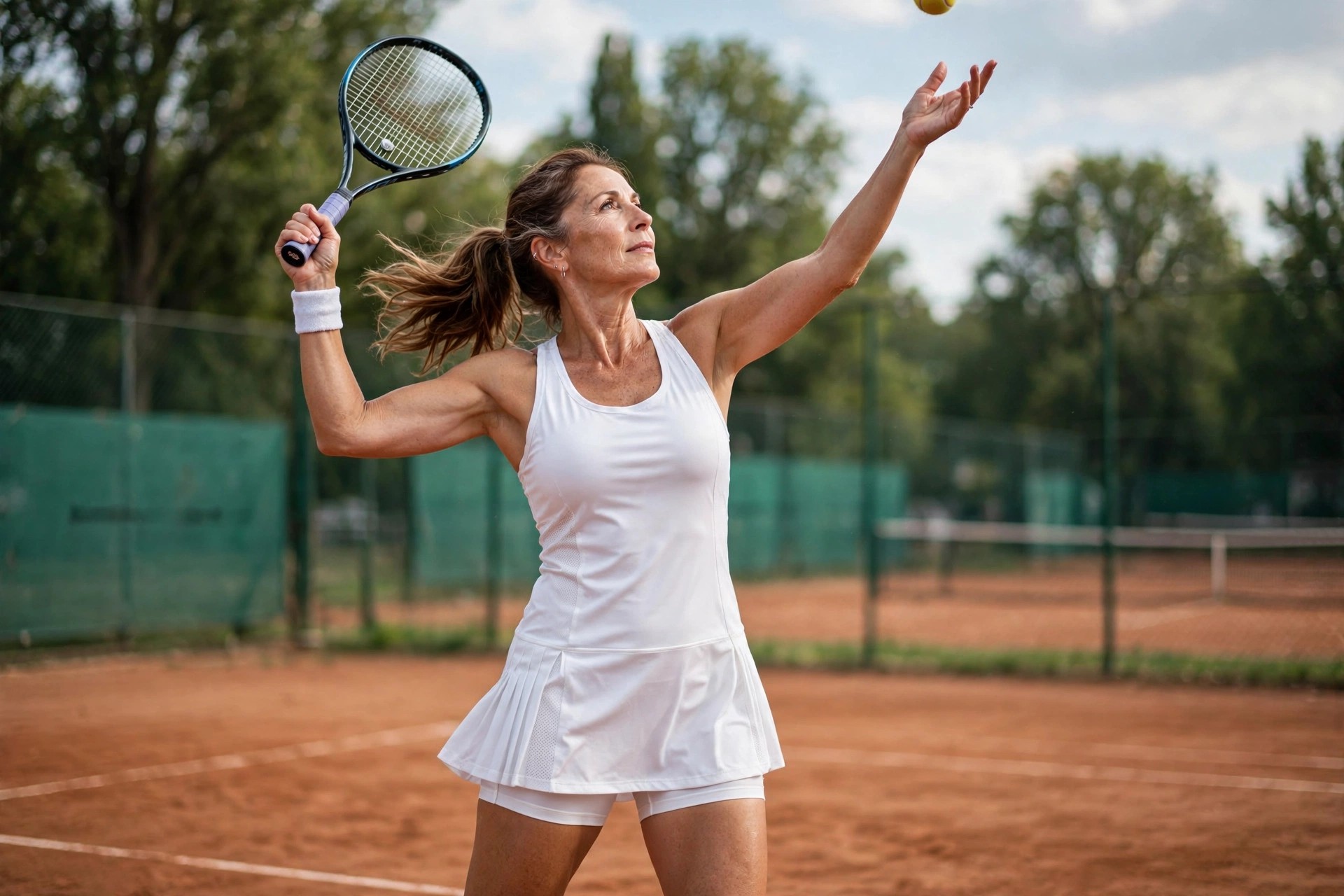
The tennis dress is the hero piece of the court wardrobe, and I mean that both ways — it can rescue your morning, or it can be the villain of the second set. Here’s what thirty years of fit sessions taught me: a great tennis dress on a 55-year-old body has exactly three non-negotiables.
First, a built-in bra that deserves the name. Not a whisper of elastic — an actual shelf with structure. If you need to wear a separate sports bra underneath, the dress has failed at its one job, which is to be one thing instead of two. Second, attached shorts underneath the skirt. Not optional, not a nice-to-have. You are a woman who serves, lunges, and slides. The shorts are the difference between playing freely and playing while performing mental geometry about angles and hemlines. Third, a skirt that skims rather than clings — an A-line or gentle flare cut, hitting somewhere between mid-thigh and just above the knee.
The color question is where I get opinionated, which regular readers will recognize as my default setting. White is the tradition, and white on a woman with a real tan and real confidence is unbeatable. But white is also unforgiving in bright sun — it shows every line of underlayer and every damp patch. If you’re building your first serious tennis outfit, start navy, black, or deep green. They read as expensive, they hide the honest sweat of a real match, and — this is pure buyer voodoo — dark colors on the court genuinely make you look faster.
Fit note from the fitting room: tennis dresses run a full size smaller than street clothes across almost every brand. I don’t know why the industry does this. I never knew why, even when I was in the meetings. Just size up without the drama.
2. Skorts: Your New Best Friend

If the dress is the hero, the skort is the reliable best friend who shows up every single day. I converted to skorts in my late fifties after a decade of dress loyalty, and I’ve never looked back — because a skort lets you mix one great bottom with four or five tops, which is how you build a rotation without building a second mortgage.
The anatomy of a perfect skort: the outer skirt should be pleated or gently flared (pleats move beautifully and hide a multitude of midsection opinions), and the inner short should be compression-grade with a wide, flat waistband that doesn’t roll. Length is personal, but the sweet spot for most women over 50 is 13 to 15 inches — long enough to feel composed bending for a low ball, short enough to let you actually move.
Now, the detail that separates a real tennis skort from a golf-course tourist: pockets. You need a place for the second ball, and I don’t mean your hand. Look for a ball pocket built into the undershort — usually on the thigh — big enough to actually hold a ball without it migrating somewhere embarrassing mid-rally. Some of the best designs hide a zip pocket in the waistband for a key or a lip balm. That is a designer who has played tennis, and you can tell.
3. Fabric Science, the 50+ Edition
I spent years reading fabric spec sheets for a living, so allow me a moment of buyer geekery, because this is the section that will change how you feel at 4–4 in the third set.
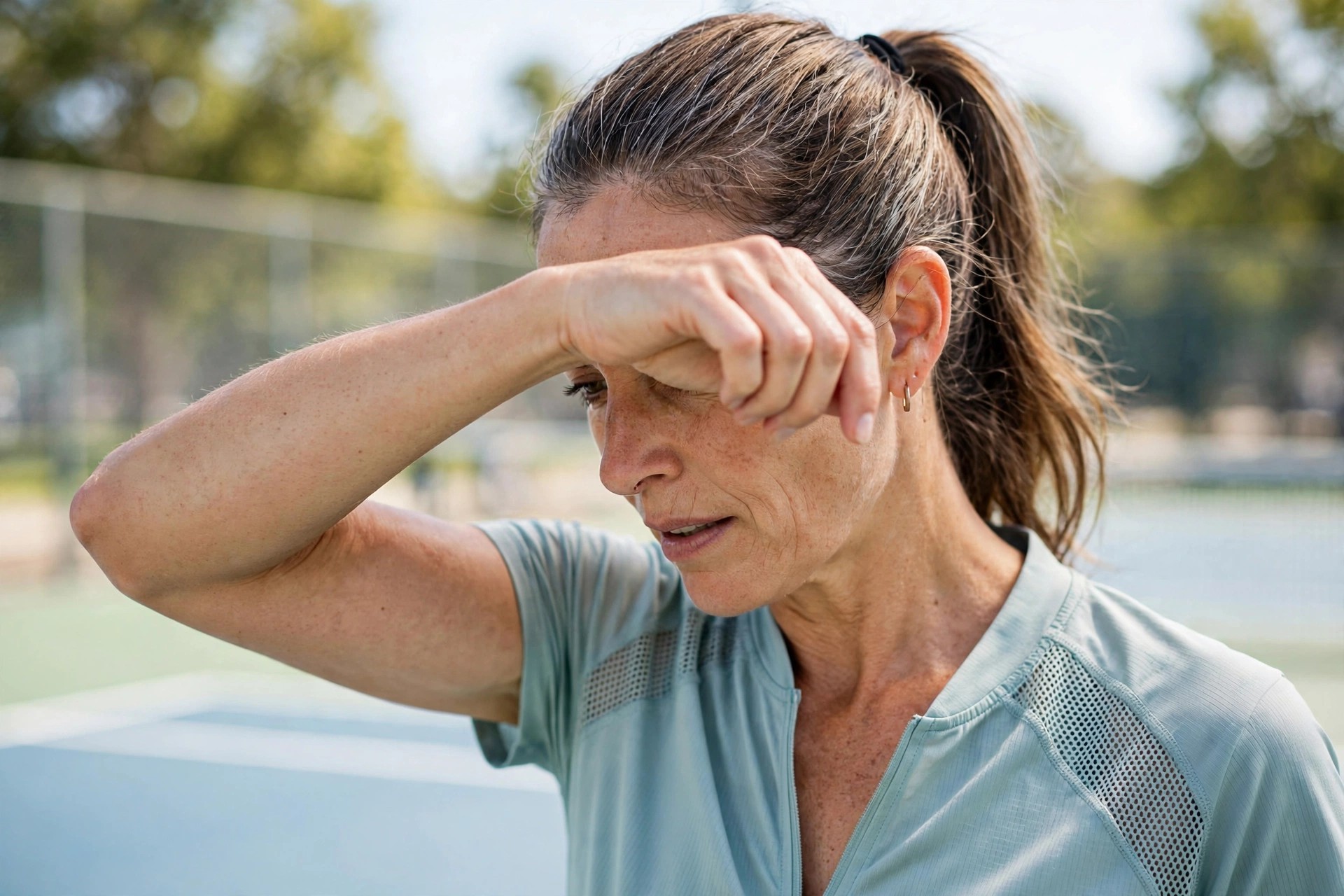
Cotton is the enemy. I say this with love for cotton in every other context — a cotton shirt is a beautiful thing, just not on a tennis court. Cotton absorbs moisture and holds it against your skin; by the second set, a cotton tee can gain a pound of water weight, chafe at every seam, and go translucent in exactly the places you’d prefer stayed opaque. The industry’s shift to polyester-spandex performance blends wasn’t a fashion trend. It was physics.
What you want: moisture-wicking synthetics (the fabric pulls sweat off your skin and spreads it to evaporate), four-way stretch (because a backhand is a full-body event), and — this is the over-50 upgrade most women miss — built-in UPF protection. A UPF 50 top blocks 98% of UV rays. You are spending three hours in direct sun, three times a week, on a surface that reflects it back at you. Sunscreen helps; a shirt that is sunscreen is better. Look for mesh ventilation panels at the back and underarms, flatlock seams (they lie flat instead of raised, which means no chafing), and a slightly looser cut through the torso — compression where you want support, ease where you want grace.
4. Tops That Actually Support You
Let’s talk about the part of the outfit nobody wants to discuss and everybody needs to get right: support. After 50, the requirements change, and pretending they don’t is how you end up distracted, uncomfortable, and adjusting things between every point.
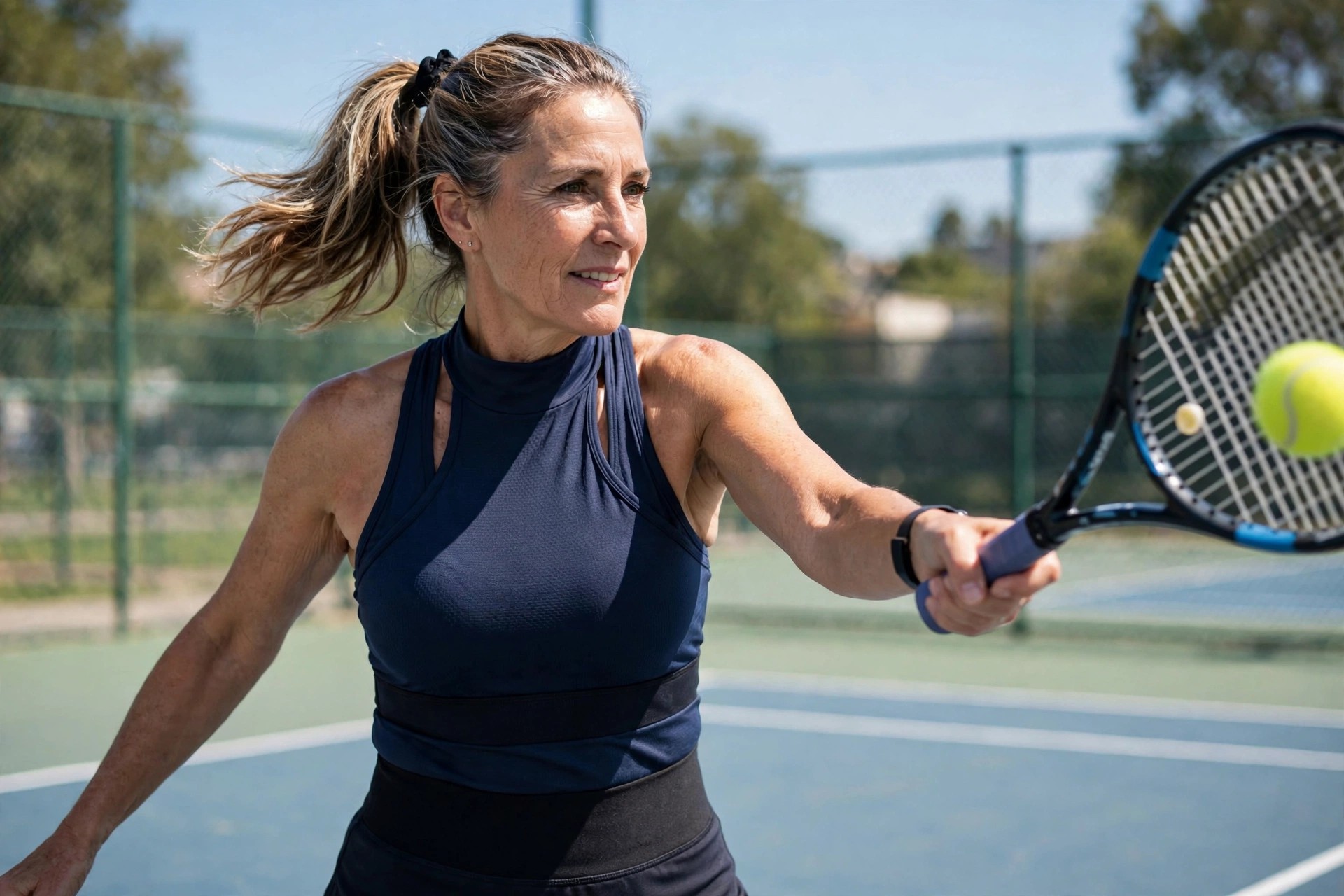
You have two good options. Option one: a top with a genuinely structured built-in bra — wide underbust band, real cups or a compressive shelf, adjustable straps if you’re lucky. Option two: your own high-support sports bra under a performance tank or tee. Both work. What doesn’t work is a cute top with a decorative elastic strip that the marketing department calls a “bra.” Try the bounce test in the fitting room. You know the one. Do it. Future you, mid-overhead, says thank you.
Cut matters as much as construction. Racerback tops are a gift for our age group — they show the strongest part of the shoulder, stay put during a serve, and flatter arms without squeezing them. Higher necklines (crew or a modest scoop) read as polished and keep everything where it belongs during a sprint. And a small vanity note from someone who’s seen ten thousand fitting-room mirrors: a top with a bit of ruching or seaming through the torso is more forgiving than a flat panel, on every body, every time.
5. Shoes — the Part Most Women Get Wrong
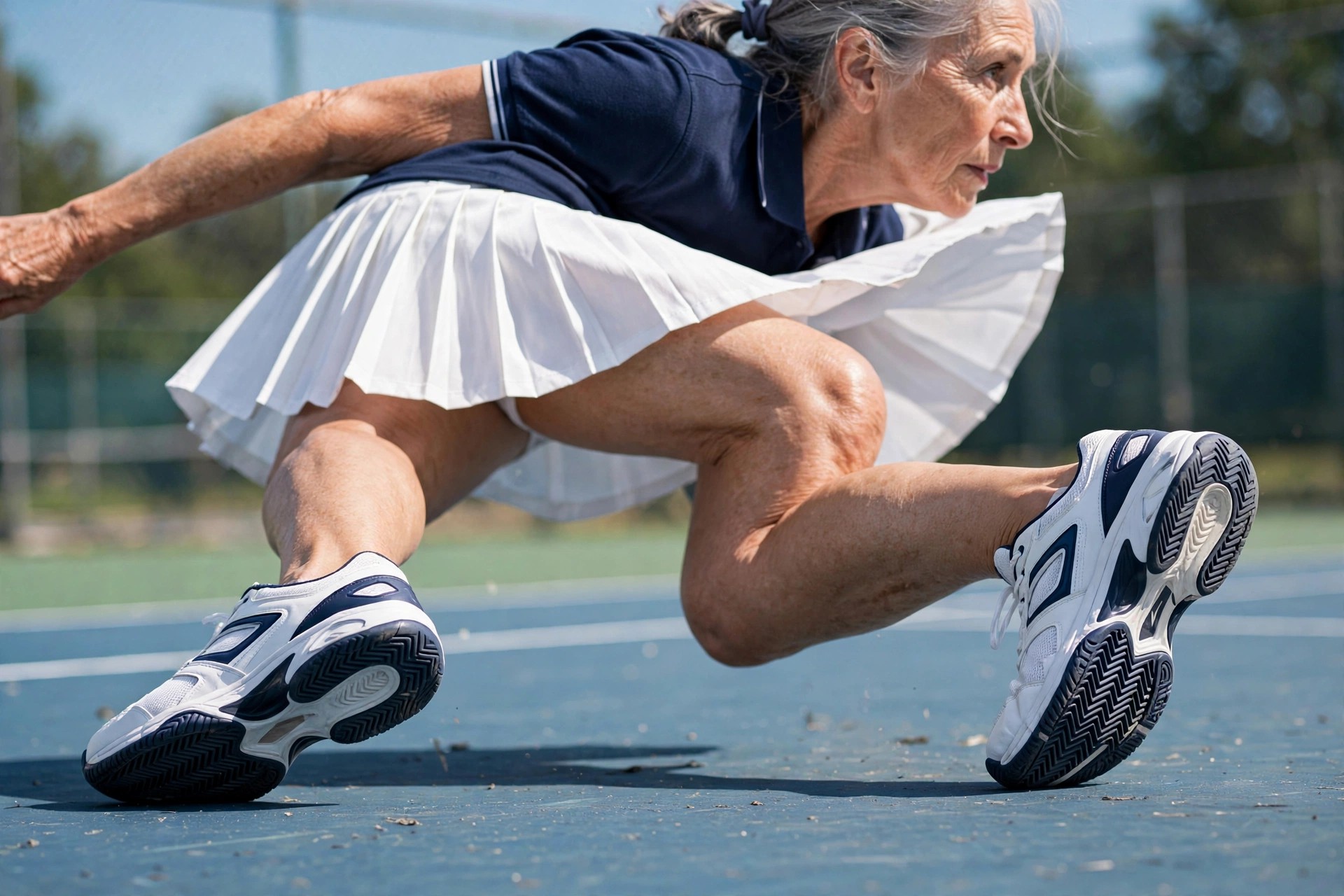
If you take one thing from this entire article, take this: do not play tennis in running shoes. I know they’re comfortable. I know you already own them. I also know — from the ankle sprain that ended my 2019 season — that running shoes are engineered for forward motion, and tennis is a sport of violent sideways stops. A running shoe’s soft, high edge will roll under you on a hard lateral cut. A tennis shoe’s job is precisely to prevent that.
What a real tennis shoe gives you: a lower, flatter profile for stability; reinforced sides (look for a sturdy “lateral support” cage or overlay) that hold your foot on direction changes; a durable outsole with a herringbone or modified-herringbone tread — on clay, that tread is the difference between sliding and sticking; and a toe guard, because the serve-and-volley crowd drags toes like it’s a personal mission.
Fit rules from the shoe department, where I also did time: shop in the afternoon when feet are slightly swollen, leave a thumb’s width at the toe, and break them in with two practice sessions before a match — never debut shoes on match day, a rule that applies to weddings and tennis equally. Replace them every 45–60 hours of play or when the tread smooths out; dead shoes are how knees file complaints. And here’s the style payoff nobody mentions: the right court shoe makes your whole outfit look intentional. It’s the difference between “woman who owns a racket” and “tennis player.”
6. Sun Armor That Looks Chic
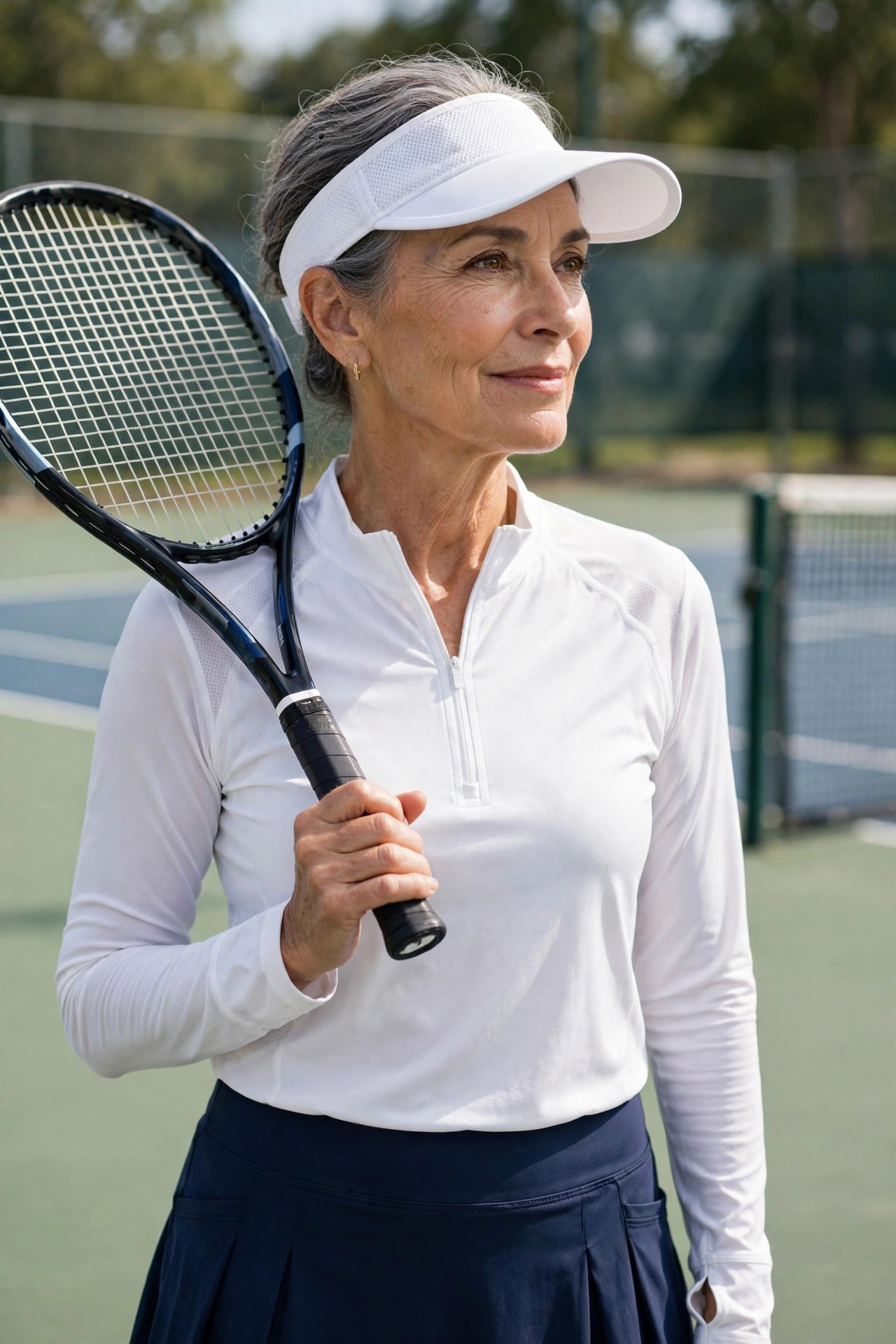
Three hours of sun, three times a week, for twenty years: do the math on what that does to a face, and you’ll understand why the women who’ve played longest are the most militant about sun protection. The trick is doing it without looking like you’re about to rob a bank or clean a chimney.
The visor is the correct answer, and I will defend it. A visor shades your eyes without trapping heat the way a full cap does — and heat management at our age is not vanity, it’s strategy. Choose one with a dark underside to the brim (it cuts glare bouncing up off the court) and a terry sweatband. White is classic; navy and black hide sweat marks and look sharper by the third set.
Then layer the clothing-based protection: a lightweight long-sleeve UPF top for the brutal midday sessions (the good ones feel like wearing air), UPF arm sleeves if you prefer short sleeves with coverage, and — the item I evangelize about — a UPF neck gaiter or a collared top with a high neckline for the hours when the sun is directly overhead. Sunscreen on every exposed inch, reapplied at the changeover; the “sport” formulas genuinely do hold up better to sweat. Looking chic while doing all this is simply a matter of coordination: pick your sun pieces in the same color family as your outfit, and protection reads as polish.
7. The Warm-Up Layer & Post-Match Polish
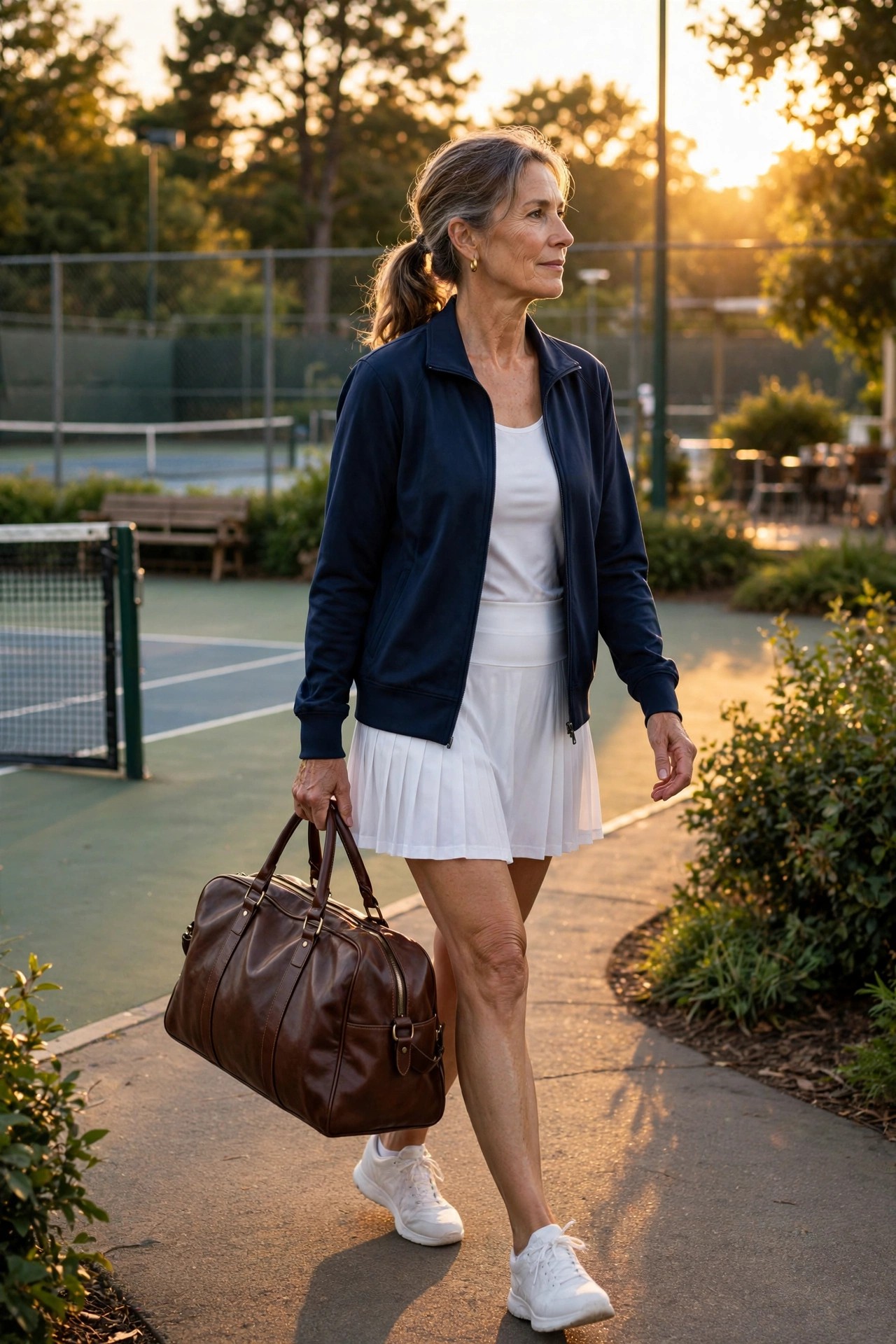
Here’s the insider truth from the clubhouse: your warm-up layer gets more wear than your tennis outfit. You arrive in it, you warm up in it, you sit in it after the match while the winners buy the sparkling water. It deserves the same thought as everything underneath it.
The ideal layer is a lightweight zip jacket in a technical fabric — not a heavy cotton hoodie, which you’ll overheat in by the second game and then carry around your waist like a flag of surrender. Look for thumbholes (they keep sleeves put during warm-up rallies), zip pockets (phone, key, dignity), and a cut that skims rather than swallows. A matching or coordinating warm-up pant or a knit tennis skirt-layer extends the polish.
And then there’s the post-match moment — the reason many of us care about any of this. You walk off the court and into lunch, or the pro shop, or the rest of your Saturday. The players who look effortlessly put-together aren’t overdressed; they’re just finished. A clean jacket zipped over the dress, hair re-pulled, a fresh swipe of lip color from the bag, court shoes swapped if you’re heading somewhere civilized. Five minutes, and you look like the woman who won — whether or not the scoreboard agrees. (It usually does, by the way. Confidence is a performance-enhancing substance.)
| Do This | Not That |
|---|---|
| Size up — tennis brands run small | Squeezing into your street size and blaming your body |
| Real tennis shoes with lateral support | Running shoes, fashion sneakers, or — I have seen it — sandals |
| Attached shorts under every skirt and dress | A flirty skirt with nothing underneath on a windy day |
| Moisture-wicking synthetics with UPF | The beloved cotton tee that weighs a pound by set two |
| A ball pocket in the undershort | Clutching the second ball like a secret |
| Dark colors for your first serious outfit | All-white everything before you’ve tested the fit in motion |
| Break in new shoes over two practices | Debuting fresh shoes on match day |
| Visor + reapplied sunscreen | A baseball cap that steams your head, or nothing at all |
Can I wear leggings to play tennis?
You can, and many women do — full-length or capri performance leggings are excellent for cooler weather and for anyone who prefers coverage. Just make sure they’re true athletic leggings (moisture-wicking, four-way stretch, squat-proof opacity) and not fashion leggings. Pair with a longer top or skort over them for the classic court look, and check your club’s dress code — a few traditional clubs still frown on them.
What should I wear to tennis if I’m a beginner over 50?
Start with the skort-plus-top formula: one good skort with compression undershorts and ball pocket, two moisture-wicking tops, and real tennis shoes. That’s a complete starter kit. Add a tennis dress once you know you love the game — and you will. Don’t buy the whole pro shop on day one; buy the shoes first, because those protect your joints while you’re learning.
Are tennis dresses flattering for women over 50?
The right one, absolutely — and the qualifiers do the work in that sentence. Look for an A-line cut that skims, a built-in structured bra, attached shorts, and a length that hits mid-thigh to just above the knee. Darker colors and small prints are the most forgiving. The dresses to avoid are the junior-cut bodycon styles with spaghetti straps and no support — those were designed for a different body and a different decade.
How many tennis outfits do I actually need?
Two skorts, three to four tops, one dress, one warm-up jacket, and two pairs of shoes in rotation will carry you through three sessions a week comfortably — as long as you do laundry like a responsible adult. The tops are the high-turnover item; everything else lasts. This is the capsule-wardrobe logic applied to sport, and it works.
What’s the dress code at most tennis clubs?
Most clubs require “proper tennis attire” — which generally means tennis-specific clothing (no gym shorts, no running tights at traditional clubs, no denim anywhere, ever) and non-marking court shoes. White-only rules still exist at some old-guard clubs, so check before you invest in a navy wardrobe. When in doubt, a white or light-colored tennis dress is the universal passport.
Here’s the real secret, and it’s not about clothes at all. The best-dressed woman on any court I’ve ever walked — and I’ve walked a lot of them — was never the one with the newest outfit. She was the one whose clothes had clearly been chosen by a woman who intended to play. Everything fit, everything moved, nothing needed adjusting, and she never thought about her outfit once the first ball was struck. That’s the whole game: dress so well that you forget what you’re wearing. The outfit should disappear. The player should not.
Now go look as good as you play. You’ve earned both.