EVERYDAY STYLE • 7-MINUTE READ
Fall Outfits That Flatter a Tummy Over 50:
The 8 Formulas That Actually Work
Forget sucking it in. These are the fall outfits that skim, drape, and distract — designed by a former buyer who’s dressed a thousand midsections.
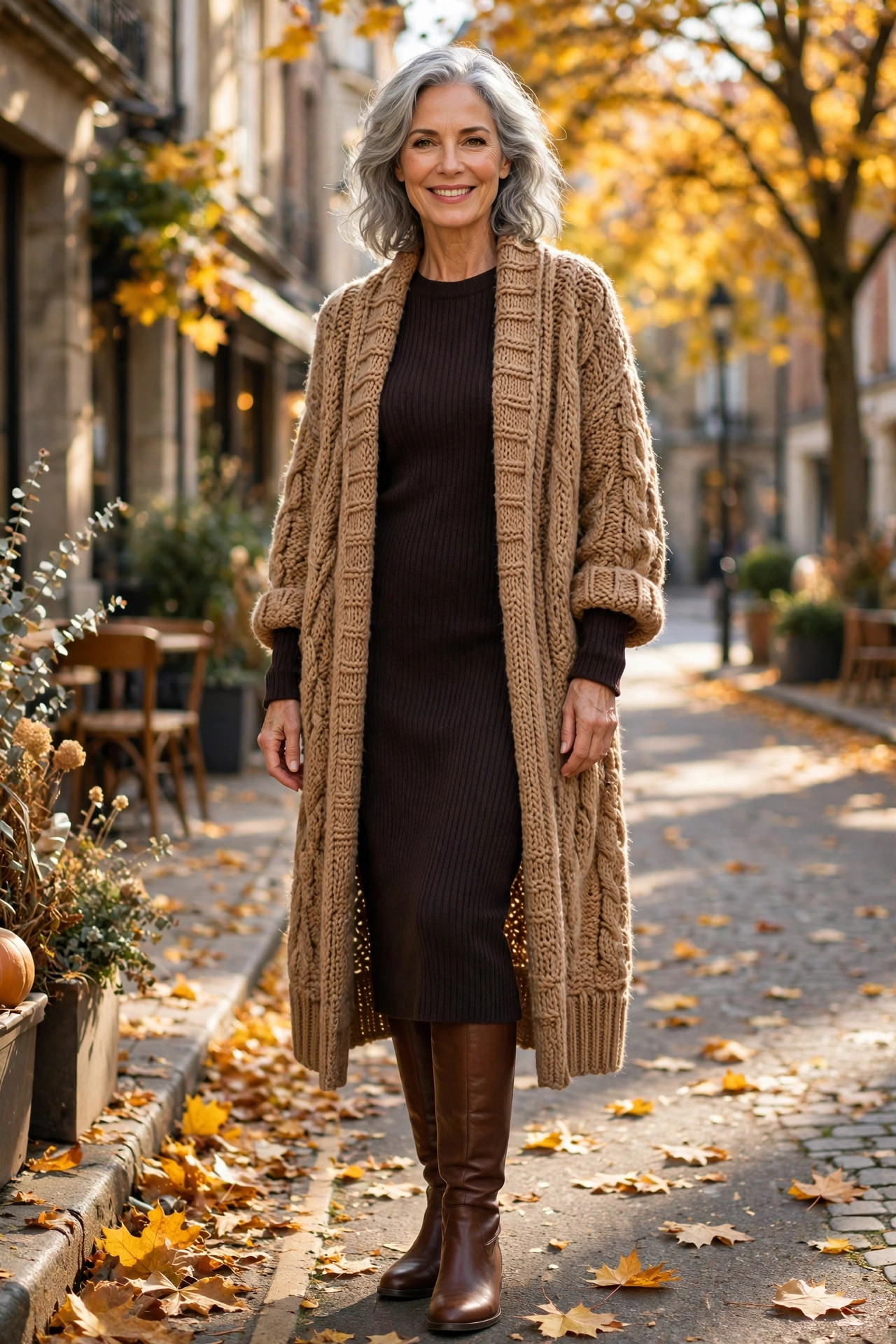
A long open cardigan over a ribbed knit dress — the easiest tummy-flattering formula in your closet.
Let me tell you a secret from twenty years of fitting rooms: the women who look the most expensive in fall are rarely the thinnest ones. They’re the ones who understand skim, not squeeze. A waistband that cuts in, a knit that clings, a jacket that ends exactly at the widest point — these are the tiny mistakes that make a tummy look bigger than it is.
And the fixes? They’re not diet tips. They’re buying tips. Fall is the best season for this because structure is back — coats, blazers, boots, layers — and structure is a midsection’s best friend. Below are the 8 outfits I reach for between September and November, each one built on real buyer-level detail: rise measurements, fabric weights, where a hem should actually land. No shapewear required.
The Flattery Cheat Sheet: 5 Principles Before We Start
| Principle | What it means | Why it works |
|---|---|---|
| Skim, don’t cling | Fabrics that float 1–2 cm off the body | Cling outlines every curve; skimming suggests none |
| Vertical lines win | Open layers, long necklaces, column dressing | The eye travels up and down, never across |
| Define beside the waist | Shoulders, neckline, or just below the bust | Draws the eye to your narrowest nearby point |
| Mind the hem | Tops ending mid-hip or mid-thigh — never at the widest point | A hem that stops exactly on the tummy frames it like a picture |
| Weight matters | Mid-weight knits and structured wovens over tissue-thin jersey | Heavier fabric holds its own line instead of mapping yours |
1. The Wrap Coat + Column Dress Combo
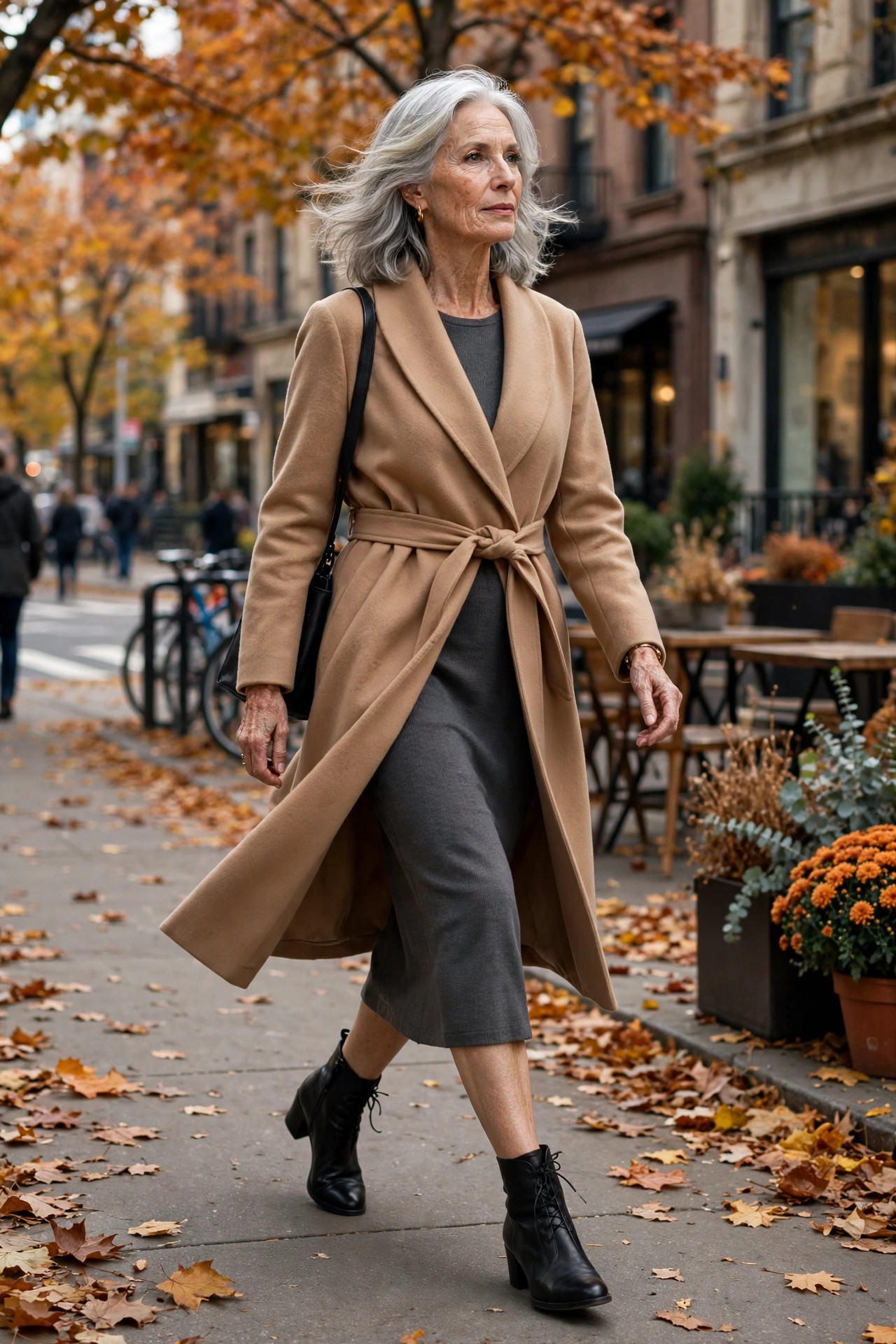
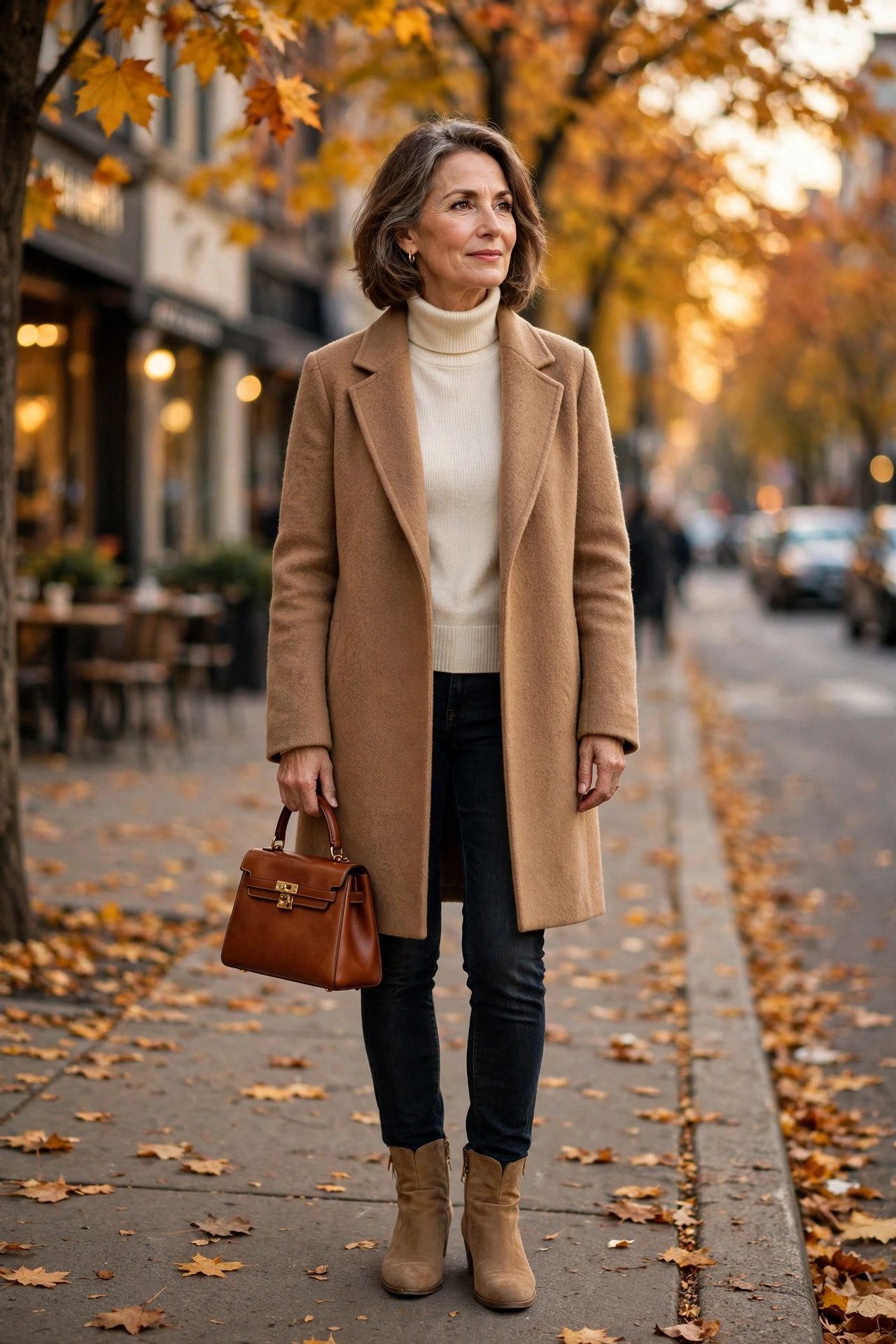
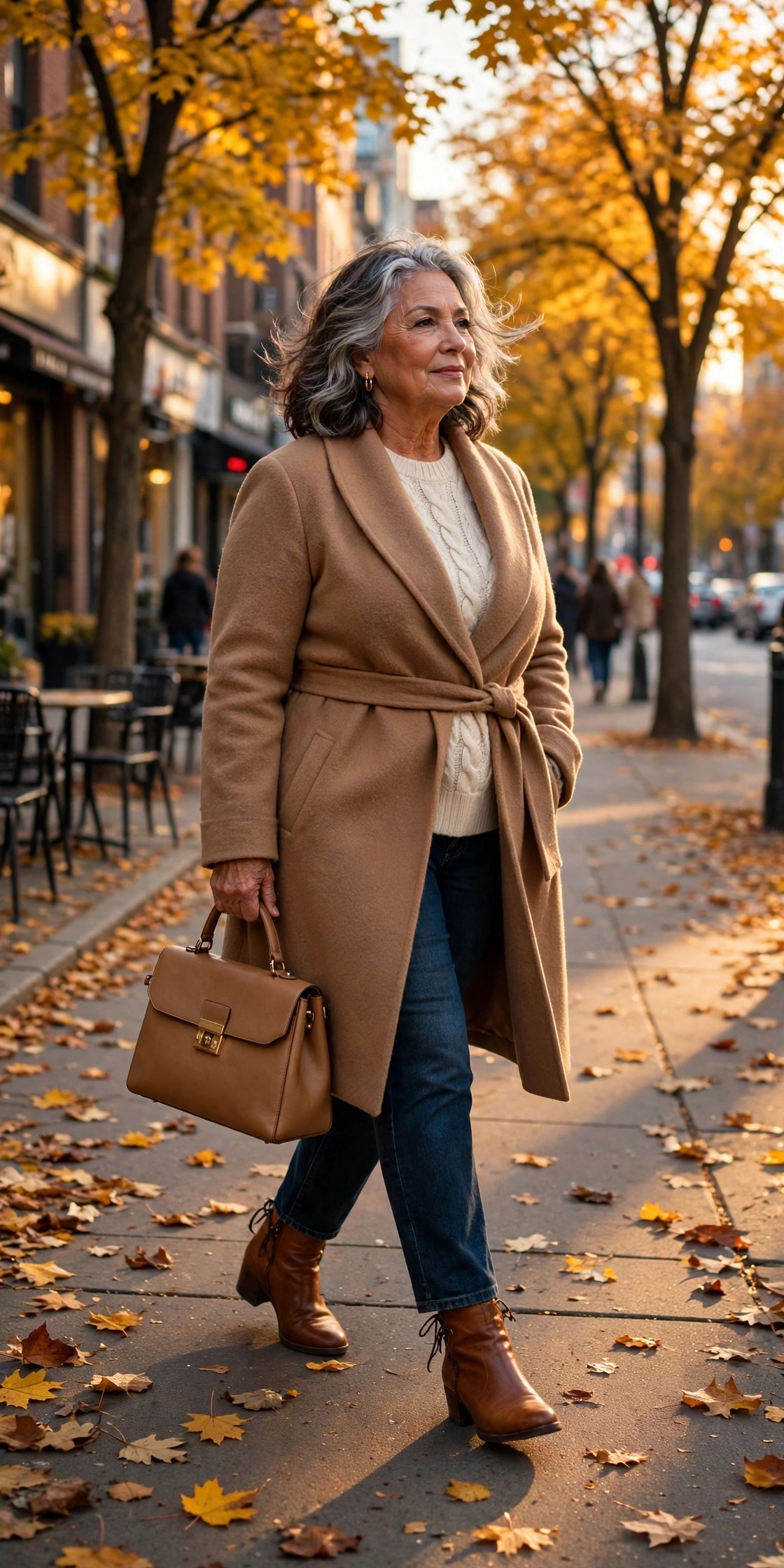
If you buy one thing this fall, make it a knee-length wrap coat in camel, charcoal, or deep olive. The wrap creates a diagonal line straight across the torso — nature’s contouring — and the belt ties at your true waist or empire line, wherever you choose. Underneath, a column dress (straight, unfitted, one color) in a mid-weight ponte or matte jersey does the rest.
The magic detail: leave the coat open. Two long vertical panels of fabric on either side of a dark column dress will take a visual ten pounds off before you’ve had coffee. I watched this silhouette sell out three seasons running when I was buying outerwear. It wasn’t an accident.
2. High-Rise Dark Denim + Tunic-Length Blouse
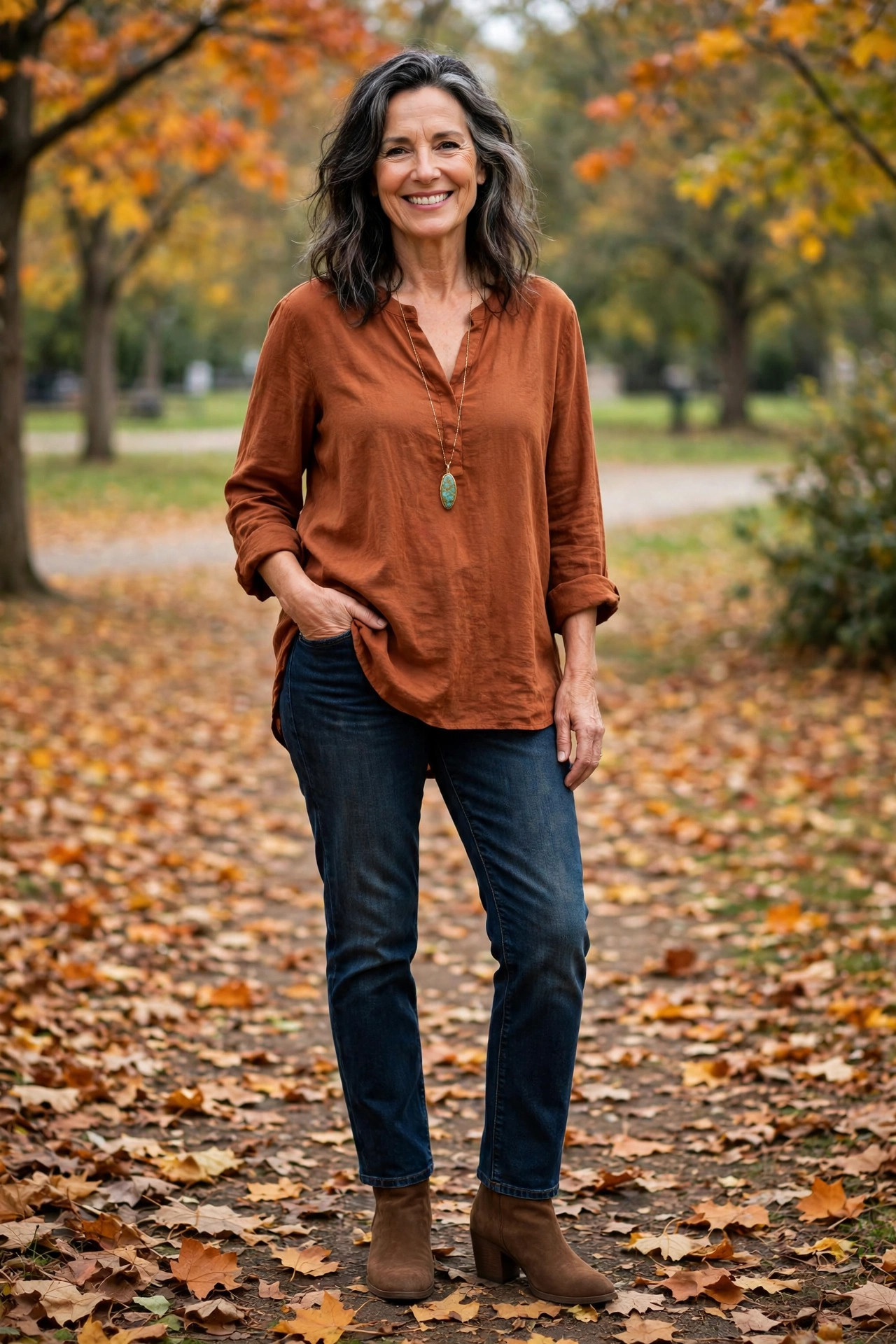
The number one fitting-room mistake I see: low-rise jeans on a soft midsection. A 10.5- to 11-inch rise in a dark rinse sits at the natural waist and holds everything the way a good hug holds you — firm but kind. Pair it with a tunic blouse that ends mid-thigh, in a fabric with some body: brushed cotton, lightweight flannel, or a crepe.
French-tuck just the front corner if you like, but here’s the buyer truth — a full tuck into high-rise denim looks better than people think at 50-plus, because the jean’s structure does the smoothing. Add a low block-heel boot and a pendant necklace that lands at the sternum. Vertical line, checked.
3. The Long Cardigan + Fitted Ribbed Dress
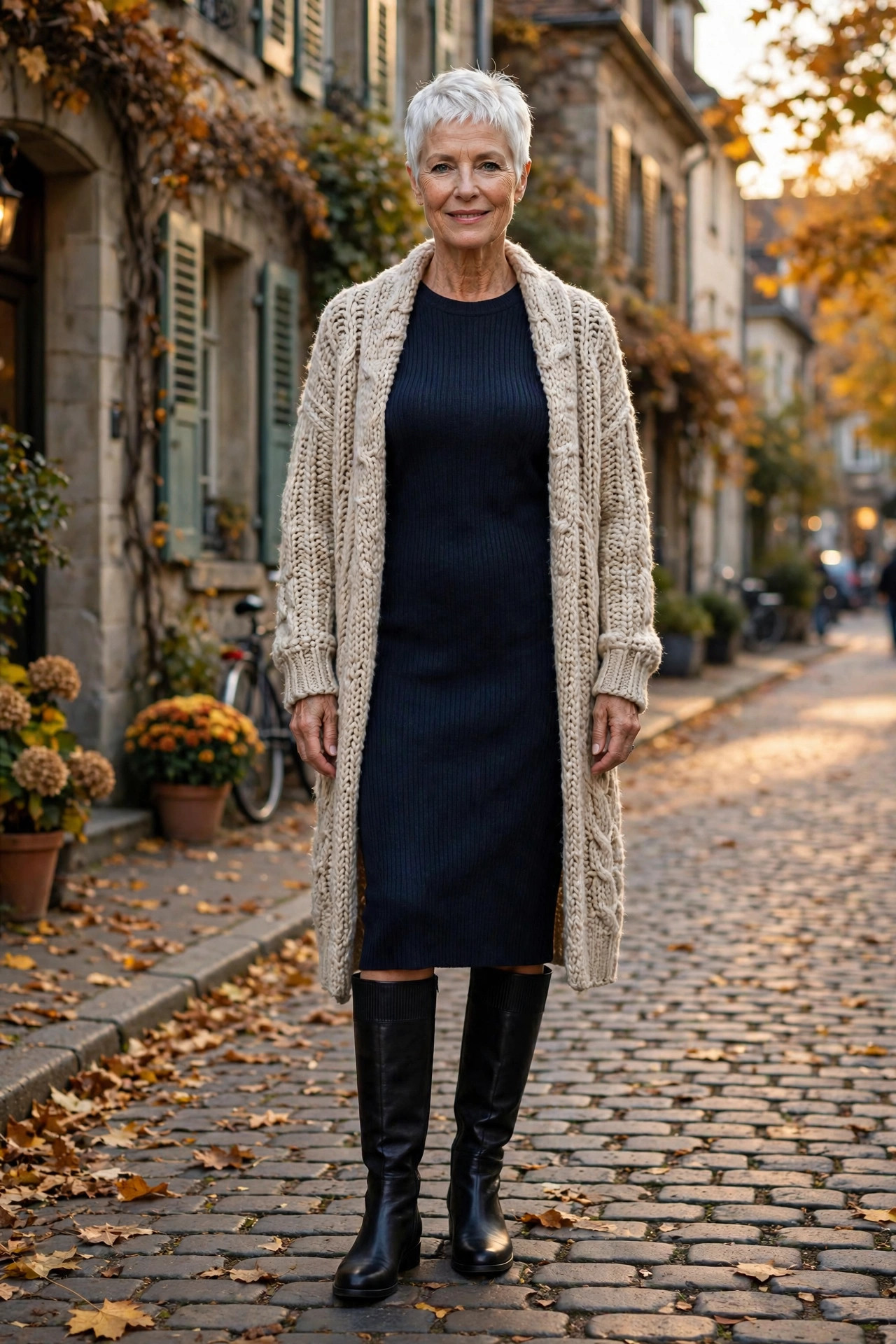
This is the outfit women email me about most, so listen closely. A ribbed knit dress in a dark tone — espresso, navy, forest — fitted but not tight. Over it, an open-front cardigan or duster that falls to mid-calf. The cardigan’s two front edges create the longest vertical line in your wardrobe, and the ribbed dress underneath reads as one smooth column.
The detail that makes or breaks it: the cardigan must be heavier than the dress. A chunky or mid-weight knit holds its drape; a flimsy one collapses onto the tummy and outlines it. Think sweater-coat, not shrug. Finish with knee boots — more on those below — and you’re done in ninety seconds flat.
4. A-Line Midi Skirt + Fitted Turtleneck
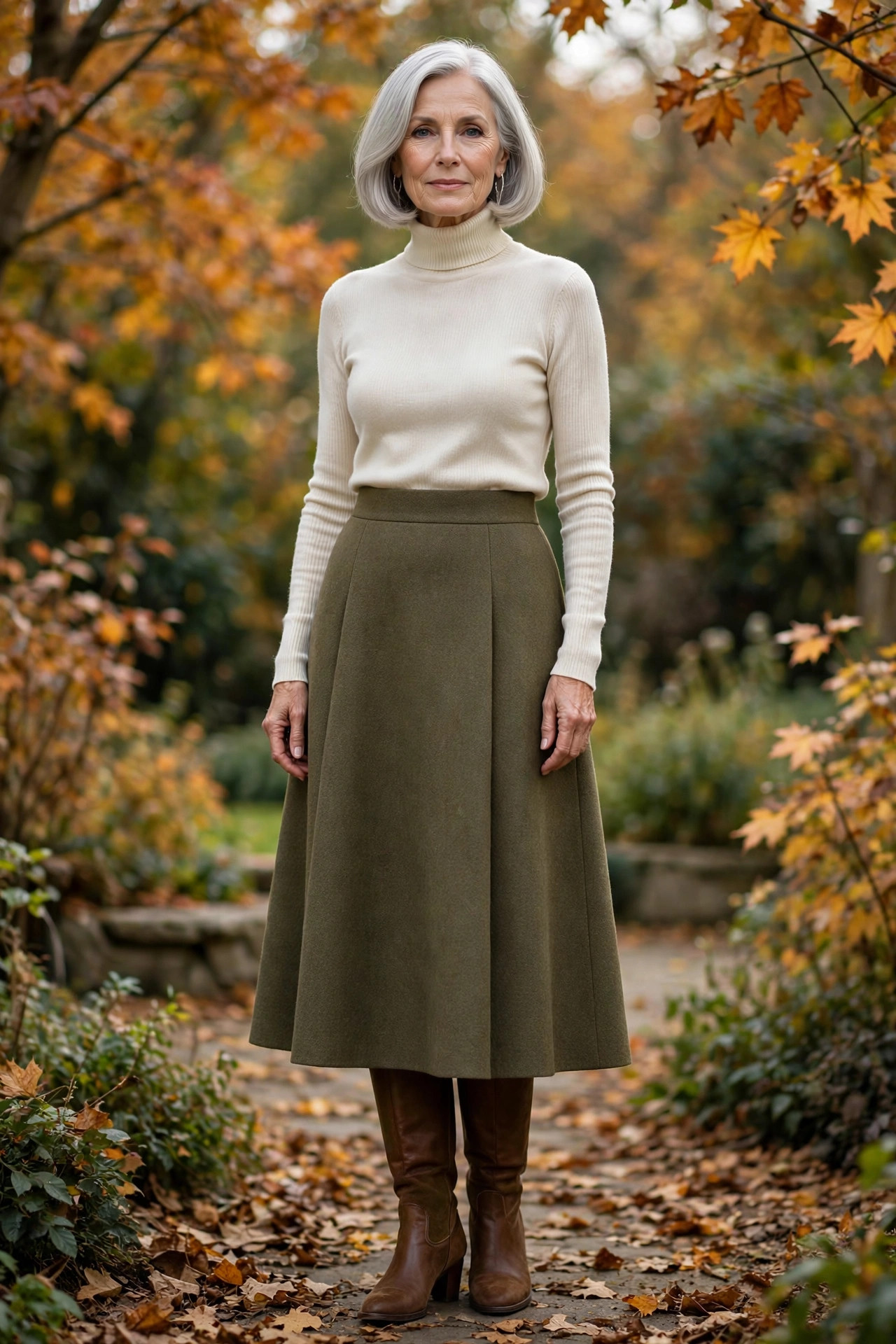
The A-line midi is the single most forgiving skirt silhouette ever designed, and at 50-plus it’s pure gold. It nips at the waist (or just under the bust with an elastic-back style) and flares away from everything below. Tuck a fitted — fitted, not tight — turtleneck into it, in a fine merino or modal blend.
Why the turtleneck works: it draws every eye upward to your face and collarbones, the area that stays elegant at any size. Choose a skirt with structure — wool-blend, scuba, or lined twill — because an unlined flimsy A-line will cling to the tummy when you sit. A structured one stands away from the body like it has manners.
5. Monochrome Layering, Head to Toe
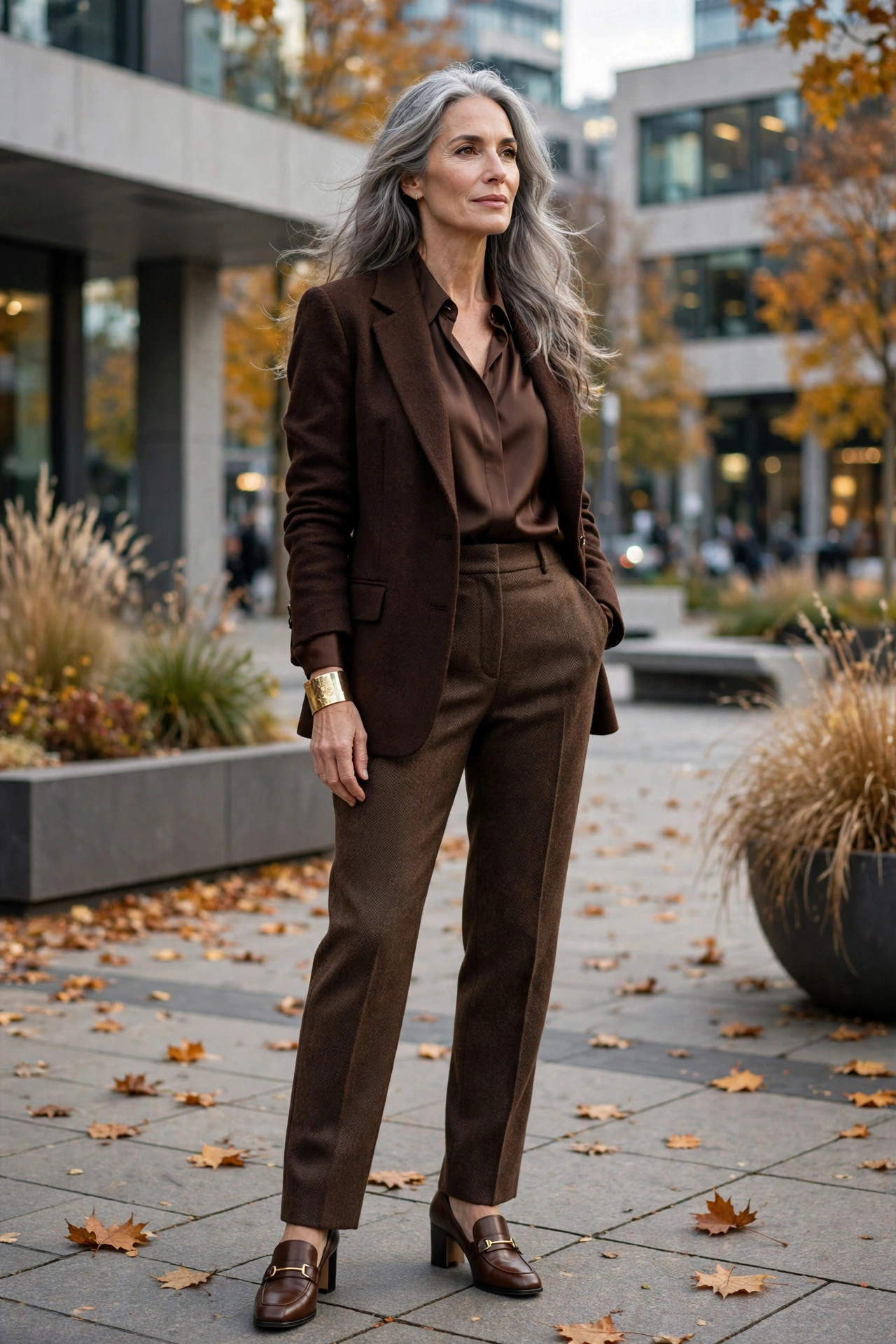
Pick one color — charcoal, chocolate, olive, navy — and wear it from neck to ankle in three slightly different textures. A silk-blend blouse, a matte blazer, a wool trouser, all in the same family. With no color break at the waist, the eye can’t find where the tummy starts. It simply… glides past.
This is the stylist trick behind every “how does she look so slim?” red-carpet moment. The texture variation keeps it from looking like a uniform: matte against sheen against knit. Add one contrast accessory — a tan belt worn loose at the hip, a gold cuff — so the outfit has a focal point that isn’t your middle.
6. The Open Blazer as a Third Piece
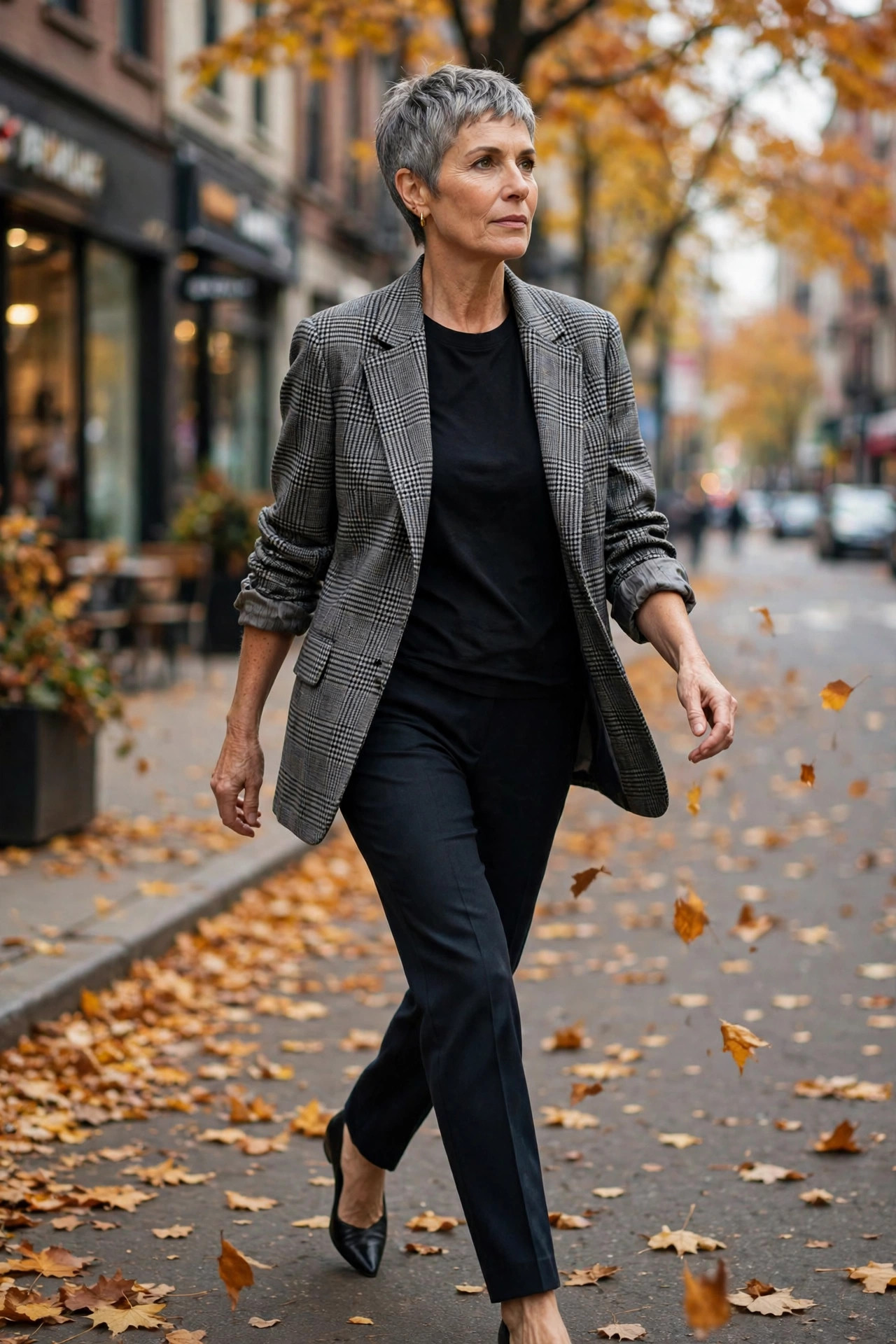
A slightly oversized blazer, worn open, over a simple dark top and trousers. That’s it. That’s the outfit. The blazer’s front edges do the same vertical-line work as the long cardigan, but the structured shoulder adds something the cardigan can’t: proportion. Broader shoulders make the waist look narrower by comparison — it’s pure optical geometry.
Fit notes from the buying floor: the blazer should skim the hip, not end at it (cropped boxy blazers cut you in half — avoid), and the sleeves should show a half-inch of cuff or be pushed up casually. A single-breasted style in a menswear-inspired check is this fall’s most flattering version, and it goes over literally everything you own.
7. The Smocked-Waist Dress + Knee Boots
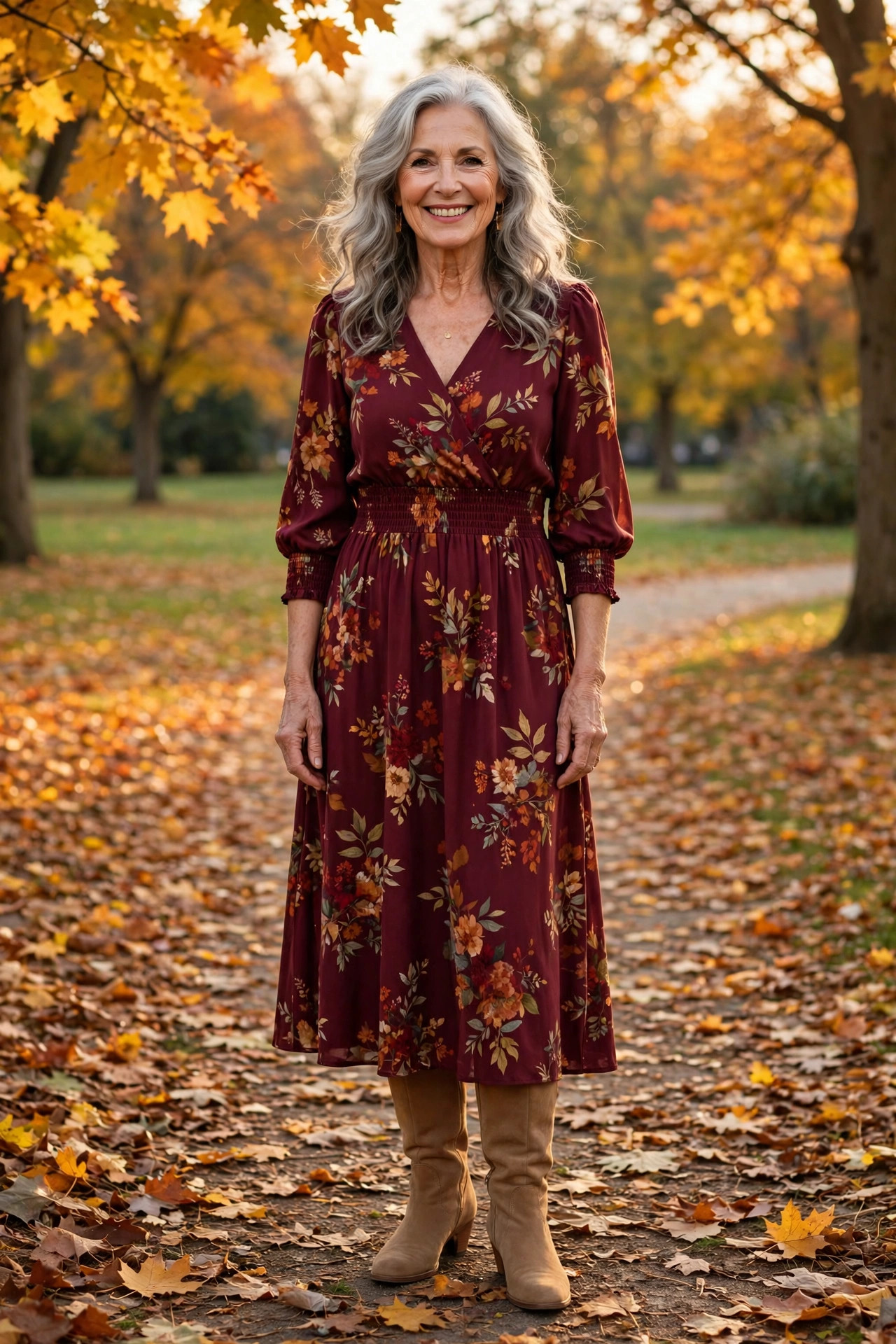
Smocking is the quiet genius of dress design: an elasticated panel that stretches exactly where you need it and gathers the fabric into soft, forgiving folds everywhere else. A midi dress with a smocked waist or smocked back in a fall floral or rich solid skims the entire torso without a single tight seam.
The knee boot is doing real work here. A boot that ends just below the knee with a midi hem creates a long, unbroken leg line, and the slight heel lifts your posture — standing taller instantly flattens the stomach’s appearance. Choose a dress with sleeves (three-quarter is perfect) to balance the proportions, and you’ve got a one-and-done outfit for dinners, events, and everything between.
8. The Shacket Over a Knit Dress
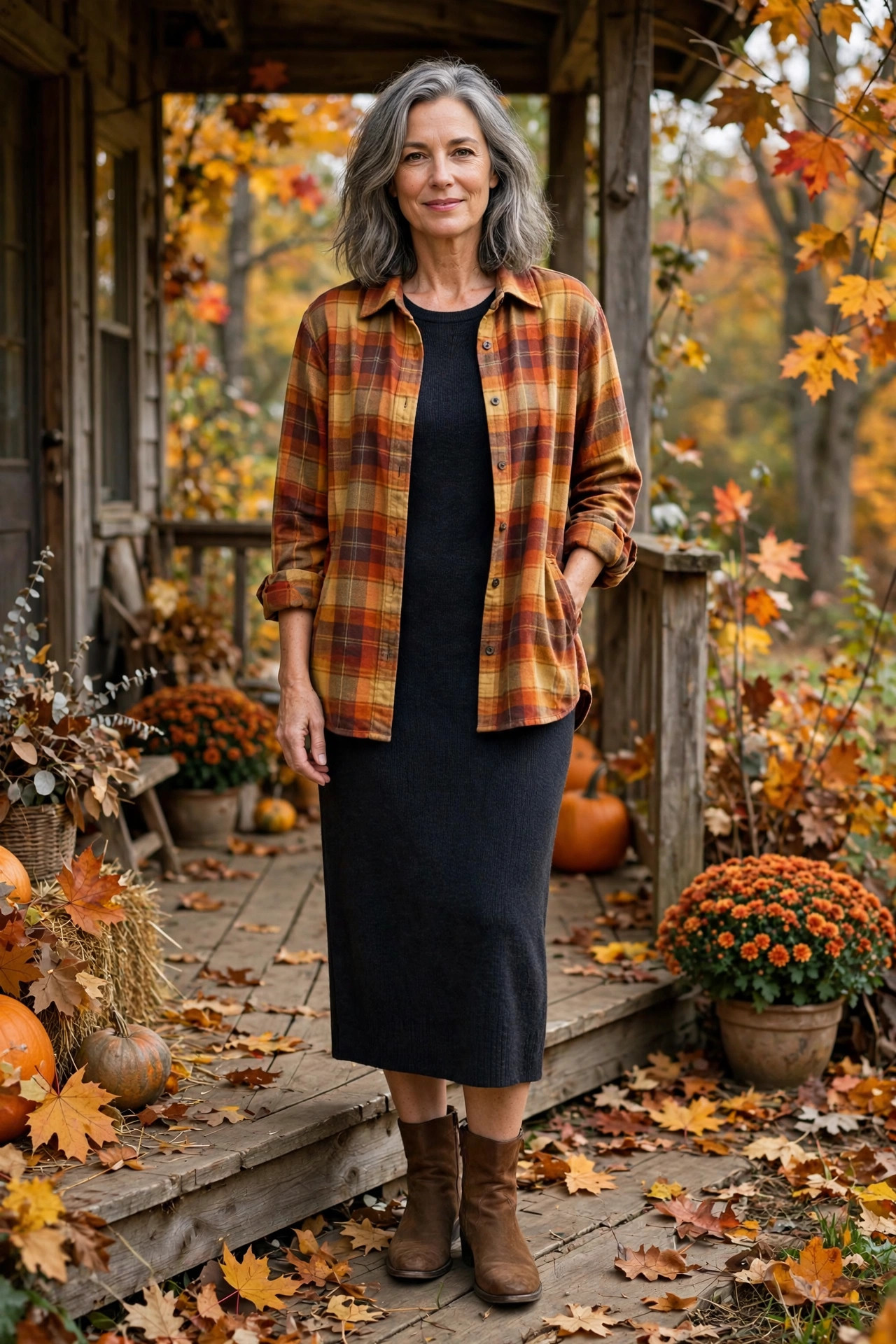
The shirt-jacket — heavier than a shirt, lighter than a coat — is fall’s hardest-working layer, and it’s a tummy’s ally for one reason: structure without bulk. Worn open over a straight knit dress or dark jeans and a bodysuit-style top, it adds those vertical front edges while the slightly boxy cut floats free of the midsection.
Look for a shacket that hits mid-hip to upper-thigh, in brushed flannel, moleskin, or a wool blend. Button just the middle button if you want a hint of shape — it creates an hourglass suggestion without touching the tummy. Roll the sleeves once, add loafers or ankle boots, and you have the weekend uniform that looks effortlessly pulled-together.
The Do / Don’t Table (Tape This Inside Your Closet)
| DO ✅ | DON’T ❌ |
|---|---|
| Hemlines ending mid-hip or mid-thigh | Tops ending exactly at the widest point of the tummy |
| Open third pieces (cardigans, blazers, coats) | Cropped boxy jackets that cut you at the waist |
| High-rise bottoms (10.5″+ rise) | Low- or mid-rise jeans that create a muffin top |
| Mid-weight fabrics with structure | Tissue-thin jersey that maps every curve |
| V-necks and long pendants | Tight crew necks that shorten the torso visually |
| One dark color head-to-toe | High-contrast waistbands (white top + black belt + light jeans) |
| Define shoulders or neckline | Empire waists that tent outward from the bust |
Frequently Asked Questions
Should I size up to hide my tummy?
Almost never. Sizing up adds volume everywhere — shoulders, bust, hips — and you end up looking bigger overall. Buy your true size in structured fabrics, and let silhouette do the hiding: A-lines, wraps, and open layers. The only exception is an oversized blazer or shacket worn deliberately as a third piece, where the boxiness is the point.
Are leggings okay over 50 if I have a tummy?
Yes — with rules. Choose a thick, high-rise ponte legging (not tissue-thin athletic fabric), and always pair it with a top that covers the hip and upper thigh: a long cardigan, a tunic, a shacket. The legging is the base layer, never the whole outfit. Done this way, it’s one of the most comfortable flattering combinations in this list.
What about tucking in my top?
A full tuck works when the bottom is high-rise and structured — the waistband becomes a smooth anchor. A French tuck (front corner only) works with softer trousers. What doesn’t work: tucking into low-rise anything, or into thin unlined pants where the tucked fabric bunches. When in doubt, leave it untucked at mid-hip length.
Do prints or solids flatter a tummy more?
Small-to-medium prints in dark grounds are wonderfully forgiving — they break up the surface so the eye can’t trace a curve. But a solid dark column with an open layer beats a busy print worn alone. My ranking: dark solid + open third piece first, dark-ground print second, light solid alone last.
Can I wear a belt if I have a tummy?
Yes, but placement is everything. A belt cinched at the natural waist over a dress or coat emphasizes the narrowest point and looks fantastic. A belt jammed into jean loops at the hip over a soft tummy just creates a shelf. Rule of thumb: belt over structure (coats, blazers, shirt dresses), skip it over soft knits.
The Real Secret
Here’s what two decades of buying taught me that no magazine will print: the tummy was never the problem — the outfit’s architecture was. Every woman in this article’s photos has a real, lived-in midsection. What changed wasn’t her body; it was where the hem landed, where the fabric floated, where the eye was invited to travel. Fall gives you the best building materials of the year — wool, structure, layers, boots. Use them like an architect, not an apologist. You don’t need to hide. You need a better blueprint.