
STYLE ADVICE • 10-MINUTE READ
I’m a Retired Psychologist, 72:
These Are the 10 Signs Someone Is Truly Lonely
For forty years, lonely people sat in my office and told me everything was fine. None of them looked the way you think lonely looks. Here’s what I actually learned to watch for — and the first thing to go is always the lipstick.
Forty years of listening, two years of being retired. I finally have time to tell you what the couch taught me. (Photo: Balibili)
I retired two years ago at seventy, after forty years as a clinical psychologist. Here’s what nobody tells you about that job: my patients almost never said the word “lonely.” They said “everyone’s busy.” They said “I don’t want to be a burden.” They said “I’m fine” with the speed of people who have rehearsed it in the car on the way over.
And here’s the part that still surprises people at dinner parties: the loneliest patients were rarely the quiet ones sitting home alone. They were the busy ones, the funny ones, the ones who hosted the book club and knew everyone’s birthday. Loneliness doesn’t look like an empty apartment. It looks like a full calendar and an empty heart, and after four decades I can spot it the way a former fashion buyer spots a fake handbag — by the stitching nobody else checks.
This is a style blog, so let me give you the thread that ties it all together: loneliness undresses you before it does anything else. The first thing to go is the lipstick. The second is the earrings. The third is the reason to get out of the bathrobe before noon. Nobody warned me about that in graduate school, but forty years of watching women walk into my office taught me: the wardrobe tells the truth before the mouth does.
The Myth vs. My Waiting Room
| What you picture when you hear “lonely” | Who actually sat on my couch |
|---|---|
| A woman alone in an empty apartment | A woman with a packed social calendar and no one she’d call at 2 a.m. |
| Someone quiet and withdrawn | The funniest person in every room she enters |
| Someone who never leaves the house | Someone who is never, ever home — and hates the silence when she is |
| Someone sad and tearful | Someone who laughs so loudly you never think to ask |
| Someone who’s given up | Someone who helps absolutely everyone else |
| Someone with no memories worth keeping | Someone who lives entirely inside her memories |
1. They’re the Busiest Person You Know

The armor of the over-scheduled: if every hour is full, you never have to feel the empty ones. (Photo: Balibili)
One of my patients — a widow of three years, sharp as a tack — had a calendar that would exhaust a cruise director. Bridge Monday, volunteering Tuesday, church Wednesday, the grandkids Thursday, book club Friday. I asked her once what she did on a free Sunday afternoon. She stared at me like I’d asked her to defuse something.
Over-scheduling is loneliness wearing a disguise. The logic is impeccable: if my calendar is full, I’m not lonely, I’m popular. But watch what fills the calendar — committee meetings, group outings, tasks. Almost never an unstructured hour with one person who might ask how she really is. Busyness is the noise you make so you don’t hear the quiet.
The tell: a calendar full of events and zero plans that involve being truly known. Ask about a free evening and watch the panic flicker.
2. They Laugh Loudly and Answer “Fine” at Lightning Speed

Listen for the speed of “fine.” The longer it’s been rehearsed, the faster it comes out. (Photo: Balibili)
In forty years, I learned to time it. “How are you?” — and the answer arrives before the question has finished landing. Fine. Great. Can’t complain. The speed is the tell. People who are actually fine pause, consider, and give you something real — “tired, honestly” or “pretty good, the garden’s finally behaving.” People who are lonely have a press release ready.
And the laughter! My loneliest patients were often my funniest. Humor is a brilliant social strategy — it keeps people near you and keeps them from looking too closely at the same time. If someone is always “on,” always performing the good time, you may be watching a one-woman show with an empty theater behind it.
The tell: “Fine” arrives in under a second, and the laughter is always a decibel louder than the room requires.
3. Their House Is Too Clean and Too Quiet

A lived-in home has evidence: two mugs, a jacket on a chair. The lonely home looks staged. (Photo: Balibili)
I did home visits early in my career, and I will never forget the difference. A connected person’s home has beautiful chaos — the crossword half-done on the table, a sweater draped where someone left it mid-conversation, two wine glasses from last night. A lonely person’s home looks like a showroom. Everything in its place. Nothing touched. A museum of a life being maintained rather than lived.
I’m not diagnosing your housekeeping. I’m telling you that loneliness is the world’s most meticulous housekeeper — because when no one is coming over, you clean for the silence. You arrange the pillows because arranging something is better than sitting with nothing.
The tell: a home with no evidence of interruption. No second mug. No chair pulled out. Everything exactly where it was yesterday, and the day before.
4. They’ve Stopped Inviting Anyone In

The invitation with no date is a goodbye wearing a smile. (Photo: Balibili)
Here’s a sentence I heard a hundred times: “We should get together sometime!” Said warmly. Meant sincerely. Followed by absolutely nothing. Loneliness shrinks hospitality in stages — first the dinner parties stop, then the coffee dates, then even the casual drop-bys. What’s left is the ghost of an invitation: all warmth, no date, no time, no follow-through.
It’s not rudeness. It’s protection. Inviting someone in means risking that they see the quiet, the single plate drying by the sink, the way the house goes still at 6 p.m. So the lonely person stops issuing invitations with addresses on them and starts issuing sentiments. “We should!” is the loneliest sentence in the English language.
The tell: warmth with no logistics. If someone says “we should get together” three times and never names a day, they’re not busy — they’re hiding.
5. They Handle Everything Alone and Call It “Not Being a Burden”

Independence is a virtue. Refusing all help is a hiding place. (Photo: Balibili)
“I don’t want to be a burden” is the national anthem of my generation, and I have complicated feelings about it. Yes, self-reliance is admirable. But I watched patient after patient turn independence into a wall — declining rides, refusing help with the heavy bag, insisting the doctor’s appointment was “nothing, just routine” while sitting alone in the waiting room for three hours.
Here’s what forty years taught me: people who are connected let themselves be helped. They know that needing someone is the admission ticket to closeness, not a debt. The lonely person has rewritten the contract: I will need no one, so no one has to need me, so no one can leave me. It’s flawless logic and a terrible life.
The tell: pride in never asking. If someone brags that they haven’t asked anyone for anything in years, that’s not strength talking — that’s fear with good posture.
6. They Live Entirely in the Past Tense

Nostalgia is healthy in doses. When it’s the only furniture in the room, it’s a sign. (Photo: Balibili)
Listen to the verbs. “We used to go every summer.” “He always said.” “In those days.” Memory is a wonderful roommate until it becomes the only one. I had patients who could describe a dinner from 1987 in perfect detail and couldn’t tell me one thing they’d done last week — because last week, nothing happened worth describing.
Nostalgia isn’t the enemy. The enemy is when the past becomes the address where someone lives because the present feels uninhabited. A healthy memory is a photo album you visit. An unhealthy one is a house you never leave.
The tell: every story starts more than ten years ago, and there’s a wistful pause after each one — like she’s checking whether the room she’s actually in still exists.
7. They’ve Stopped Getting Dressed With Care

The wardrobe tells the truth before the mouth does. The robe at 3 p.m. is a confession. (Photo: Balibili)
This one I could spot from the waiting room. The woman who used to arrive in a pressed blouse and lipstick starts arriving in the same fleece three weeks running. The earrings disappear. The hair that was always done is now “just easier this way.” And when I asked — gently — what changed, the answer was always some version of: “Nobody sees me anyway.”
There it is. Four words that contain the whole diagnosis. Getting dressed is a vote you cast every morning that today is worth showing up for. When the audience disappears, the performance stops — and then, cruelly, stopping the performance makes the isolation worse, because you stop being someone people want to be around. It’s a spiral, and it starts in the closet.
I’ll say it plainly because this is a style blog and somebody has to: the bathrobe at 3 p.m. is not a comfort choice. It’s a white flag. And the beautiful thing about a white flag is that you can take it down any morning you choose.
The tell: a closet full of beautiful clothes going unworn, and the sentence “what’s the point” said about lipstick, earrings, or a proper shoe.
8. They’re Everyone’s Helper and Nobody’s Confidant
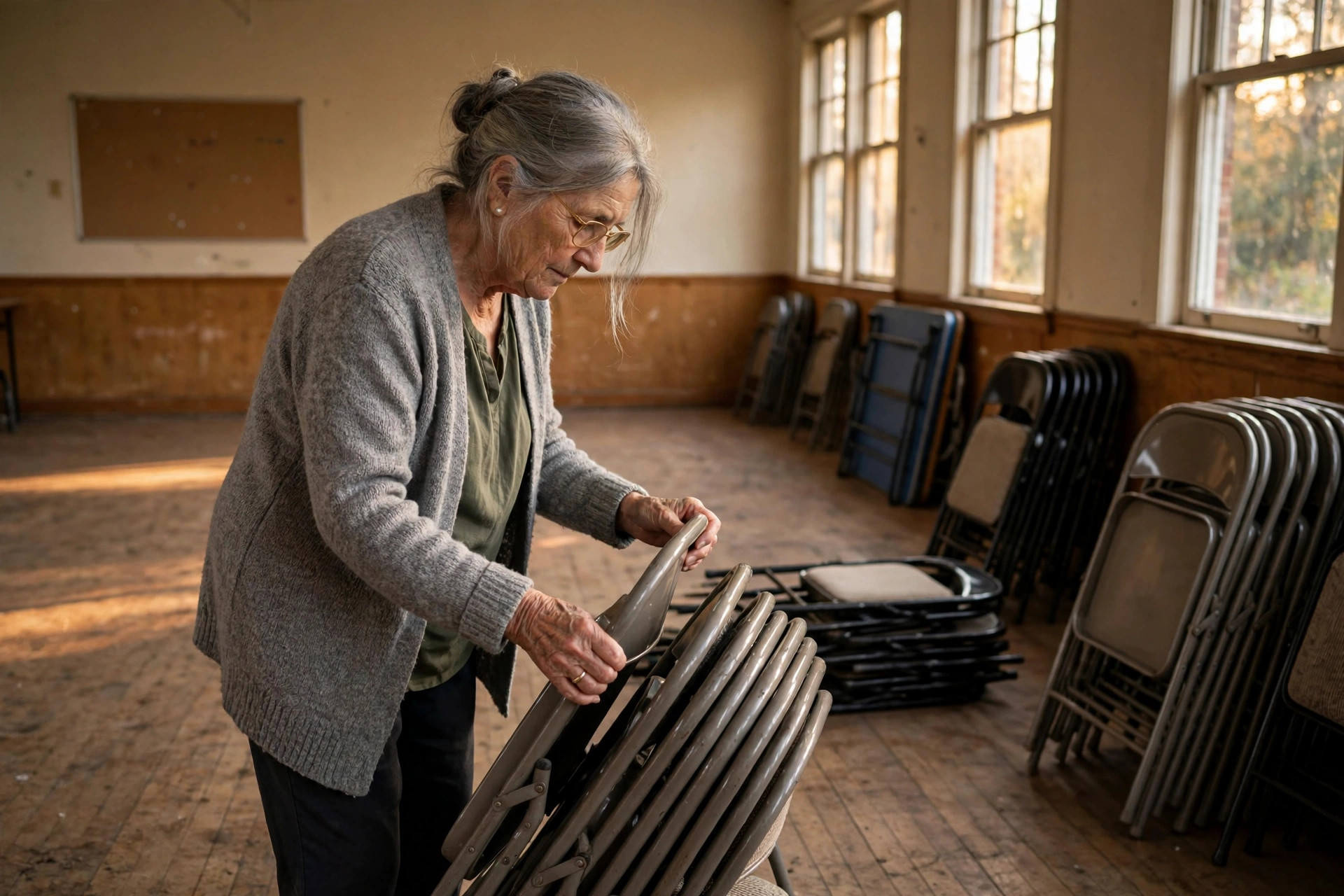
Service is a brilliant way to be near people without being known by them. (Photo: Balibili)
She runs the food drive. She drives the neighbor to chemo. She stays late stacking chairs after every event. Everyone loves her. No one knows her. This was one of the hardest patterns to explain to families, because how can the woman who does everything for everyone be lonely? Easily. Service is proximity without intimacy — you can be in a room full of grateful people and never once be asked how your heart is doing.
I’m not criticizing generosity. I’m pointing at the asymmetry: she knows everyone’s struggles and no one knows hers. Helping became her ticket into rooms where she didn’t have to risk being seen. It’s noble, it’s useful, and it’s a hiding place with excellent lighting.
The tell: ask who she confides in, and watch the pause. Everyone’s helper usually has no one on her own list.
9. They’ve Outsourced Company to the Screen, the Phone, the Pet

The cat is lovely. The cat does not ask how your heart is. (Photo: Balibili)
“I have my shows.” “The cat keeps me company.” “I’m on that phone thing all day.” I heard it constantly, and let me be clear: pets are wonderful, and a good series is a legitimate joy. The sign isn’t the screen or the cat. It’s the substitution — when the television becomes the dinner companion, the phone becomes the confidant, and the pet becomes the only living thing that notices your moods.
Substitutes are comfortable because they never ask for anything real. The television doesn’t notice you’ve been crying. The phone doesn’t ask follow-up questions. The cat, bless her, loves you unconditionally and knows nothing about your grief. That’s exactly why they’re safe — and exactly why they can’t fix it.
The tell: “company” that requires nothing of her and gives nothing back but noise. Four hours of scrolling described as “keeping up with everyone.”
10. They Stopped Marking Milestones
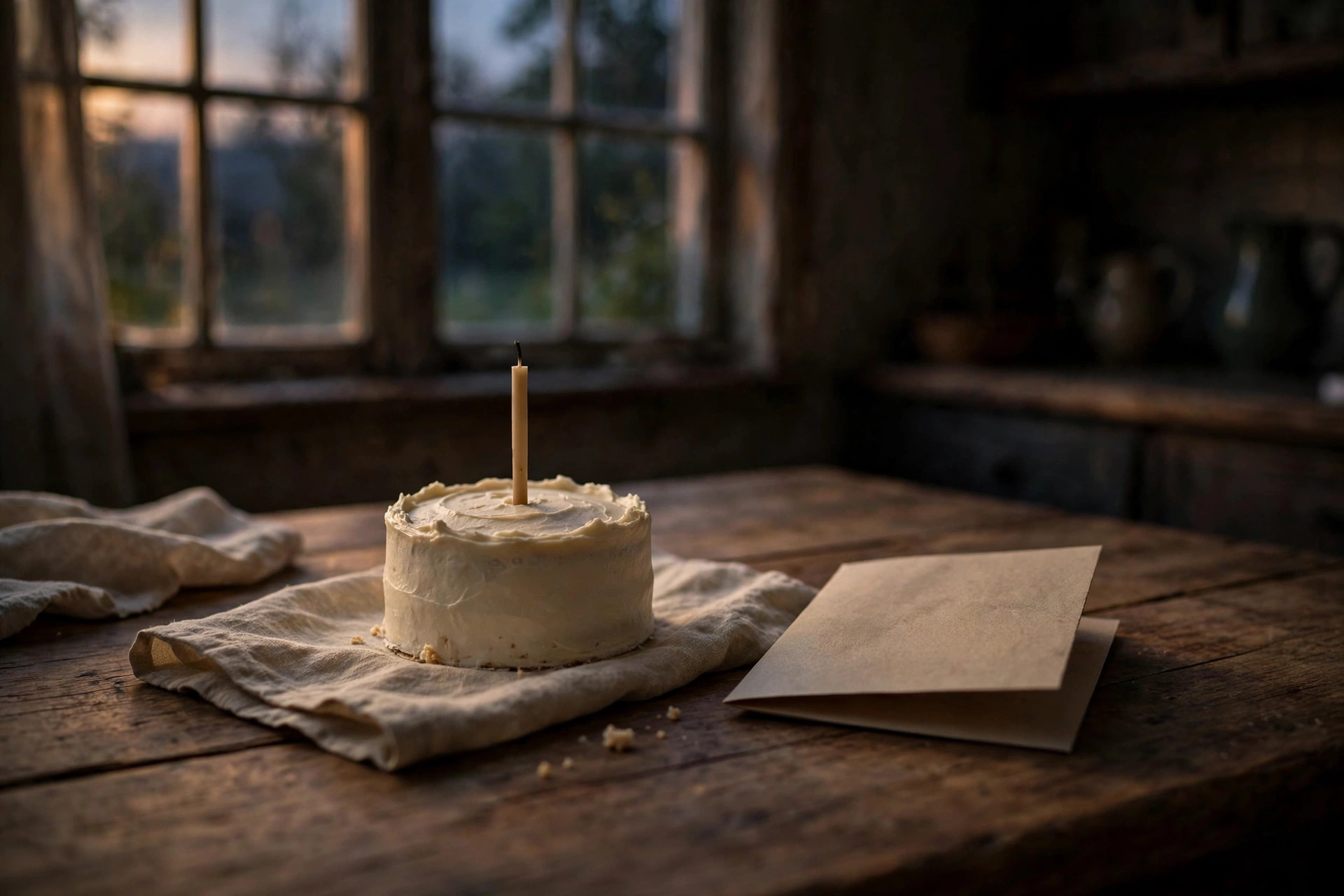
“Don’t make a fuss” is often the loneliest sentence a person can say about their own birthday. (Photo: Balibili)
“Don’t make a fuss.” “It’s just another day.” “I told them not to bother.” I want you to hear what I heard in those sentences across forty years: a person preemptively declining celebration so she doesn’t have to feel the absence of people celebrating her. If you cancel the party, you can’t be disappointed that no one came.
Refusing celebration is refusing to be celebrated — and the day you stop letting people mark your milestones, you’ve told them you don’t matter, and started believing it yourself. Birthdays, anniversaries, the small wins: these are the punctuation marks of a life being witnessed. Take them away and the sentences all run together into one long, quiet paragraph.
The tell: milestones pass unmentioned, unmarked, deliberately minimized — especially the birthday.
If You Recognize Someone You Love in This List
| Do this | Not this |
|---|---|
| Show up unannounced with soup | Say “call me if you need anything” (she never will) |
| Invite her to small, low-pressure things — a walk, a cup of tea | Invite her to one big party and call it enough |
| Ask a second question after “I’m fine” | Accept the first answer and change the subject |
| Notice when she dresses up — and say so out loud | Only comment on how she looks when she’s down (“you look tired”) |
| Be regular: same day, same time, every week | Be intense for two weeks, then disappear |
| Ask her for help or advice — let her matter to you | Treat her like a project to be fixed |
Questions I Got Asked About This for Forty Years
Can you be lonely without living alone?
Absolutely — some of my loneliest patients were married. Loneliness isn’t about the number of people in the house; it’s about the number of people who truly know you. You can share a bed with someone for thirty years and still be the only person who knows you’re drowning. Proximity is not intimacy.
What’s the difference between being alone and being lonely?
Solitude is chosen; loneliness is imposed. The woman who spends a happy Saturday alone with her garden and her thoughts is practicing solitude. The woman who spends Saturday alone because no one called — and tells herself she prefers it — is practicing loneliness. The feeling, not the circumstance, is the diagnosis.
My mother refuses all help. How do I reach her?
Stop offering help and start asking for hers. The fiercely independent lonely person will decline every casserole and accept every request for advice. Ask her opinion. Ask her to teach you something. Needing her is the one invitation she can’t frame as charity — and being needed is the fastest road back to feeling she matters.
Can loneliness really affect your health?
Yes, and this isn’t sentiment — researchers have linked chronic loneliness to worse heart health, weaker immunity, and poorer sleep, on a scale that gets compared to better-known risks. I watched it in my practice for decades: the lonely patients got sick more often and recovered more slowly. Connection isn’t a luxury good. It’s maintenance.
What if I see myself in this list?
Then this article did its job, and I want you to hear this clearly: recognizing it is the beginning, not the verdict. Loneliness is a state, not a trait. Start embarrassingly small — get dressed tomorrow morning like someone is coming to see you. Then call one person and name an actual day. Small is how every big change I ever witnessed began.
Why does getting dressed matter so much?
Because it’s the smallest daily proof that you expect to be seen. When you put on the earrings, you’re telling the world — and yourself — that you count today. I watched women come back to life starting with nothing more than lipstick and a reason. Never underestimate a small ritual performed with intention.
The real secret? Nobody is coming to rescue you from an empty calendar — and that’s the good news, because the rescue was never supposed to come from outside. Every patient I ever watched get un-lonely did the same first thing: she decided she was worth showing up for. So start tomorrow morning. Get dressed like someone is coming to see you. Put on the earrings. Then pick up the phone and invite someone — with an actual date on it. Forty years of listening taught me that loneliness ends the same way it begins: one small decision, repeated daily, until the quiet stops being the whole story.