STYLE ADVICE • 6-MINUTE READ
Painful Realities of Outliving Your Friends
And Why Getting Dressed Anyway Is an Act of Love
Nobody warns you about this part of getting older. The scarf borrowed one last time. The lunch table with one fewer chair. The quiet understanding that every phone call now starts with good news — because you’d rather not hear the other kind. Here’s what no one says out loud about outliving your people — and the style wisdom that carries you through it.
You are still here. Dress like it means something — because it does.
I have started a terrible new habit. Every time I fall in love with a beautiful piece now, I catch myself thinking: who will I call to show this to? Then I remember — half the women on my speed dial are gone.
By your sixties, the math turns on you. Childhood friends, college roommates, work wives, the neighbor who borrowed sugar and returned wisdom — one by one, the chairs around the table start emptying. Nobody writes a guide for this. So let me be honest with you the way a friend would be: here are the painful realities, and the one thing that still belongs entirely to you.
| The Painful Reality | What Nobody Tells You |
|---|---|
| The circle gets smaller | It’s not just loss — it’s losing your own history. They were the last people who remembered you at 25. |
| You become the keeper | You inherit the photos, the stories, the inside jokes. And a wardrobe of memories nobody else wants. |
| People stop asking how you are | After the sympathy window closes, the world assumes you’re fine. You’re not fine. You’re adjusting. |
| Your own identity shifts | You were “Joanne’s friend” or “the one from bridge club.” When they’re gone, who are you getting dressed as? |
| New tables feel disloyal | Laughing with new people can feel like betrayal. It’s not. It’s survival with better shoes. |
1. The Chair Is Empty, and Everyone Pretends It Isn’t
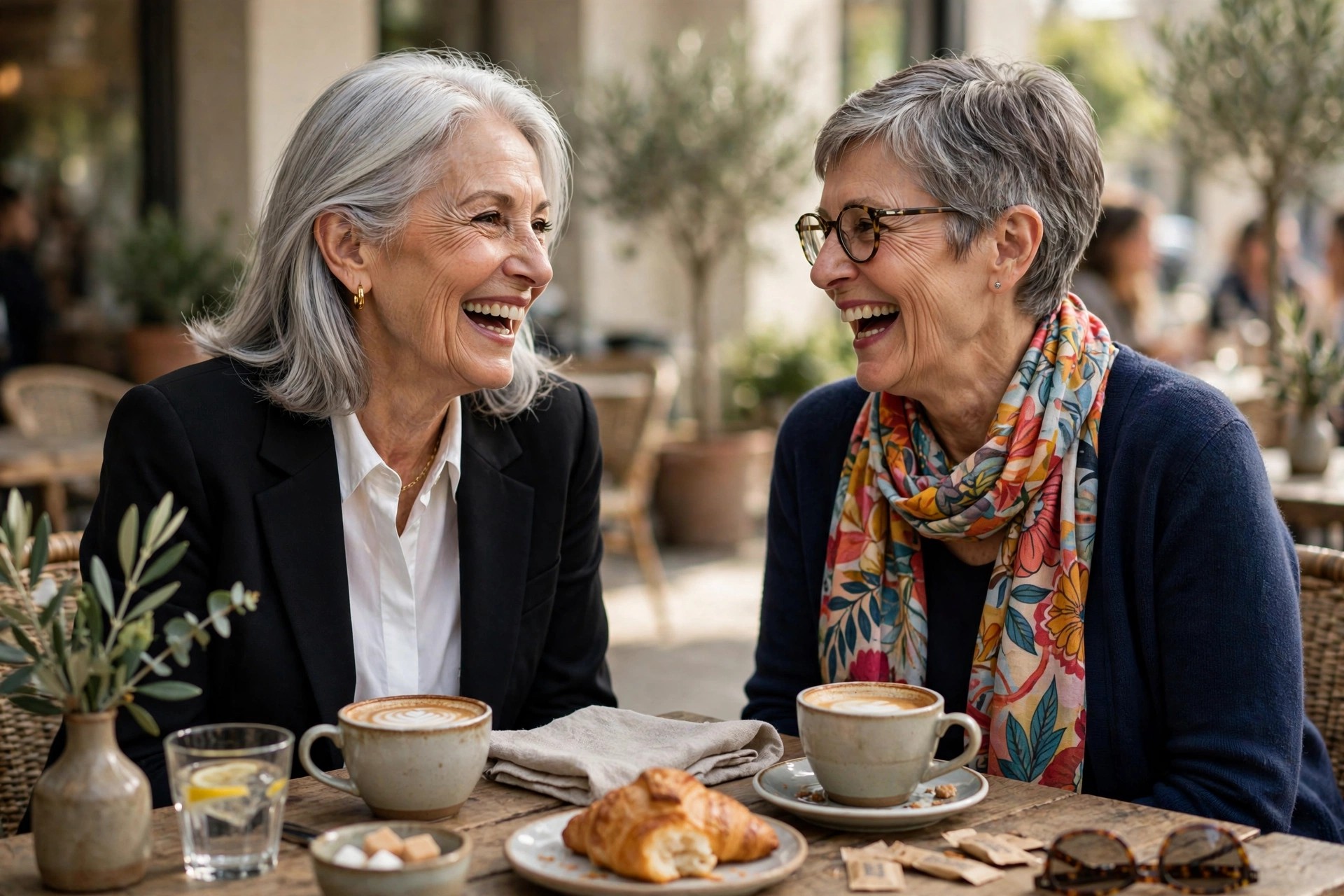
Honor the friendships you had — and let the joy of them teach you how to keep going.
Here’s the first painful reality: after the funeral, after the casseroles stop arriving, people behave as though the table was always this size. You are the only one who still counts the chairs. That’s a lonely, strange kind of grief — mourning not just the person, but the version of your life that included them.
Don’t let anyone rush you past this. But don’t set up camp in it either. The friends you lost would be horrified to think their leaving became the excuse you stopped showing up for your own life. I keep that thought like a pebble in my shoe — uncomfortable, and it keeps me walking.
2. Your Closet Still Has a Job to Do
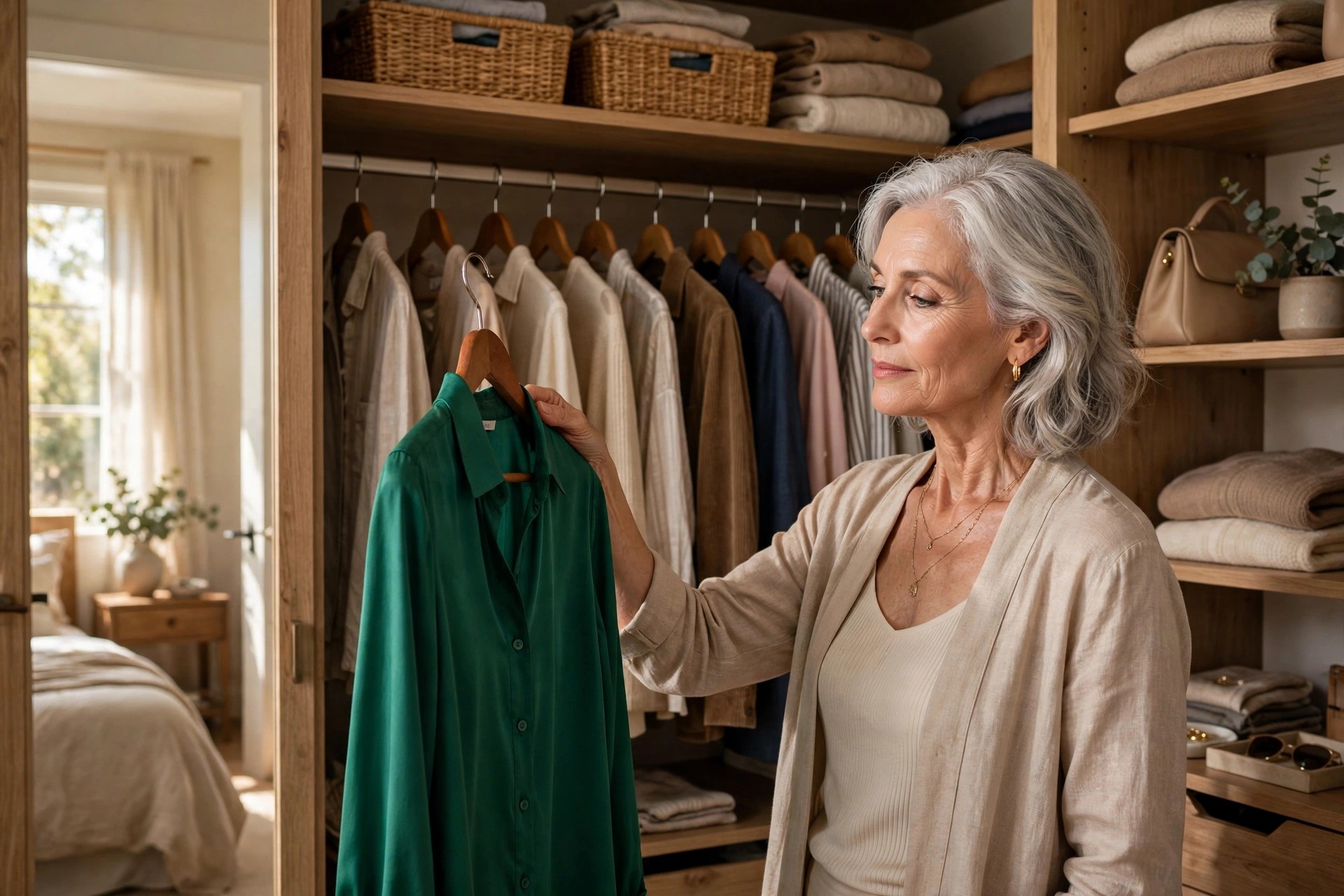
Grief wants you in grey sweats. Your closet disagrees.
When my dearest friend passed, I spent three weeks in the same shapeless cardigan. It felt honest. It also felt like disappearing — and I had already lost enough people that year without losing myself.
Here’s the buyer-truth I learned over decades in fitting rooms: clothes are not frivolous in grief. They are scaffolding. The morning you choose the emerald blouse instead of the grey cardigan, you are making a decision about your life. Nobody else is coming to make it for you anymore — that was your friend’s job, the one who always said “take it off, it’s wearing you.” Now the voice has to be yours. Practice it daily.
3. Get Dressed When Nobody Is Watching
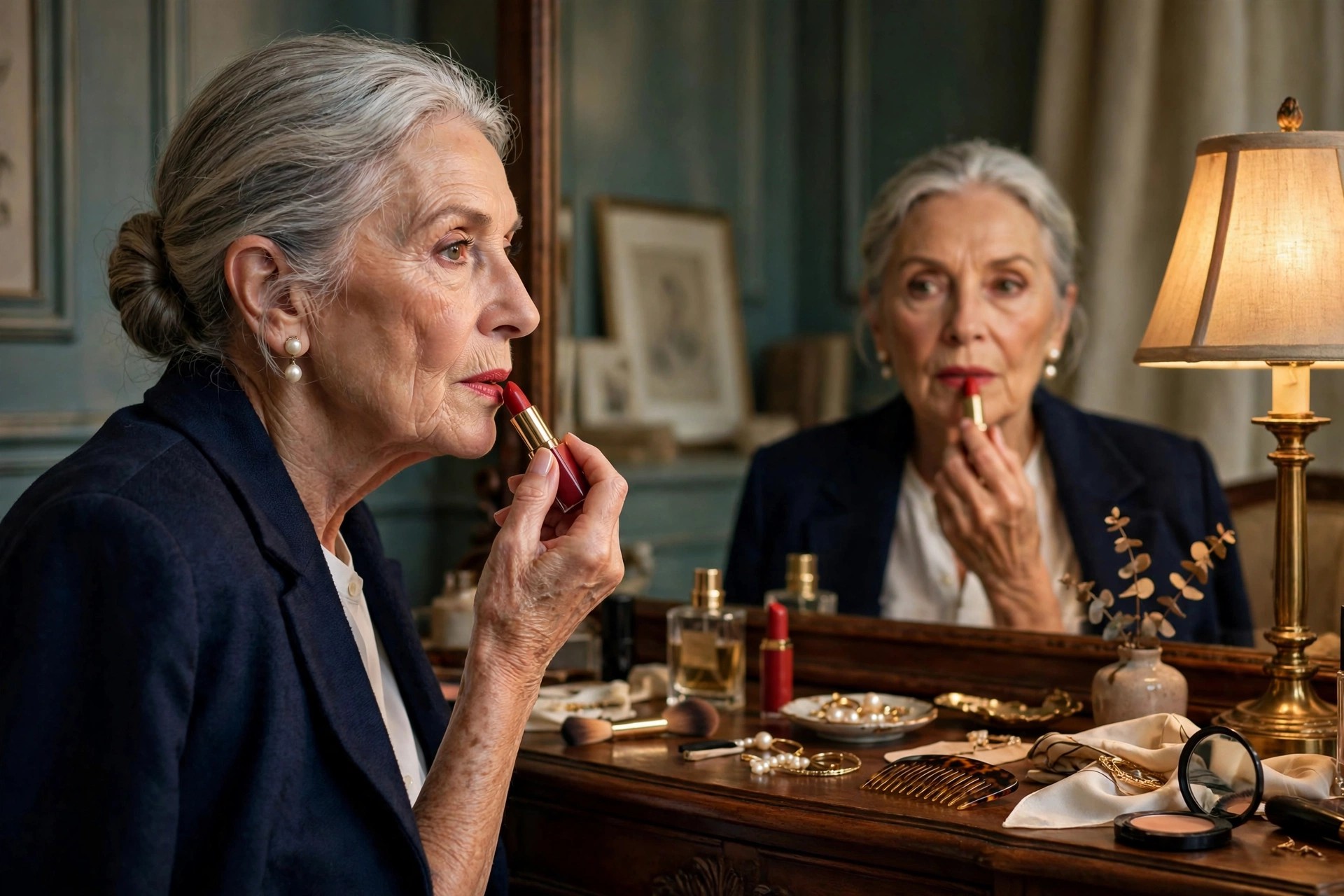
Lipstick with no audience is the purest form of self-respect.
This is the painful reality that stings most: so much of our dressing used to be for each other. The phone call — “what are you wearing tonight?” The knowing nod across a restaurant. When the audience of your life shrinks, it’s tempting to let the standard slide. Sweatpants become the uniform of a smaller life.
Refuse it. Put on the good earrings for the grocery run. Wear the silk blouse to water the plants. I am deadly serious: the woman who gets dressed for no one is the woman who still believes her own life is worth attending. Some mornings the lipstick is the only brave thing I do. That’s enough. Bravery counts in small doses.
4. Build the Wardrobe That Holds You Up
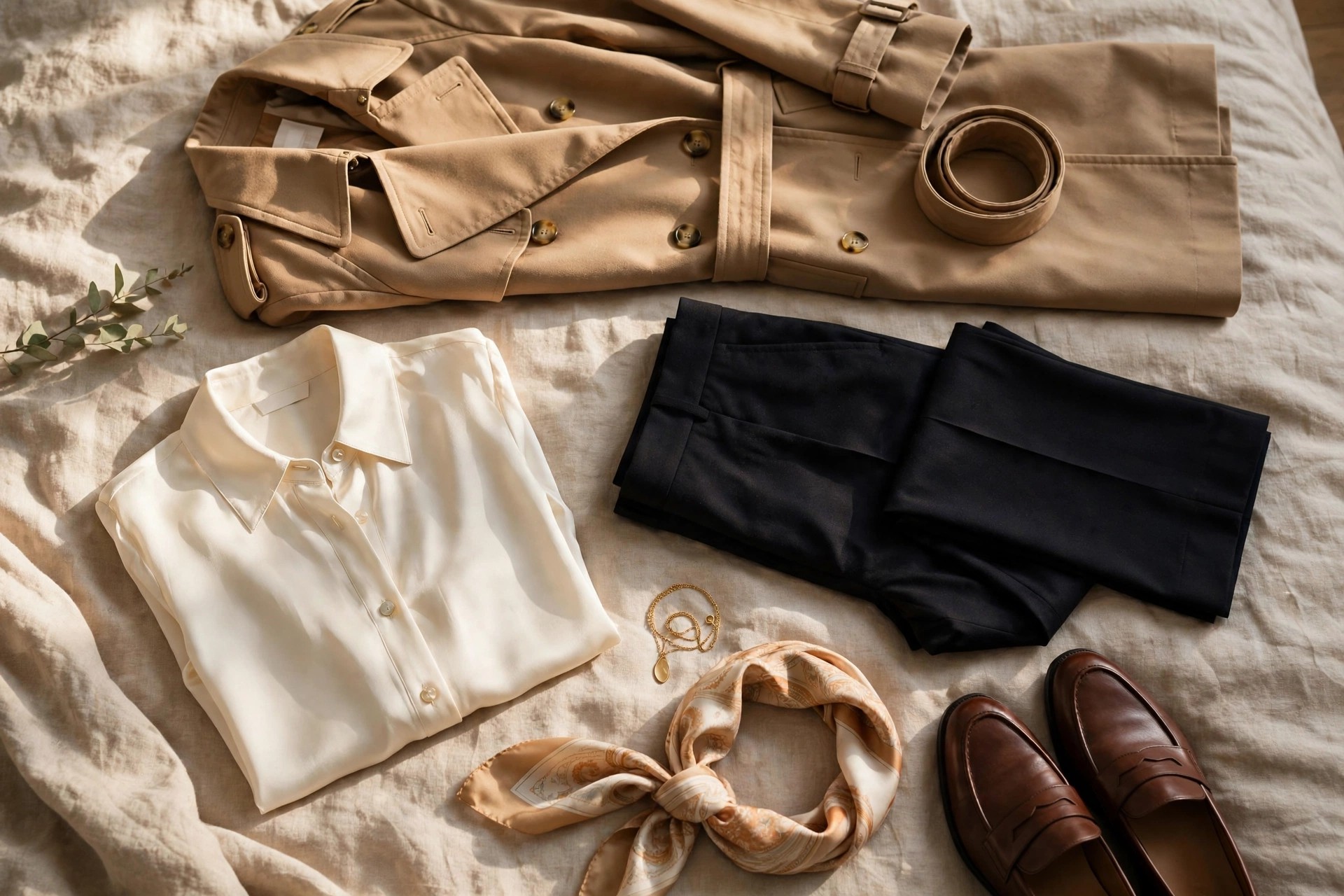
Seven pieces. Zero decisions on hard mornings.
Grief steals your decision-making energy. Protect it. Build a small arsenal of pieces that always work, that feel like you on your steadiest days, so your worst days don’t require a single choice:
| The Piece | Why It Works in a Hard Season |
|---|---|
| A perfect trench or structured coat | Instant posture. Instant armor. You stand differently the second it’s on. |
| One silk or fluid blouse in your best color | Soft against skin on days you feel fragile; photographs beautifully with friends old and new. |
| Trousers that fit like they were made for you | Get them tailored. A woman in well-cut trousers reads as a woman who has her life handled — even when she doesn’t. |
| The comfortable-but-beautiful shoe | Loafers, low block heels, polished flats. If your feet hurt, you’ll cancel the lunch. Don’t cancel the lunch. |
| A signature scent and a red lipstick | Two seconds, total transformation. Scent is memory — choose one that says this is who I am now. |
| One piece of jewelry with a story | Her brooch. Your mother’s ring. Wear the love, not the loss. |
Buy once, buy right. Quality over quantity was always the smart money — now it’s also the kind choice, to the woman you’ll be next year.
5. Walk Into New Rooms Anyway

The new table doesn’t replace the old one. It just means you’re still hungry for life.
The most painful reality of all: you have to make new friends. At 65. When it took forty years to build the old ones. It feels impossible, and occasionally it feels disloyal — laughing over coffee with someone new while your oldest friend’s voice is still in your head.
Do it anyway. The gallery opening. The lecture series. The volunteer shift. The travel group for women traveling solo. And here’s the style secret for walking into rooms where you know no one: wear your confidence piece. The blazer that always gets compliments. The scarf in the color that makes your eyes look alive. When you feel like yourself, you act like someone worth knowing — because you are. New people can’t love the woman hiding in the cardigan. Let them meet the real one.
6. Wear Them With You
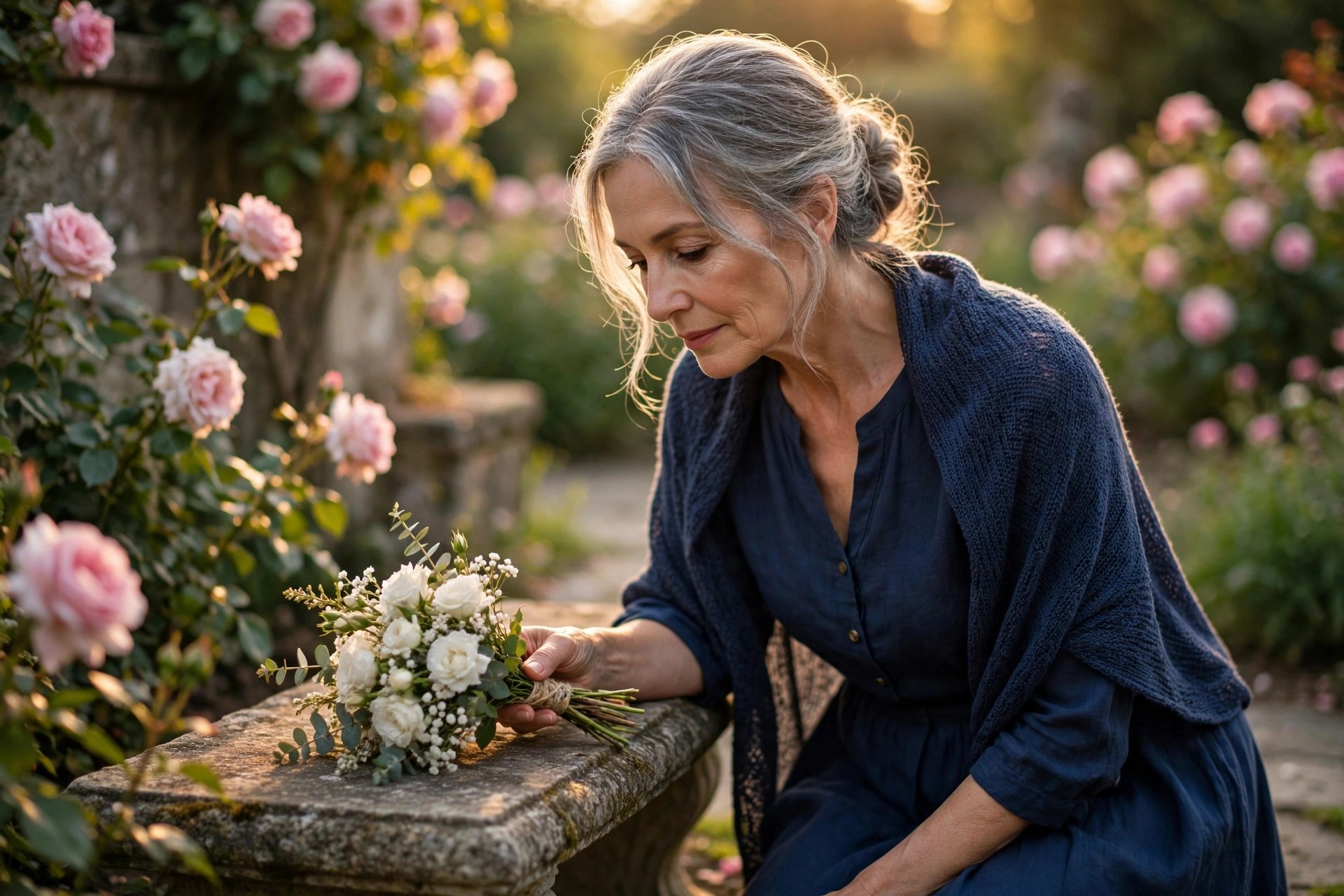
She loved that shade of blue. Now it’s yours.
Here’s what I wish someone had told me sooner: you don’t have to choose between honoring them and living. Wear her color on the anniversary. Put on the brooch she gave you for the hard appointments. Keep the rituals — the birthday flowers, the toast at the restaurant you both loved — but dress for them the way she’d want to see you: beautiful, upright, still in the game.
Grief counselors call this “continuing bonds.” I call it the best-dressed form of loyalty there is. They live on in your stories, your recipes, your laugh — and yes, in the emerald green she always said was your color. She was right. It still is.
| The Trap | The Graceful Move |
|---|---|
| Disappearing into shapeless comfort clothes | Choosing one beautiful thing every morning, even if it’s just lipstick |
| Refusing new invitations out of loyalty | Going — and wearing her brooch so she’s there too |
| Letting your style freeze at the age you lost them | Letting your style evolve, because you are still becoming |
| Hiding at home where it’s safe | One outing a week, dressed like the woman you intend to be |
Frequently Asked Questions
Is it vain to care about clothes while I’m grieving?
No. Vanity is dressing to impress strangers. This is dressing to hold yourself together. There’s a world of difference, and your friends — the ones who knew you — would be the first to tell you to put on the good shoes.
What do I do with my friend’s clothes she left me?
Keep the pieces with meaning — the scarf, the brooch, the coat she lived in — and wear them with love. Donate the rest to a women’s shelter or charity shop. Clothes that sit in a dark closet serve no one; clothes that get worn keep her in the world.
How do I dress for new social situations when I feel invisible?
Wear one conversation piece — a striking necklace, a beautiful color, an interesting texture. It gives new people something to compliment, and compliments are the fastest door into a conversation. Visibility is a skill. Practice it.
My tastes have changed since I lost her. Is that normal?
Completely. Grief rearranges everything, including your eye. Some women go bolder — life is short, wear the red. Some go simpler — fewer decisions, more peace. Both are correct. Follow the instinct; it’s your identity rebuilding itself.
Is it disloyal to make new friends and have fun?
Ask yourself this: if the positions were reversed, would you want her sitting alone in a dark house out of loyalty to you? Of course not. You’d want her at the good table, laughing, wearing something fabulous. Give yourself the same grace you’d give her.
What if I just can’t face getting dressed some days?
Then don’t. Grief has its grey days, and rest is not failure. But notice if the grey days become grey weeks — that’s the signal to reach for the emerald blouse, call someone, or talk to your doctor. Asking for help is the bravest outfit of all.

Still here. Still radiant. Still becoming.
Here’s the real secret, the one that took me years to learn: the friends we outlive don’t want us to dress in mourning for the rest of our lives. They want us to be the women they bragged about. Every morning you choose the beautiful thing over the invisible thing, you are keeping a promise to every friend who ever looked at you and said, “you look wonderful.”
You’re still here. That’s not a consolation prize — it’s the whole point. Dress like you believe it.
— Agatha