STYLE ADVICE • 9-MINUTE READ
The Best Handbags for Women Over 50:
Worth Every Penny of the Investment
After thirty years of buying handbags for a living, I can tell you the exact moment a bag stops being an accessory and starts being an asset. Here’s how to spot it.
A structured bag holds its shape, holds your essentials, and quietly holds the whole outfit together. Start there.
Let me tell you something the handbag industry doesn’t want you to believe: you don’t need twenty bags. You need seven — and you might already own three of them. I spent three decades as a fashion buyer, sitting across from tanneries in Italy and factory owners in Turkey, and the lesson that stuck is this: a great handbag is the fastest way to make a $60 outfit read $600. Nothing else in your closet pulls that trick. Not shoes, not jewelry, not the blazer.
But here’s the part nobody says out loud. After fifty, your bag is doing more than carrying your phone and lipstick. It’s framing your silhouette. A saggy, slouching bag drags your whole outfit — and your posture, visually — downward. A structured, well-proportioned bag does the opposite: it lifts. So this isn’t a shopping list. It’s a strategy.
These are the seven silhouettes worth your money, the five tired ones to retire, and the 30-second quality test I used in buying offices to separate a genuine investment from a pretty mistake.
| Bag | Best for | Why it earns its place |
|---|---|---|
| Structured satchel | Everyday polish | Holds its shape, frames your outfit |
| Buttery leather tote | Travel, grandkids, real life | Carries everything without the slump |
| Featherweight crossbody | Walking, markets, sightseeing | Hands-free security and ease |
| Evening clutch | Dinners, weddings, theater | The jewelry of your evening look |
| Woven summer bag | Warm weather, vacations | Instant freshness from May to September |
| Convertible hobo | Day-to-evening days | Two bags in one — shoulder or clutch |
| Chic mini | Going out light | Proof that proportion beats size |
1. The Structured Satchel — The Workhorse That Never Slouches
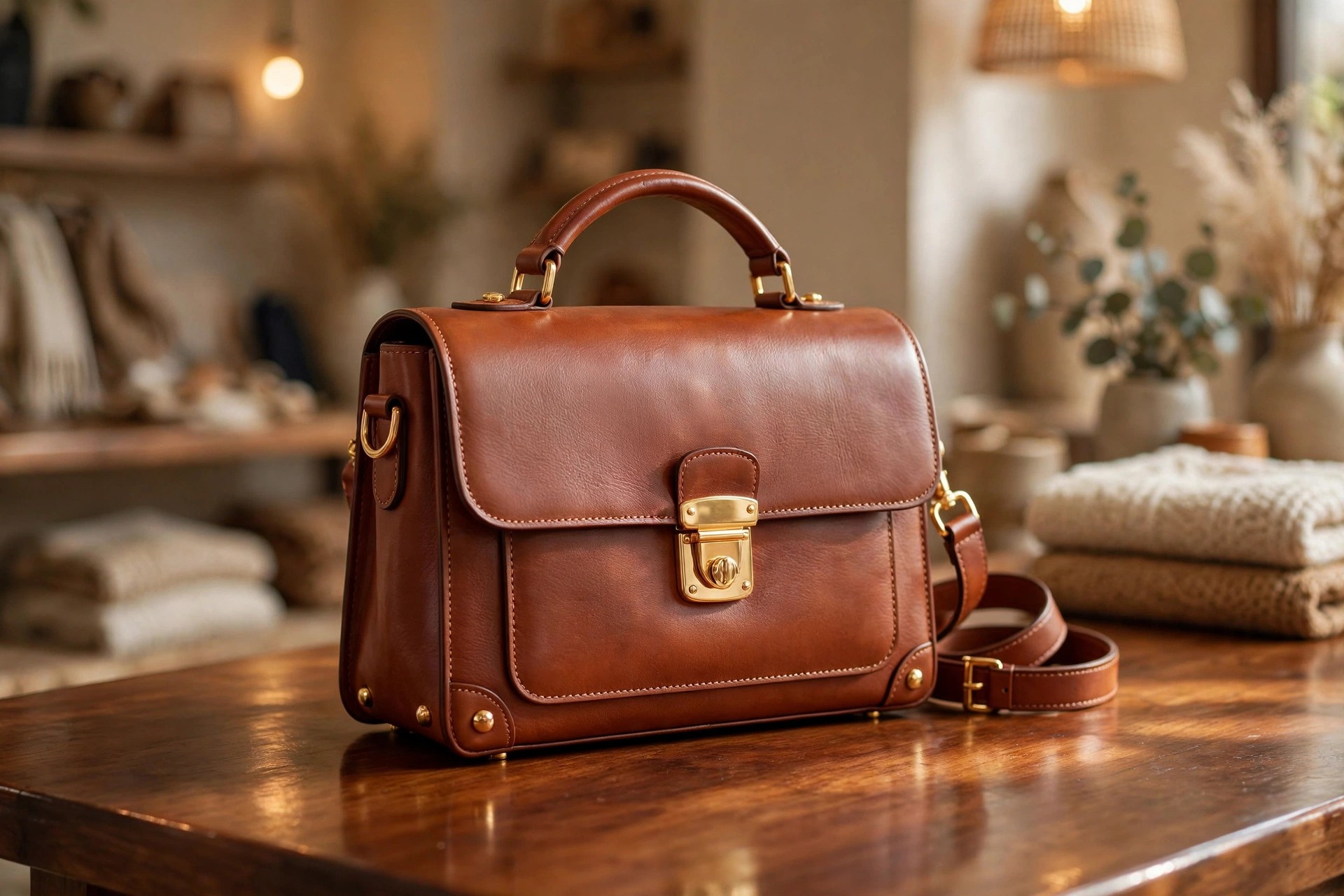
Look for clean lines, a reinforced base, and hardware that has some weight to it. This is the bag that never has an off day.
If you buy one bag this year, make it this one. A structured satchel is the handbag equivalent of a great haircut — it does the heavy lifting while you take the compliments. In the buying office, we called this category “architecture bags” because they behave like good architecture: they stand up on their own, they create clean lines, and they make everything around them look more intentional.
Here’s the buyer trick I still use: set the bag on a table in the store. If it stands upright, empty, it has structure worth paying for. If it collapses like a tired soufflé, walk away — that slouch will only get worse, and a collapsed bag adds ten invisible years to your look. Choose a medium size that sits just below your elbow when carried in the crook of your arm. Cognac, black, or deep navy in grained leather will outlast every trend cycle.
2. The Buttery Leather Tote — Carry Your World Without the Slump
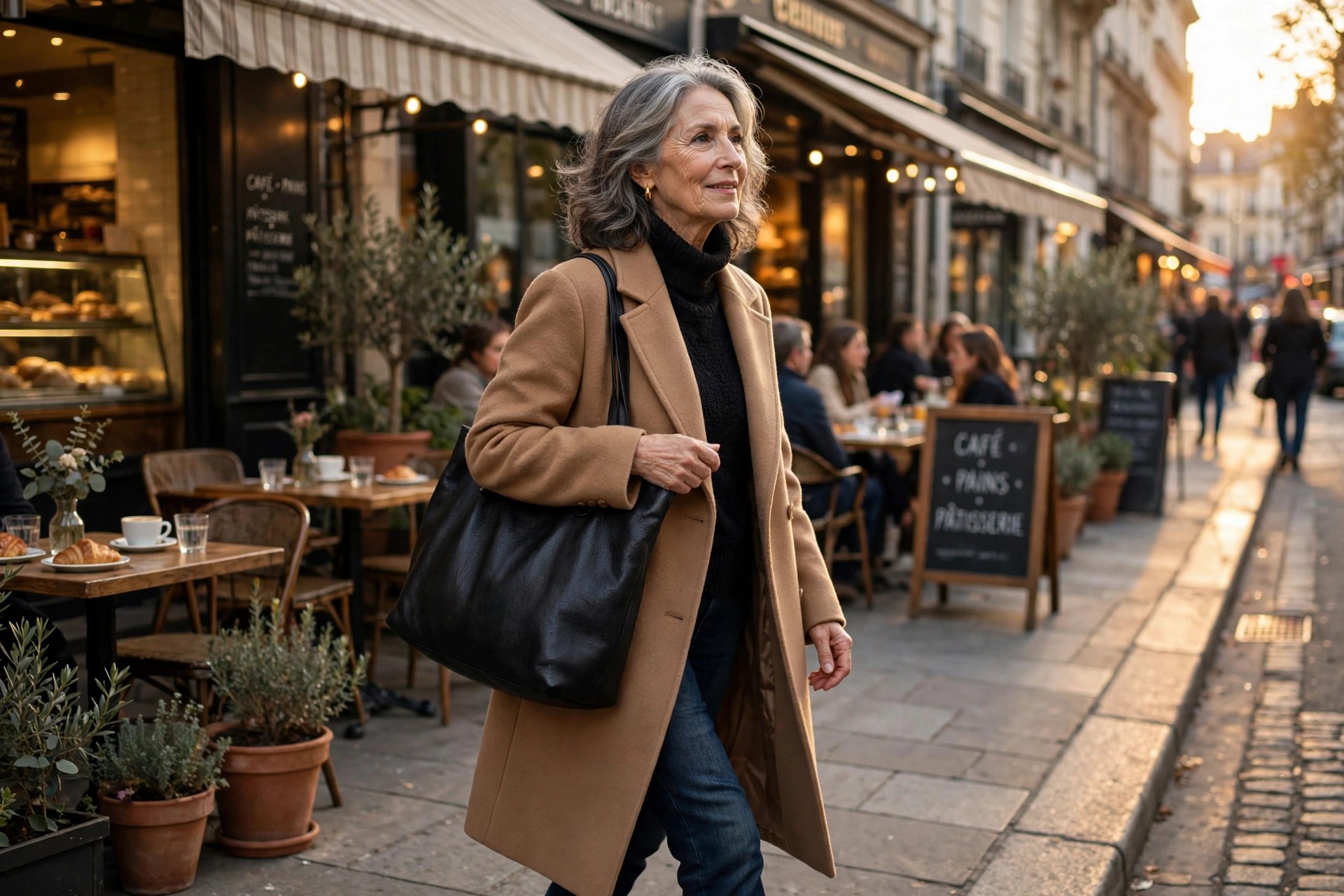
Wide enough for a paperback and a water bottle, light enough that your shoulder doesn’t file a complaint.
Every woman over fifty has a tote story: the one that stretched into a saddlebag, the one whose handles frayed mid-trip, the one that swallowed a full set of house keys and never returned them. A real investment tote avoids all three fates. The secret is in what buyers call “the hand” — press the leather between your fingers. It should feel soft but spring back, like a good handshake. That bounce means the hide was properly tanned and will age into a patina instead of a puddle.
My rule from the buying years: the tote should weigh under 800 grams empty. Anything heavier and you’ll start leaving it home, and the most beautiful bag in the world is worthless sitting in your closet. Look for interior pockets (at least three), a zip top if you travel, and handles that drop long enough to clear a coat sleeve. This is the bag for museum days, grandkid duty, and every carry-on situation life throws at you.
3. The Featherweight Crossbody — Hands-Free, Carefree

Worn across the body, it disappears into your silhouette — leaving your hands free for espresso, grandchildren, and gelato.
This is the bag that changed my life at 52, and I mean that literally. Walking the markets in Florence, hands free, camera out, I realized I’d been carrying my life wrong for decades. A crossbody distributes weight across your torso instead of hanging it all on one shoulder — and for anyone with the beginnings of shoulder or back complaints (honestly, who doesn’t have them?), that difference is not a luxury. It’s a medical event.
The mistake most women make is buying it too big. A crossbody should hold your phone, a card case, lipstick, keys, and a tissue packet — nothing more. If yours is large enough for a paperback, it’s a tote pretending to be a crossbody, and the strap will saw into your hip all day. Adjust the strap so the bag hits at your hip bone, not your waist; at the waist it cuts your torso in half and shortens you. Tan, black, or a rich olive — pick the color you’ll wear on a Tuesday.
4. The Evening Clutch — Jewelry’s Best Friend
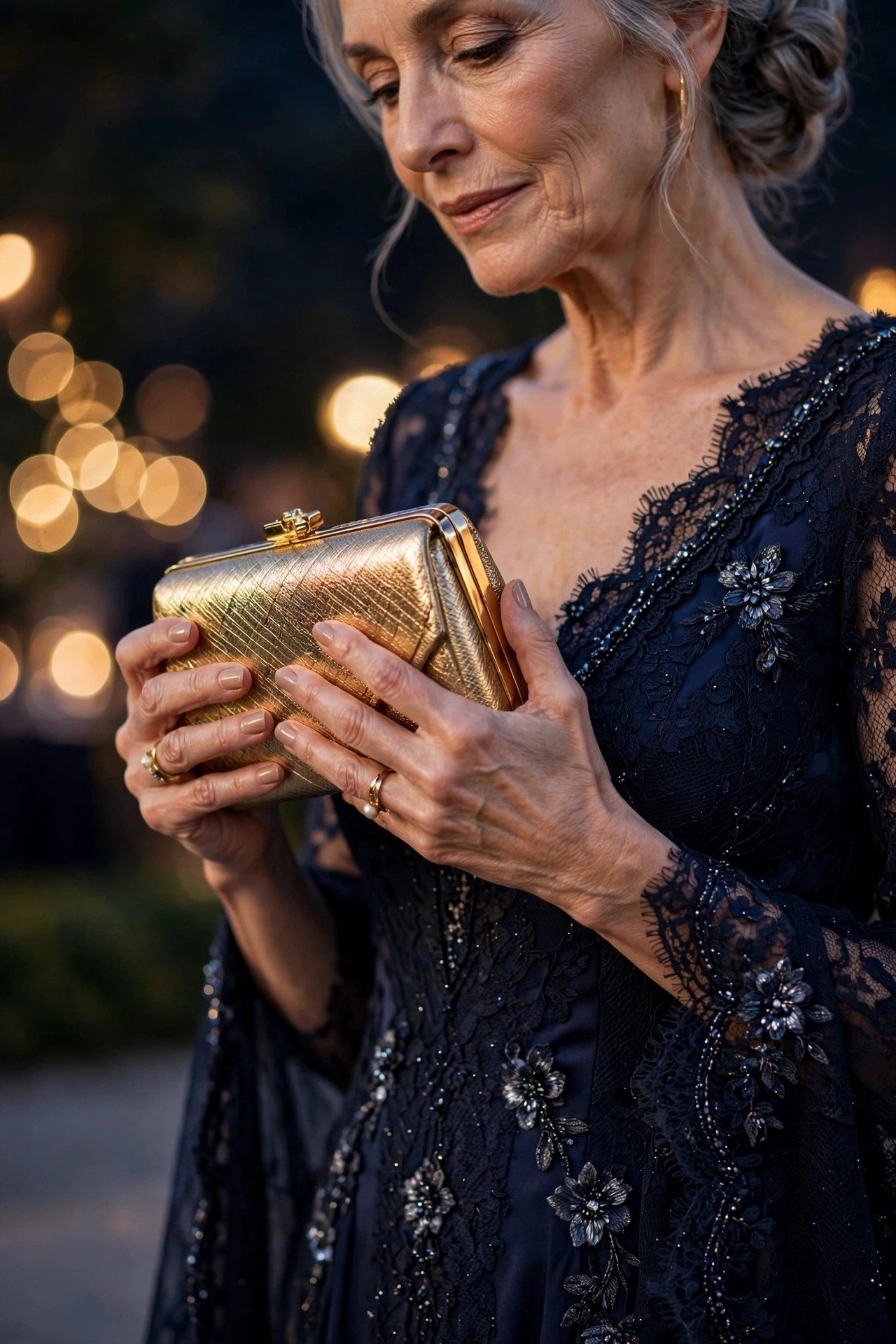
One evening clutch, kept immaculate, will outshine a drawer full of beaded compromises. Gold or champagne goes with everything.
Evening bags are where smart women routinely waste money. We buy the beaded one for a wedding, the velvet one for December, the novelty one that matches exactly one dress — and we use each of them once. A buyer thinks differently: one clutch, in gold or champagne metallic, with clean hardware, covers every after-dark invitation for a decade.
Metallics are neutrals — this is the single most liberating styling fact I learned in thirty years. A champagne clutch works with black, navy, burgundy, emerald, and every floral print you own. Size it to hold a phone, a lip color, and a card — no more. And here’s the payoff nobody expects: when your bag is this simple, your jewelry gets to be the star. A stunning clutch doesn’t compete with your earrings. It frames them.
5. The Woven Summer Bag — Vacation Energy, Year-Round
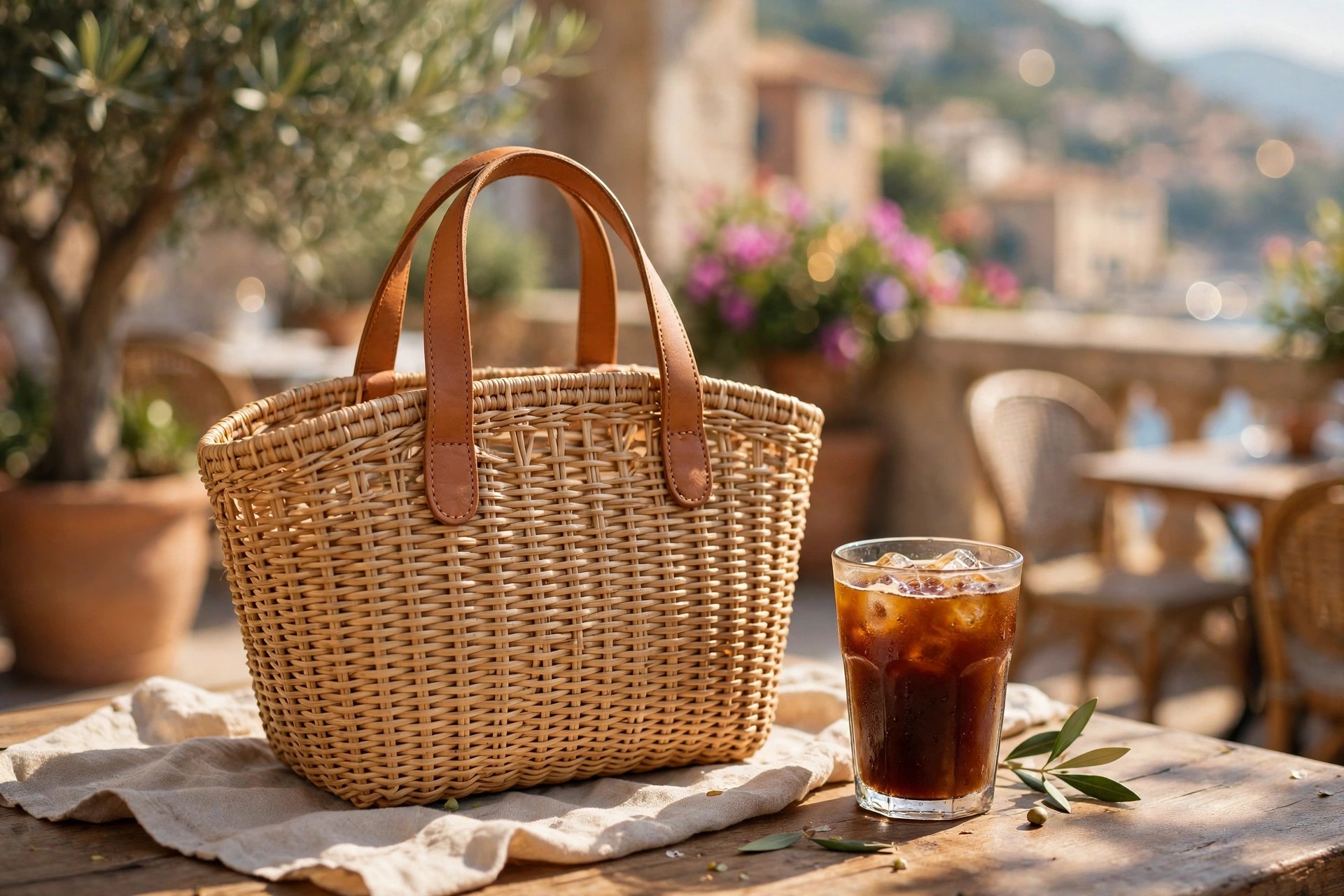
Rattan and wicker read as sunshine. One woven bag makes your entire summer wardrobe look like a holiday.
There’s a psychological trick to a woven bag that buyers have known forever: natural materials read as freshness. The moment you pick one up in May, everything you pair it with — a white shirt, a linen dress, last year’s sandals — suddenly looks new. It’s the cheapest seasonal reset in fashion.
Invest here, but invest smartly. A well-made woven bag has a fabric or leather lining (unlined wicker will eat your lipstick and your patience), reinforced handles, and tight, even weaving with no sharp ends poking out. Rattan outlasts straw by years. And skip the ones shaped like fruit or animals — the novelty tax is real, and you’ll be embarrassed by it before Labor Day. A classic rounded tote or a neat trapezoid in natural rattan is the one.
6. The Convertible Hobo — Two Bags, One Price
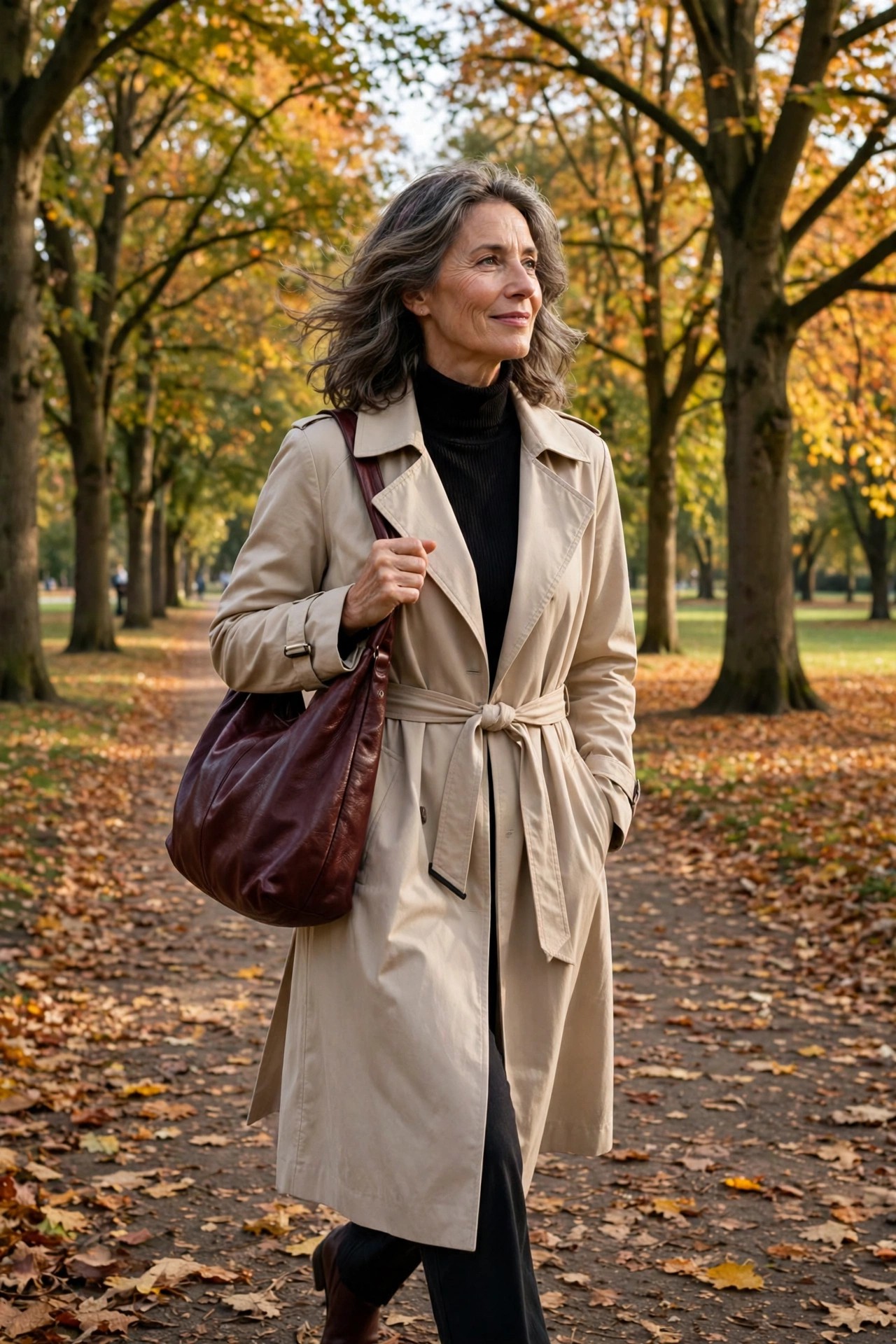
The slouchy hobo flatters a curvier frame — but only if the leather is substantial. Flimsy slouch is just a tote having a bad day.
The hobo’s soft silhouette is genuinely flattering on women with curves — its drape mirrors your shape instead of fighting it. But this is also the bag with the widest quality gap in the industry. A good hobo uses thick, structured leather that slouches elegantly; a bad one uses thin leather that collapses into a sad sack by October.
The investment move: buy a convertible. Many hobo designs come with a detachable strap, so the same bag works as a shoulder bag by day and a clutch for dinner — just tuck the strap inside. That’s two occasions, one purchase, half the closet space. In burgundy, chocolate, or forest green, a convertible hobo is the single most versatile silhouette in this entire list. I owned the same chocolate one for eleven years. It attended three weddings and two graduations and looked better at each one.
7. The Chic Mini — Yes, Small Bags Are for Us Too

The mini isn’t about carrying less — it’s about carrying exactly enough. Proportion, not size, is what makes it chic.
I hear this objection every time I recommend a mini bag: “Aren’t those for twenty-year-olds?” No. The mini is for anyone whose outfit is already doing the talking. A small, beautifully made bag on a fine chain or slim strap is jewelry-adjacent — it finishes a look instead of anchoring it. The age rule that actually matters isn’t about size; it’s about proportion. Petite women should keep the mini truly mini; taller women can carry one slightly larger without it looking like a toy.
Quilted leather, clean hardware, a strap that lets it sit at the hip. This is your dinner-with-friends bag, your gallery-afternoon bag, your “I only need my phone and my confidence” bag. One caveat from the buying trenches: never pay investment prices for a novelty mini — the beaded pom-pom phase passes, but a classic black quilted mini never will.
8. Five Bags to Retire This Year
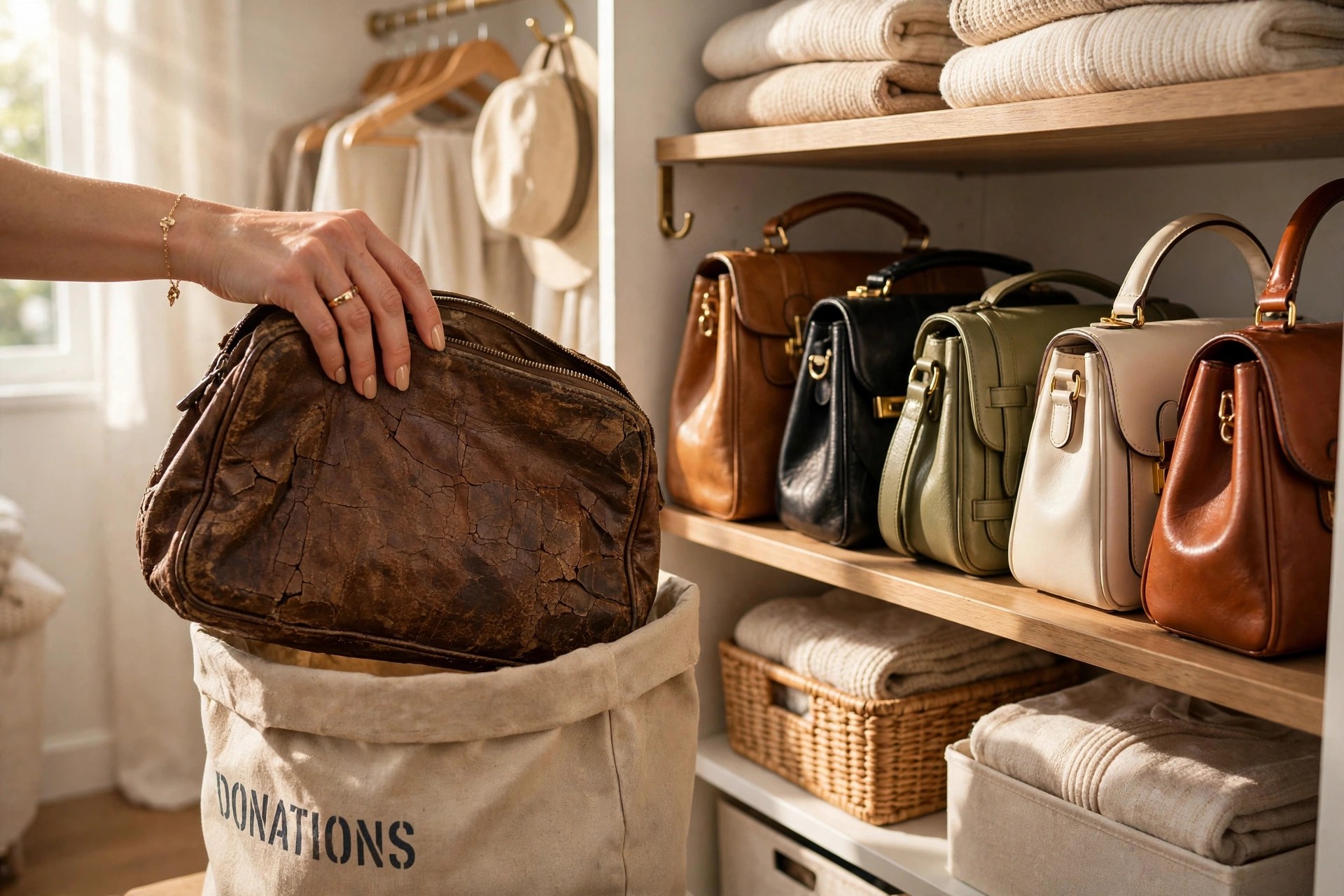
Letting go is a strategy, not a loss. Every bag you retire makes the ones you keep look more expensive.
A buyer’s closet rule: every bag you keep should earn its shelf space. These five are quietly costing you style points, and none of them are coming back:
- The cracked-vinyl shoulder bag. Peeling “leather” is the one thing that reads cheap from across the room. If it’s flaking, it’s done — donate, don’t mend.
- The logo-plastered tote from 2012. Loud logos date faster than any other detail. Quiet luxury isn’t a trend anymore; it’s just good taste.
- The novelty bag. The owl, the teapot, the beaded flamingo. Cute once, costume now. Your style has outgrown it — let it go.
- The bag with broken hardware. A zipper that sticks, a clasp that won’t close, handles hanging by a thread. Bags, like friendships, should function.
- The giant catch-all tote. If you can’t find your keys in under five seconds, the bag isn’t serving you — it’s burying you. Size down.
Retire them without guilt. I promise the closet you open tomorrow morning will feel like a boutique.
9. The 30-Second Quality Test
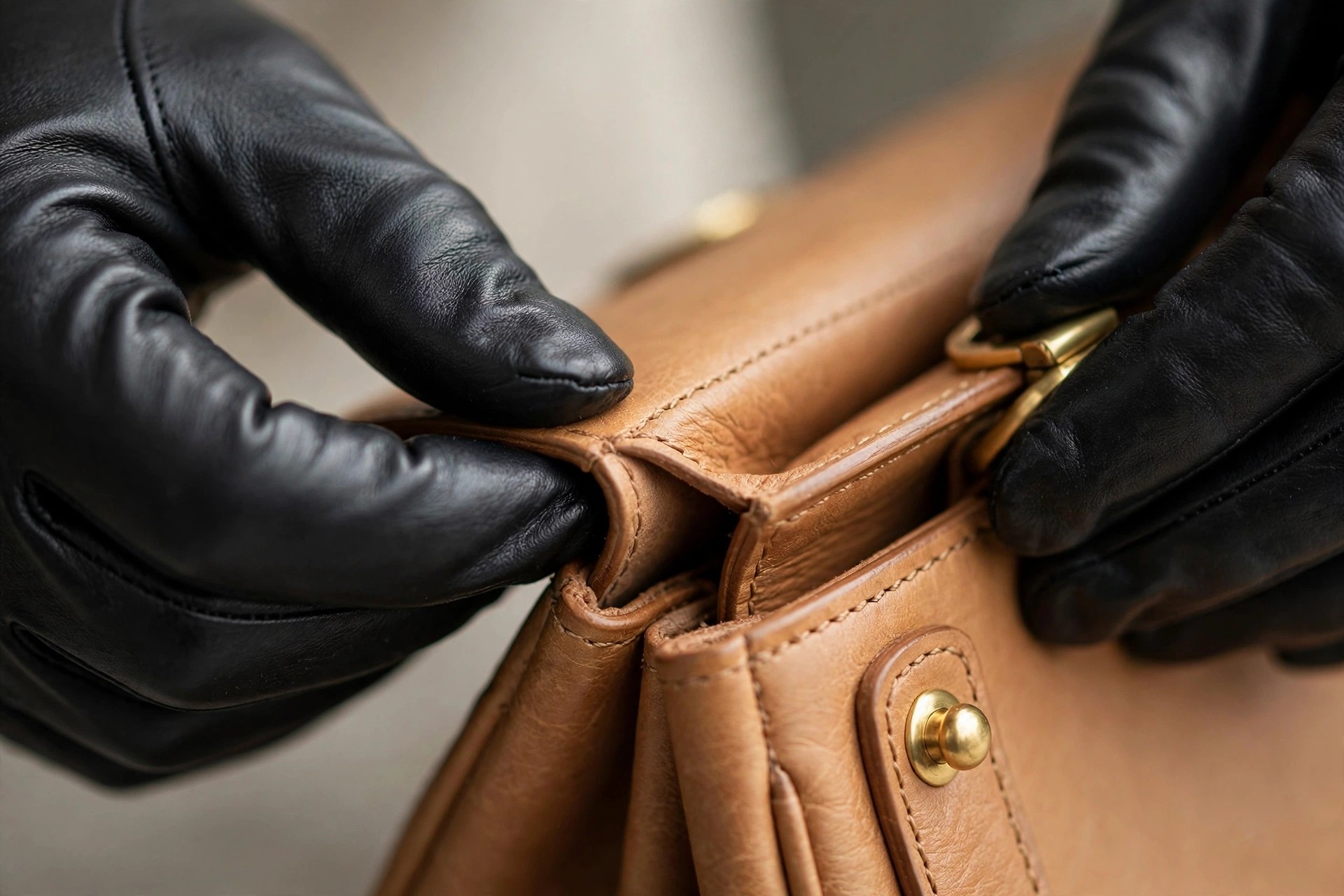
This is the inspection I ran in every buying office: four checks, thirty seconds, and you will never be fooled by a pretty lining again.
This is the part of the article that will save you the most money, so read it slowly. When I’m in a store, I run this sequence before I even check the price tag:
- Smell it. Real leather smells rich and slightly sweet. Plastic smells like a shower curtain. Your nose is the fastest authenticity test ever invented.
- Count the stitches. Look at one inch of seam. Fewer, longer stitches mean the maker was rushing. Tight, even, short stitches mean someone cared — and that bag will hold together for years.
- Feel the hardware. Lift the clasp or zipper pull. Real brass and steel have weight; plated plastic feels like a toy. Heavy hardware is the single most reliable sign of a well-made bag.
- Check the lining. Pull it out and look at the corners. Clean-finished seams mean the maker finished what you can’t see — and that’s the definition of quality.
If a bag passes all four, the price is almost always justified. If it fails two, put it down no matter how beautiful it is. Beauty fades; construction doesn’t.
| Do | Don’t |
|---|---|
| Invest in structured silhouettes that stand on their own | Keep bags that collapse, crack, or flake |
| Match strap length to your torso (hip bone, not waist) | Carry a crossbody so large it becomes a hip-weight |
| Treat metallics as neutrals for evening | Buy a new novelty bag for every event |
| Smell, count stitches, and feel the hardware in the store | Judge quality by the price tag or the logo alone |
| Keep seven great bags you actually carry | Keep twenty mediocre bags you “might” carry |
How many handbags does a woman over 50 really need?
Seven, honestly — an everyday satchel, a roomy tote, a crossbody, an evening clutch, a summer woven, a convertible hobo, and a chic mini. That rotation covers work, travel, evenings, and vacations without a single gap. Anything beyond that is collecting, which is fine if it brings you joy — but it’s not necessary.
Is it worth spending more on a designer handbag after 50?
Worth is about cost-per-wear, not the logo. A $400 well-made leather bag carried 200 times costs $2 a wear and still looks new. A $60 bag that falls apart after a season costs you more — plus the frustration. Buy the best construction you can afford, designer or not.
What handbag color is most versatile for women over 50?
Cognac or tan for day, black for everything, and champagne or gold metallic for evening. Those four cover roughly 95% of outfits. If you add a fifth, make it burgundy or forest green — rich, flattering, and endlessly pairable with neutrals.
How do I carry a handbag so it doesn’t hurt my shoulder?
Rotate your bags — never carry the same heavy tote two days running. Keep the daily bag under 800 grams empty, use a crossbody for walking days, and ruthlessly empty your bag once a month. We all accumulate weight we don’t need: coins, old receipts, three lipsticks when one would do.
Are small bags flattering after 50?
Absolutely — if the proportion is right. A mini bag works because it’s jewelry-adjacent; it finishes rather than anchors your look. The rule is simple: petite frames keep it truly mini, taller frames can go slightly larger. What doesn’t work at any age is a novelty mini that tries too hard.
How can I tell if a leather handbag is good quality?
Run the 30-second test: smell it (real leather smells rich, plastic smells chemical), count the stitches (tight and even wins), feel the hardware (real metal has weight), and check the lining’s corners (clean seams mean real craftsmanship). Pass all four, and the price is justified.
The real secret, after thirty years of this? The bag doesn’t make the woman — but the right bag makes the woman visible. Every outfit you’ve ever loved had a handbag quietly holding it together. So choose with intention, buy with your hands and your nose, retire what no longer serves you, and carry the good ones like you mean it. Your bag is the period at the end of your style sentence. Make it a strong one.