EVERYDAY STYLE • 9-MINUTE READ
Camel Outfits for Women Over 50
The One Color That Makes Every Woman Look Expensive —
and the 8 Formulas That Wear It Best
Some colors flatter you. Camel does something rarer: it forgives everything — a tired morning face, a closet full of nothing-to-wear, a budget that doesn’t stretch to designer. Here’s how to wear the richest neutral in your wardrobe like you were born to it.
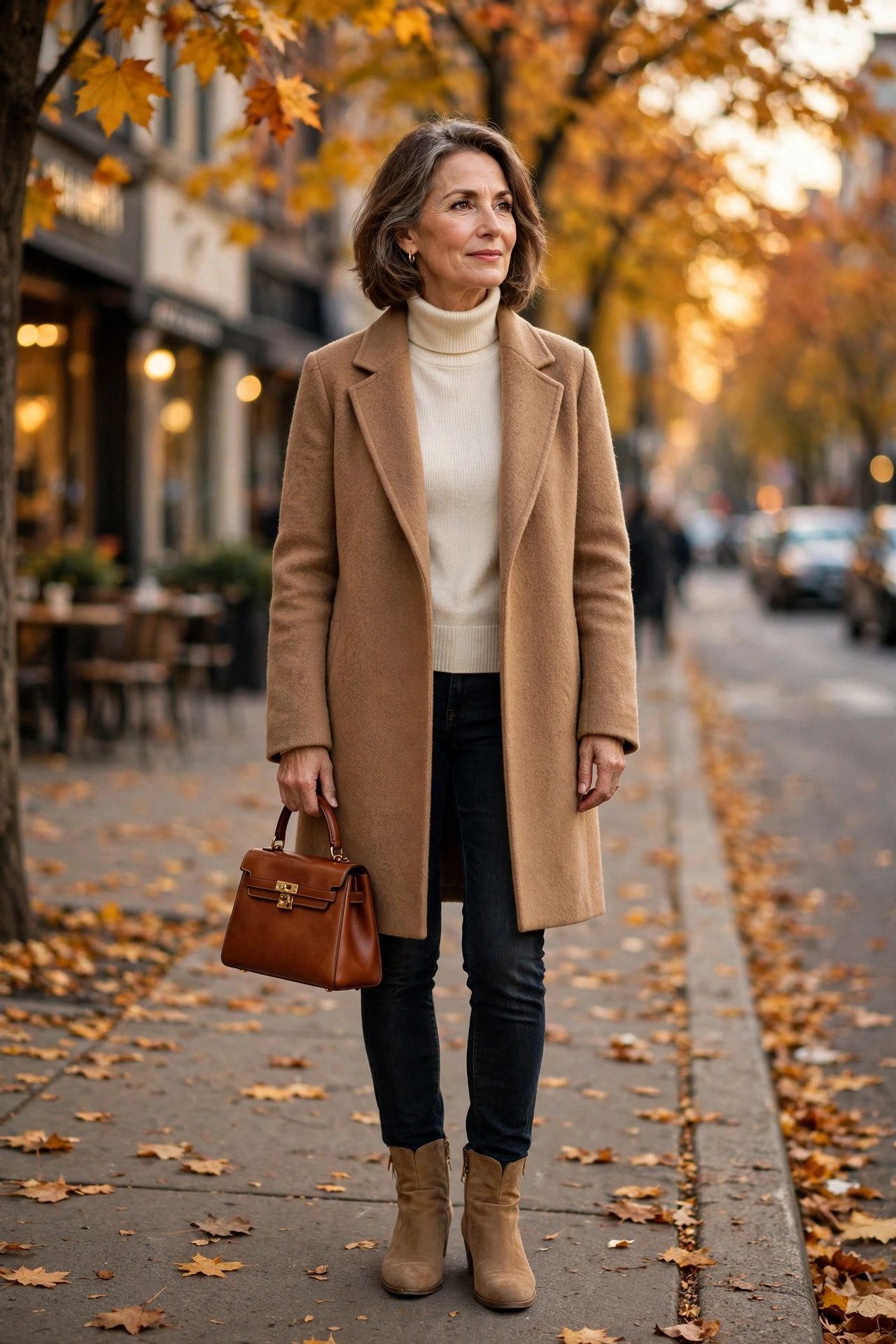
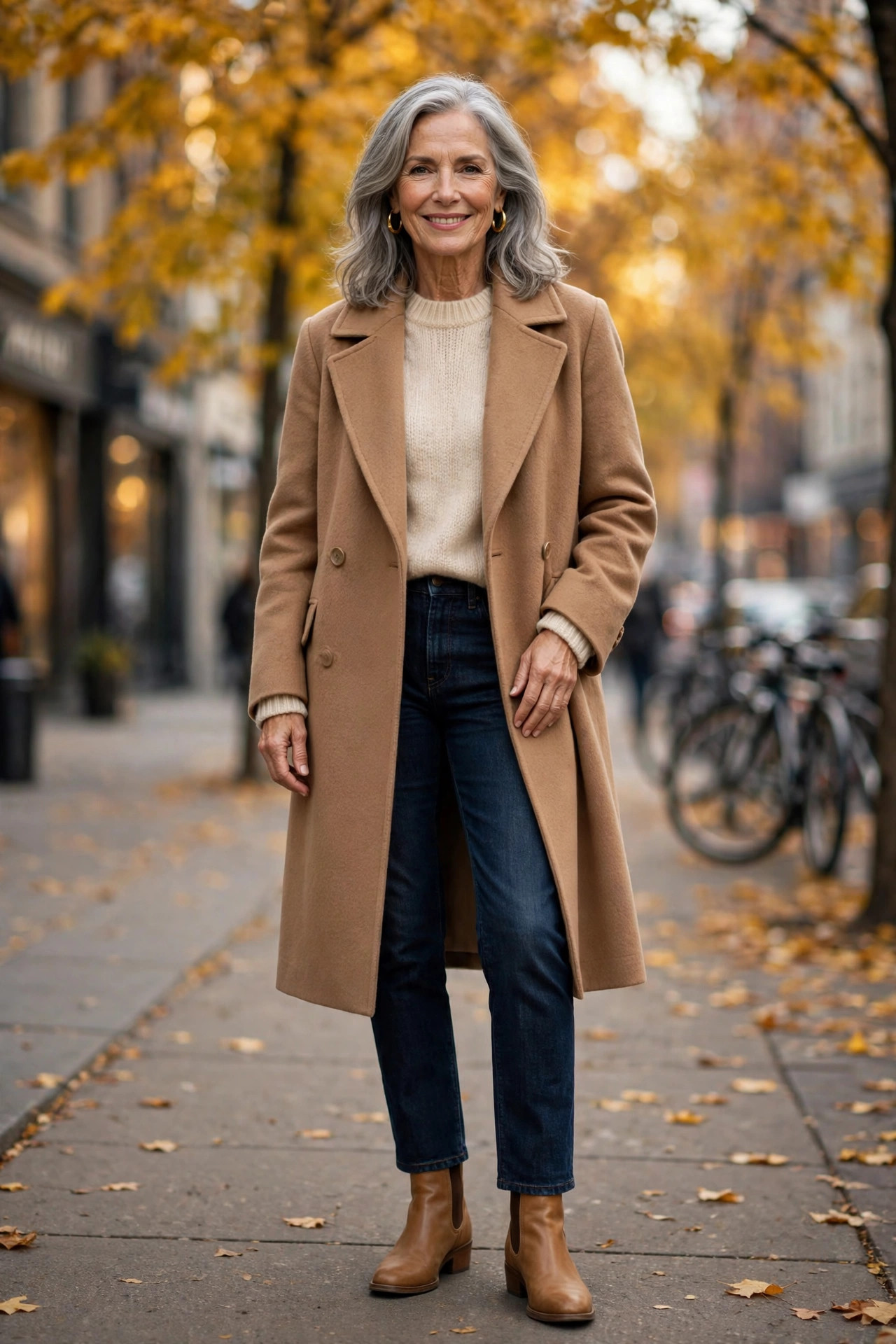
A camel coat over a cream knit and dark denim — the easiest expensive-looking outfit you’ll ever put on.
Let me tell you what I learned in fifteen years of buying: there is no color a woman over 50 wears better than camel. Not black. Not navy. Camel. It warms up skin that’s gone a little paler, it makes grey hair look like a deliberate style choice, and it has this quiet, moneyed glow that no other neutral can touch.
And here’s the part nobody says out loud: camel is forgiving. A cheap camel sweater looks like a cashmere one. A camel coat from a mid-range label photographs like it came from Max Mara. It is, quite simply, the most flattering lie in fashion — and every woman over 50 deserves to be in on it.
But camel has rules. Wear the wrong shade against your skin and you’ll look washed out instead of luminous. Pair it badly and it reads dusty instead of rich. So this is the complete guide — the shades, the pairings, and eight outfit formulas that work every single time.
The Camel Playbook at a Glance
| Camel Shade | Best For | Pairs Beautifully With |
|---|---|---|
| Light camel / sand | Fair, cool skin; silver hair | White, navy, denim |
| Classic camel / tan | Every skin tone — the universal shade | Black, ivory, chocolate |
| Deep camel / cognac | Medium to deep skin; warm undertones | Cream, olive, burgundy |
| Camel + texture (wool, cashmere, suede) | Everyone — texture reads as luxury | Silk, leather, denim |
Golden rule from the fitting room: hold the camel up to your face before you hold it anywhere else. If your skin brightens, it’s your camel. If you disappear, it’s too close to your skin tone — go one shade deeper or lighter.
1. The Head-to-Toe Monochrome Camel
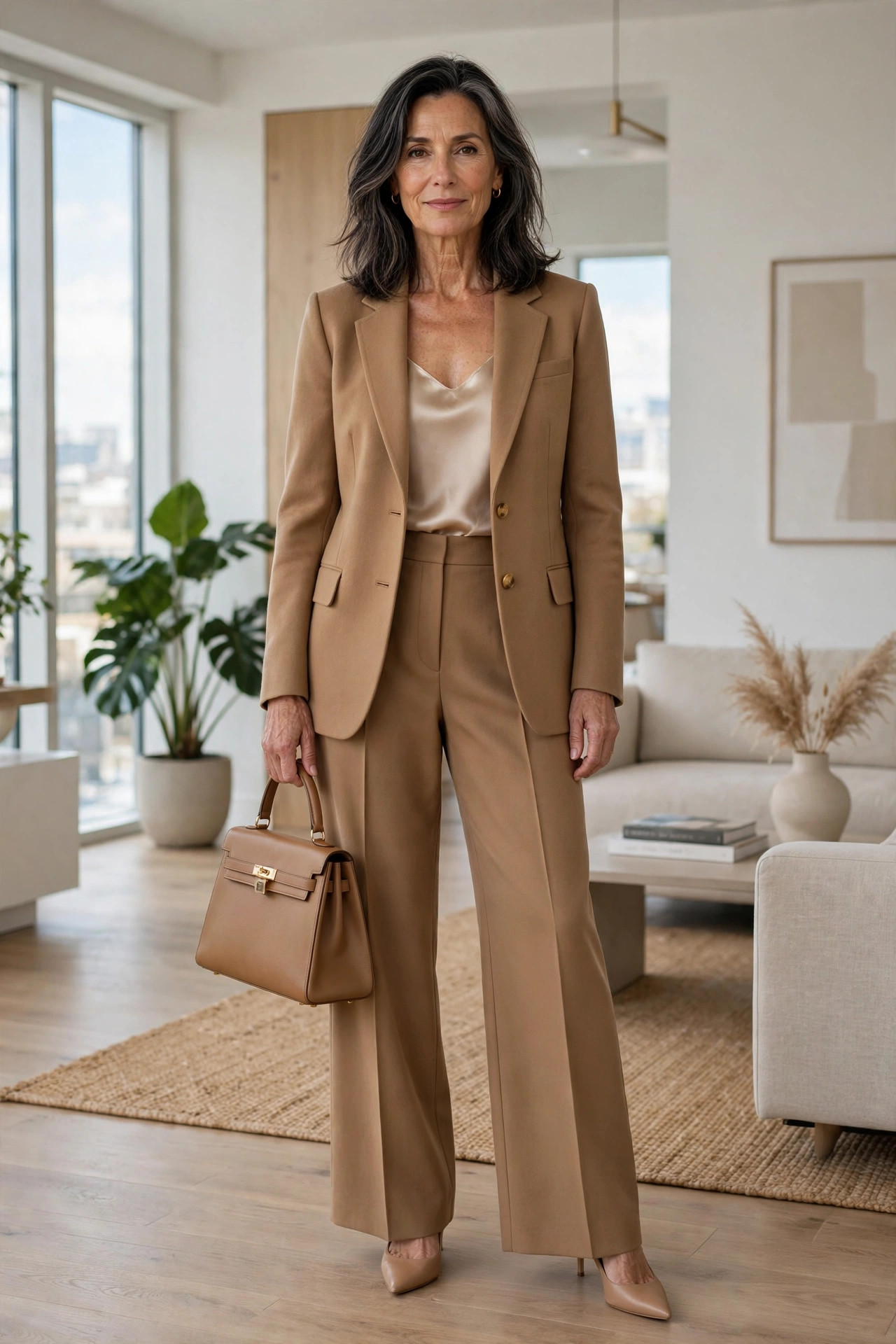
This is the power move. A tailored camel blazer with matching camel trousers and a champagne camisole underneath — and suddenly you’re the best-dressed woman in any room, including the ones with actual money.
Why it works after 50: monochrome dressing creates one long, unbroken line, which is the single most elongating trick in the book. No horizontal breaks at the waist, no visual chopping. It also reads expensive in a way patterned separates never can — quiet luxury’s entire philosophy is tonal dressing.
Buyer-level detail: keep the blazer slightly open and let the camisole show a V of silk at the neck. That sliver of lighter tone near your face is what keeps the whole thing from swallowing you. Nude pointed heels or low block heels finish it; skip the black shoe here — it’s too harsh against the warmth of camel.
2. Camel Coat + Black Everything
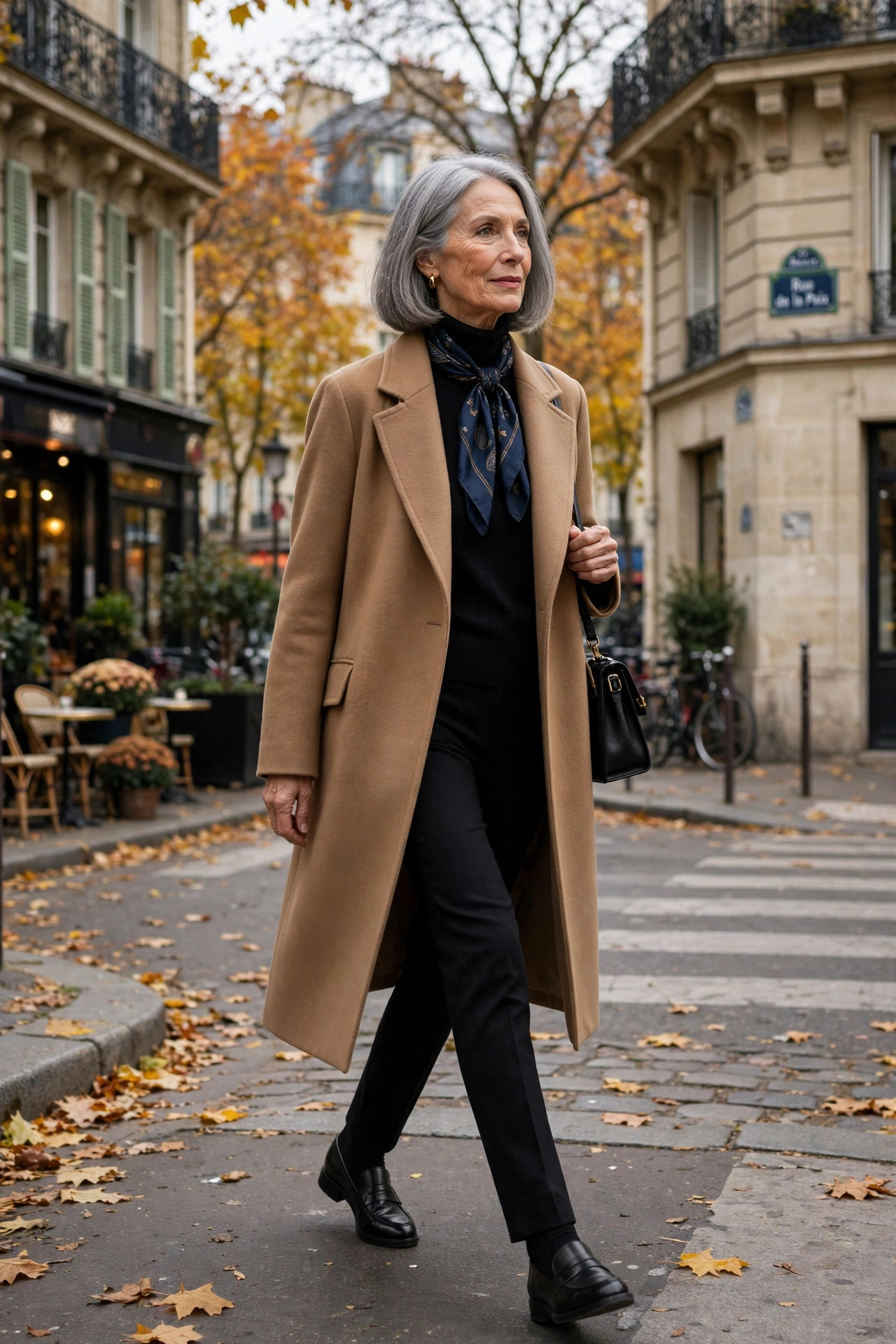
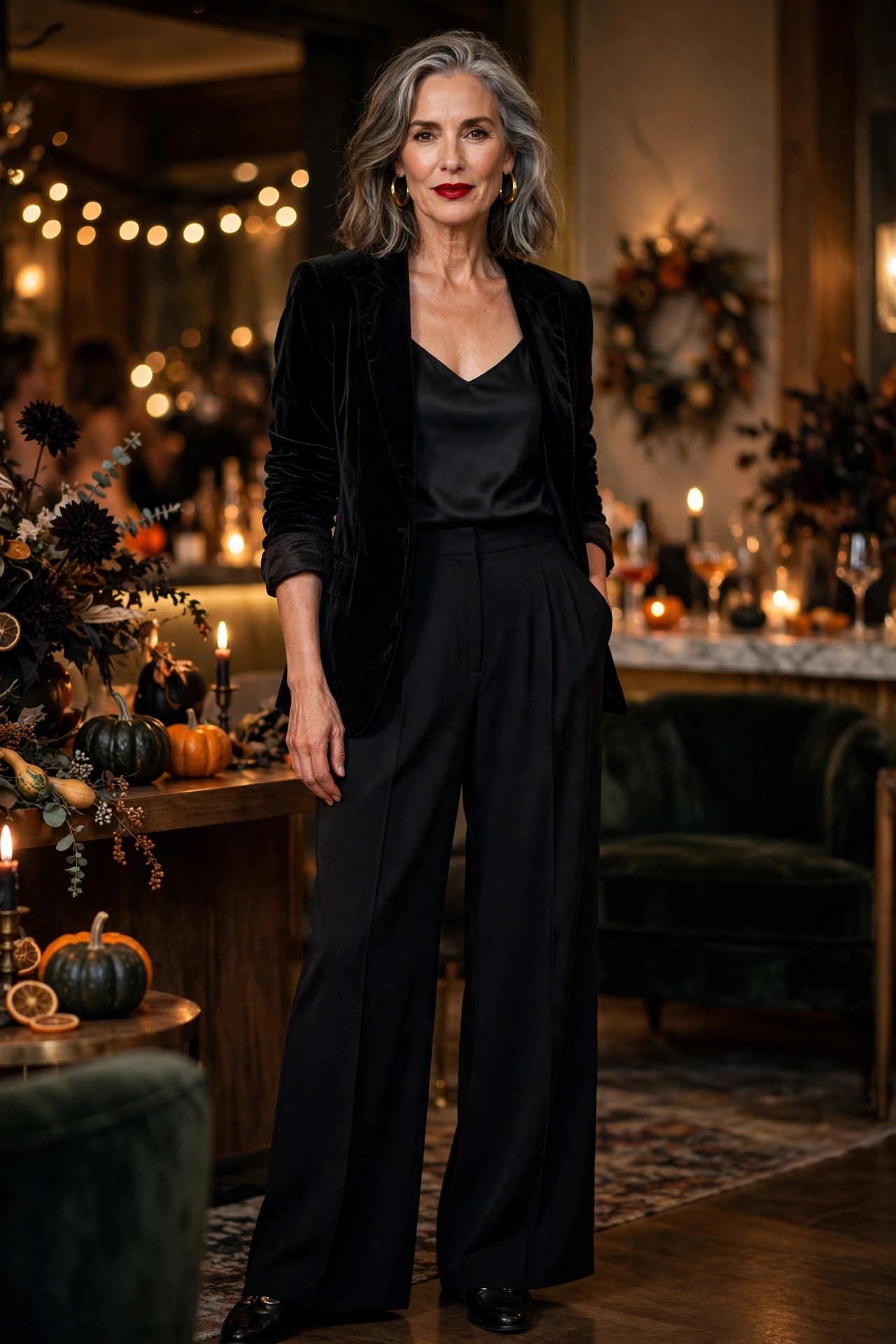
The classic for a reason. A camel overcoat thrown open over a black turtleneck and black slim trousers is the uniform of women who look chic in every city on earth. It has worked since the 1970s and it will work when we’re all ninety.
Why it works after 50: black near the face can be draining as we age — but here, the camel coat frames your face instead, warming everything up while the black underneath does the slimming work. You get black’s polish without black’s pallor.
Buyer-level detail: the coat is everything — it should hit mid-thigh or just above the knee, with a collar you can pop. Add one softener: a silk scarf at the neck, a gold necklace, even just lipstick. Black + camel with zero warmth at the throat is the only way this outfit ever looks severe.
3. Camel + Crisp White
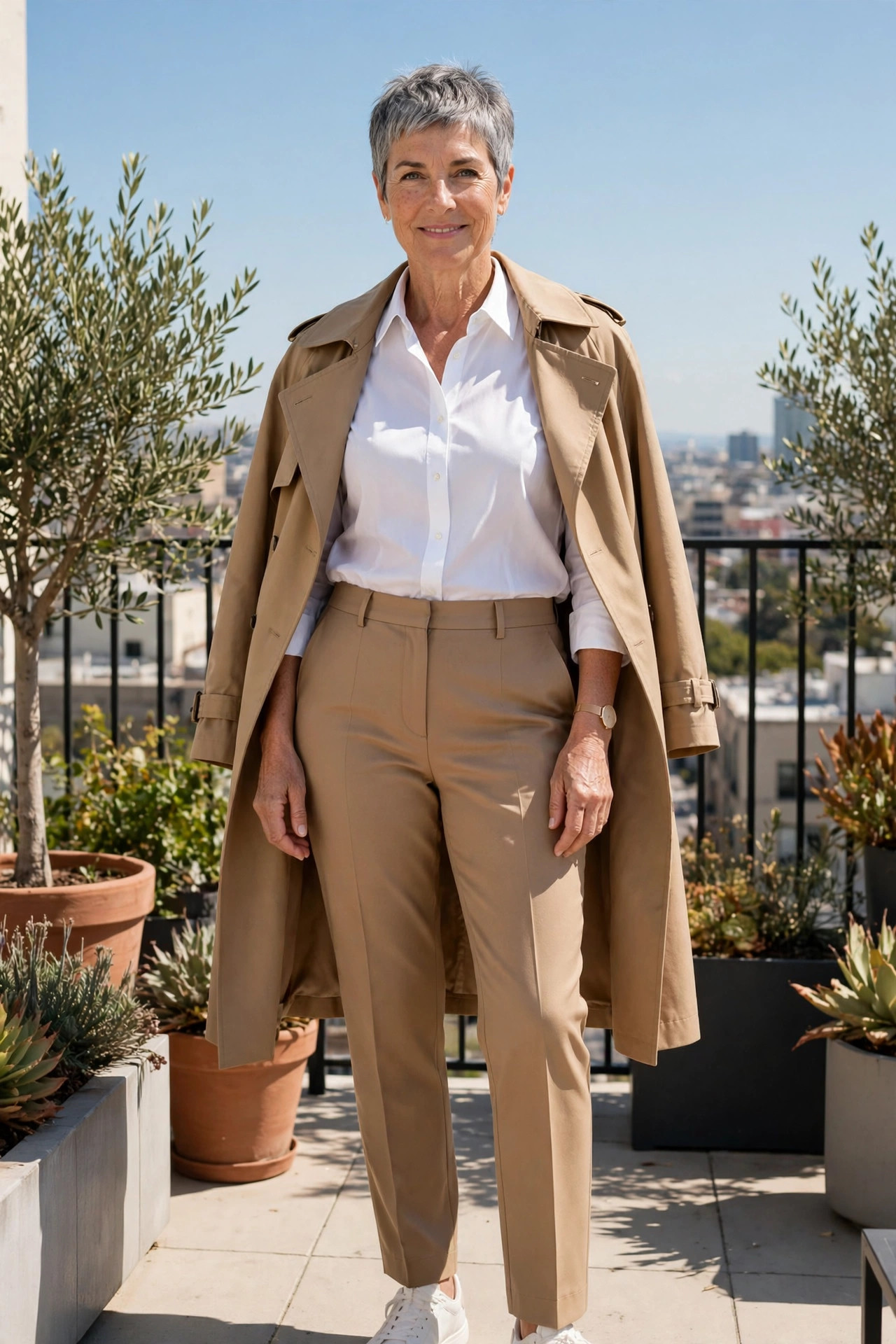
When you want to look polished without trying — a crisp white shirt tucked into tailored camel trousers, with a camel trench draped over the shoulders. This is the outfit that gets you compliments from strangers.
Why it works after 50: white near the face is nature’s highlighter. It bounces light up under the chin and softens everything. Combined with camel’s warmth, the contrast is fresh rather than stark — think Mediterranean morning, not corporate memo.
Buyer-level detail: the shirt must be truly crisp — no limp, washed-out whites. And tuck it fully; a half-tuck with camel trousers looks accidental instead of insouciant. White sneakers keep it modern, loafers keep it classic.
4. Camel + Denim (The Weekend Formula)

Proof that camel isn’t precious: a soft camel cardigan over a plain white tee with straight-leg jeans. This is the outfit for Saturday farmers’ markets, grandkids’ soccer games, and lunches where you want to look like yourself, only better.
Why it works after 50: denim is our generation’s comfort zone — and camel instantly elevates it. The combination says relaxed but considered, which is exactly the energy most of us want on weekends. The warm cardigan also does lovely things for posture: you stand a little straighter when you feel put-together.
Buyer-level detail: choose a medium or dark wash — light-wash denim against camel can read a bit 1987. Keep the cardigan long enough to skim the hip, and roll the jean cuff once to show the ankle. Tan loafers tie the whole warm palette together.
5. Camel Knit + Ivory (Tonal Luxury)
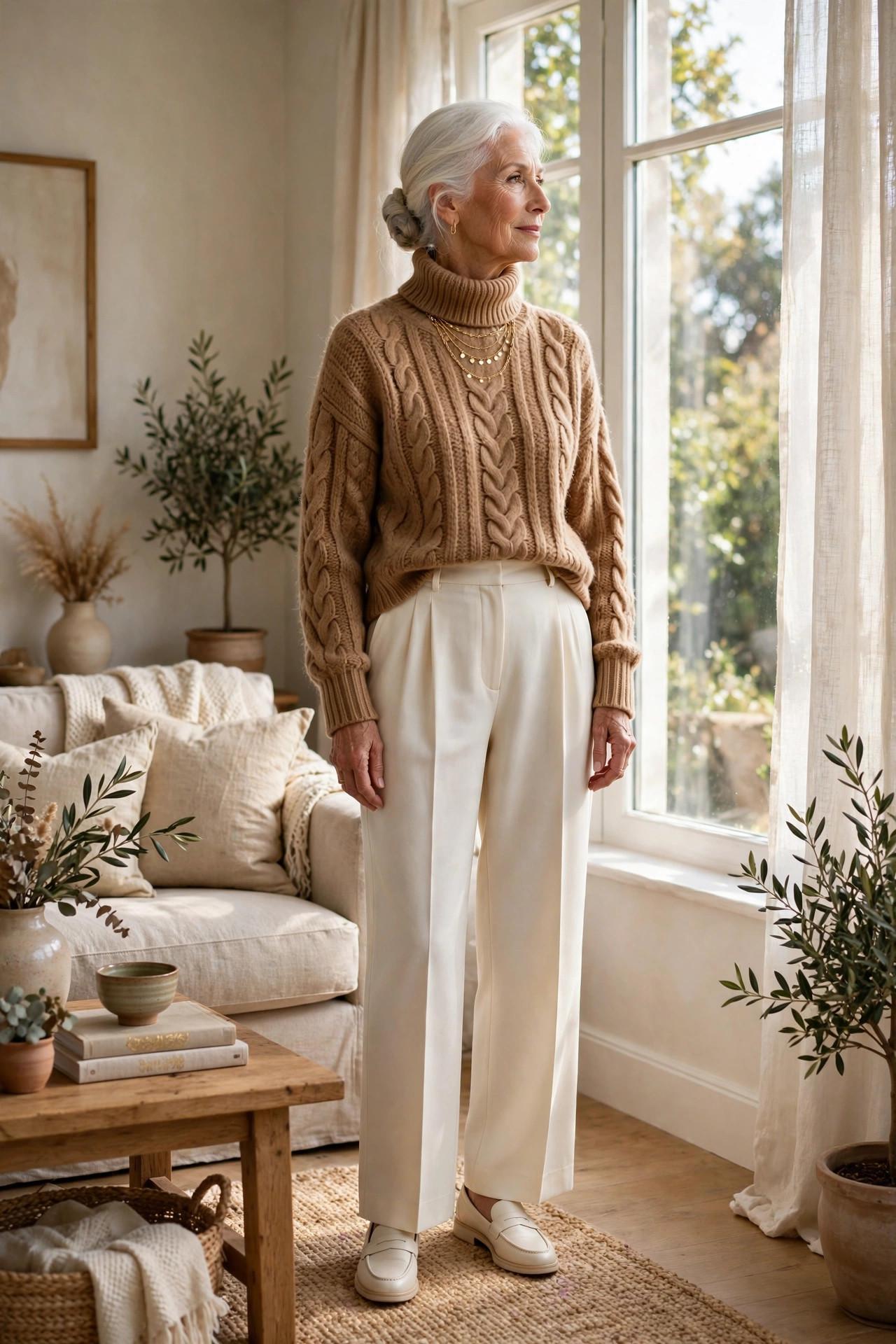
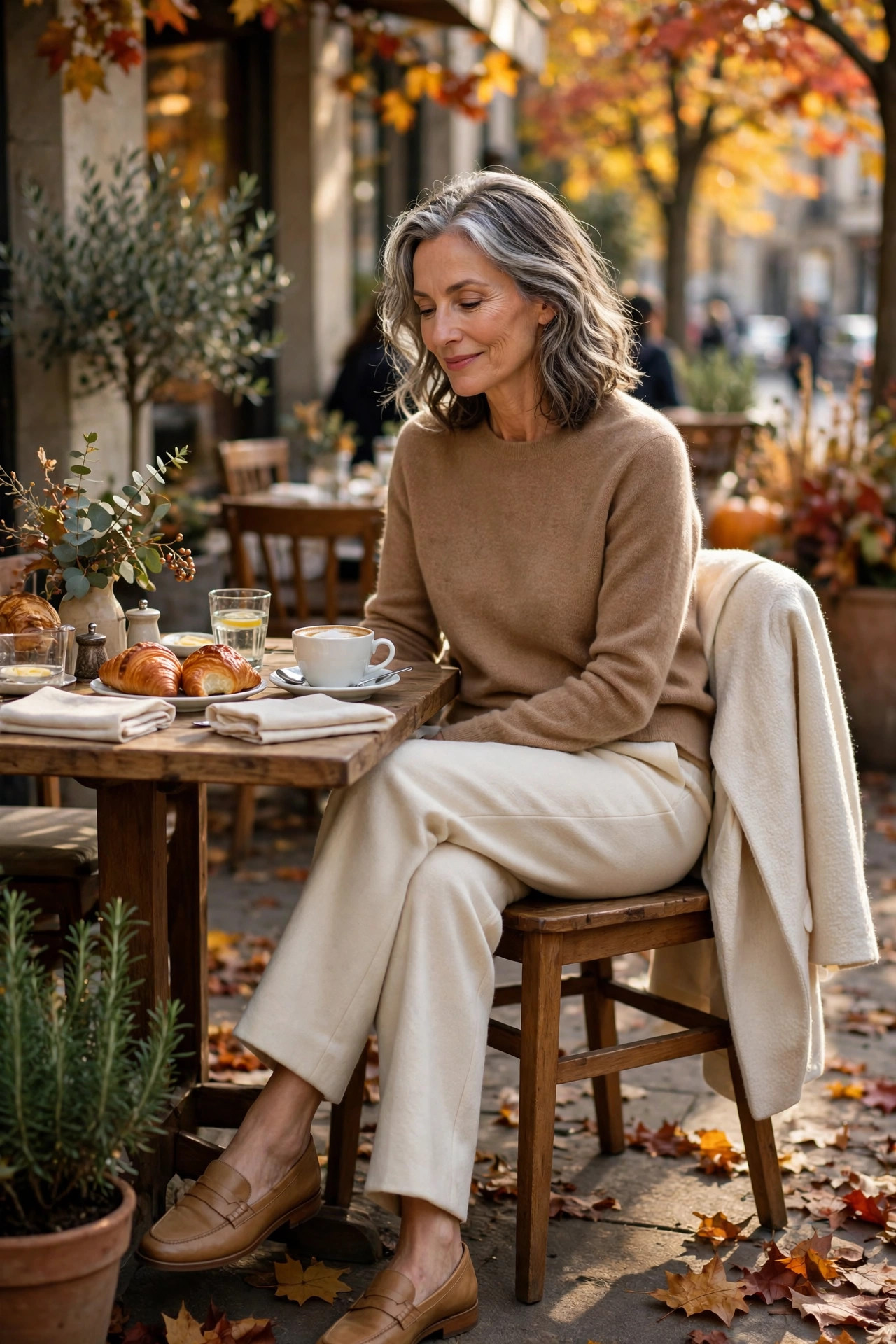
A chunky camel turtleneck tucked into ivory wide-leg trousers. Two neutrals, zero effort, and the kind of softness that makes people want to stand closer to you. This is quiet luxury in its purest form.
Why it works after 50: tonal dressing in warm neutrals is extraordinarily flattering to mature skin. Nothing fights, nothing contrasts harshly — the eye just glides. Ivory is also kinder than stark white against skin that’s lost a little of its youthful contrast.
Buyer-level detail: texture is the whole game here — chunky knit against smooth trouser fabric, so the outfit has depth without color. Add gold jewelry (never silver with this palette — the warmth must be consistent) and a cream loafer. One structured bag keeps it from drifting into pajama territory.
6. Camel + Navy (The Unexpected Pair)
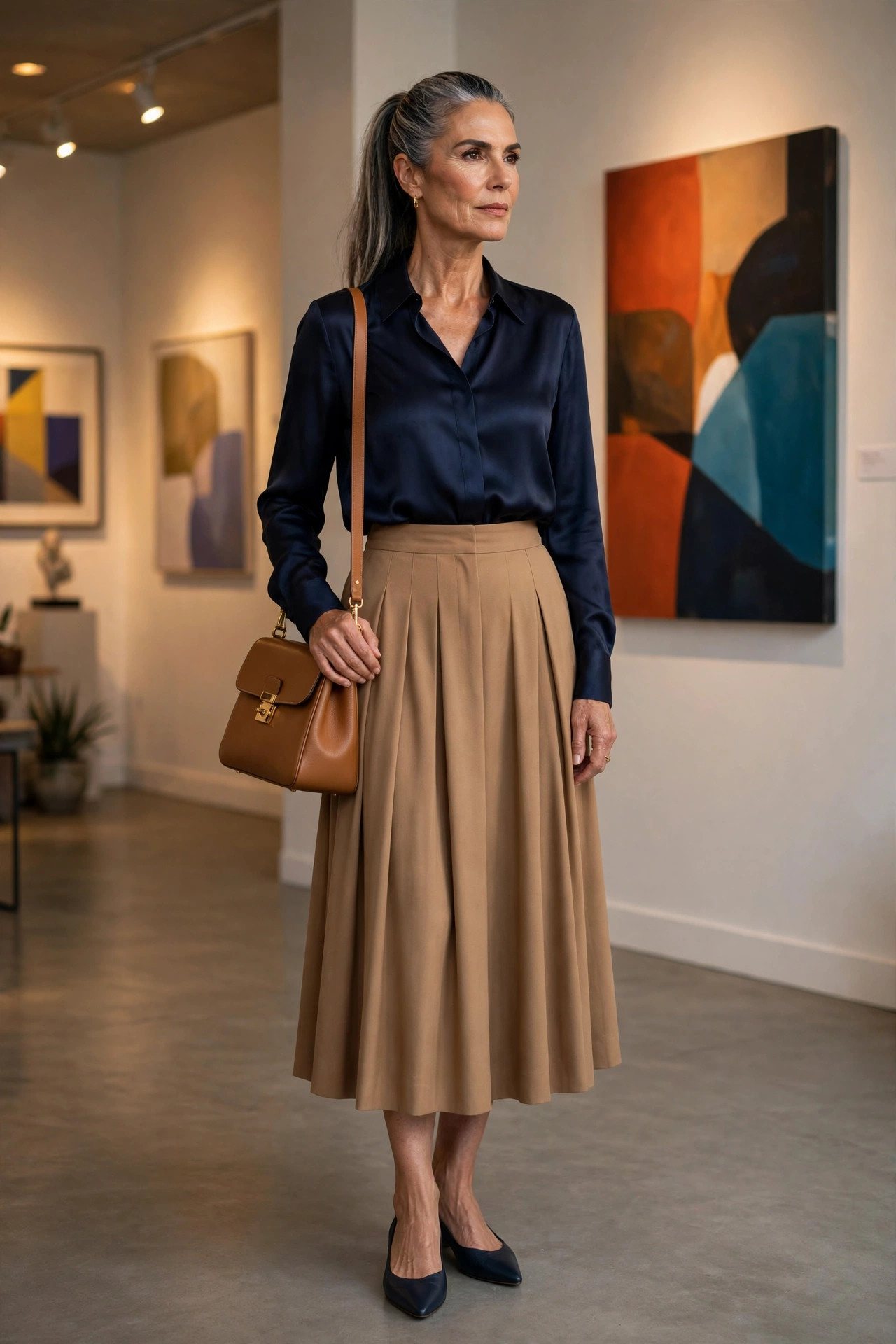
Everyone reaches for black with camel. The sophisticated move is navy: a deep navy silk blouse tucked into a camel pleated skirt. It’s richer, rarer, and honestly more interesting than the black version.
Why it works after 50: navy is black’s kinder sister — it gives you depth and polish without the draining effect black can have on mature skin. Against camel, it creates a color story that looks curated, like you have a stylist. (Now you do. It’s me.)
Buyer-level detail: the navy must be deep — inky, almost black. A washed-out navy against camel looks muddy. And keep the camel piece below the waist or as outerwear; camel near the face with navy below is the flattering direction.
7. The Camel Sweater Dress (One and Done)
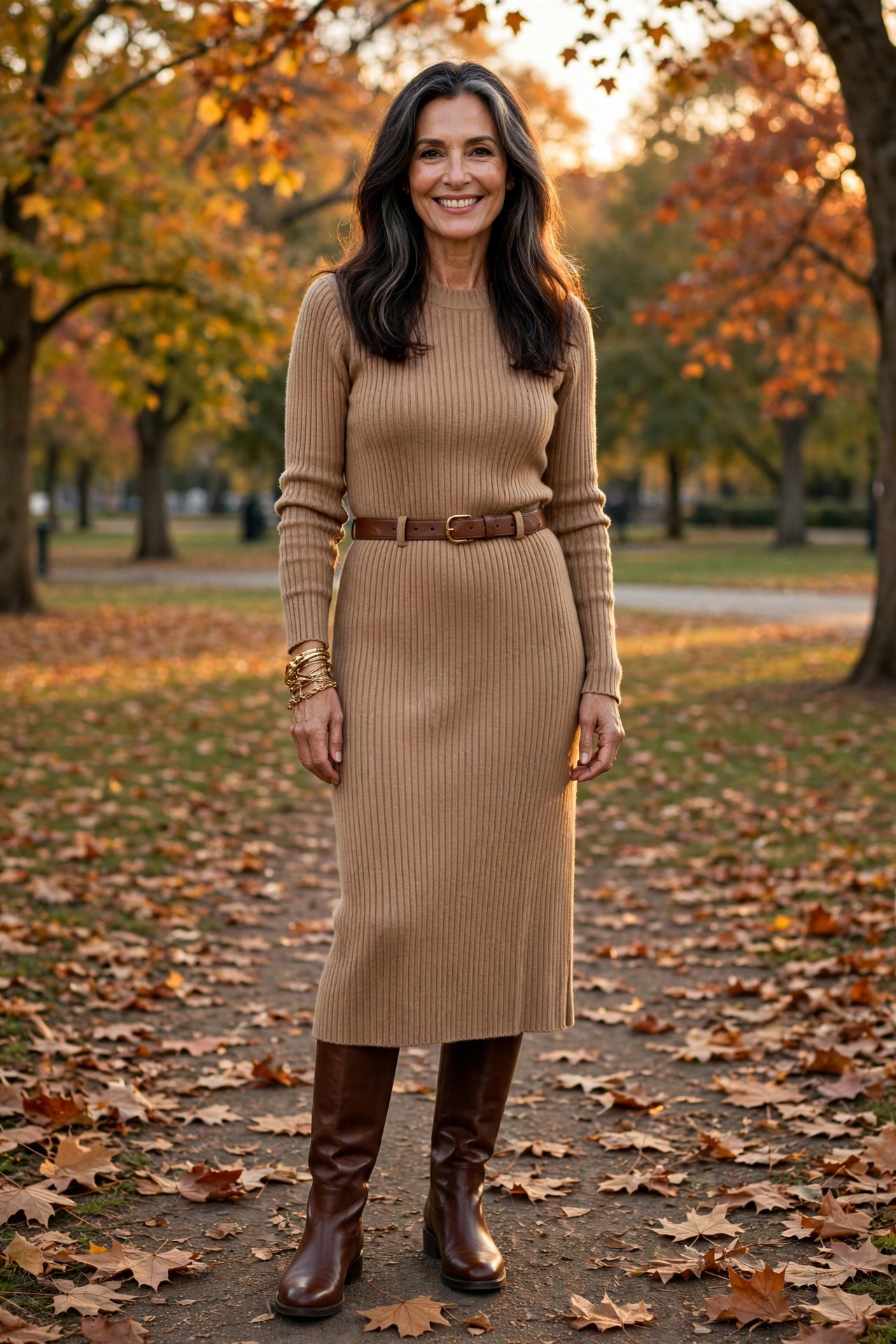
Some mornings you need one piece that does all the work. A belted camel ribbed-knit midi dress with knee-high boots is that piece. Dress, boots, earrings, done — out the door in six minutes looking like you planned for an hour.
Why it works after 50: a knit dress skims rather than clings, which is the silhouette sweet spot for bodies that have changed. The belt defines the waist without a waistband digging in, and the midi length shows just enough leg to keep the whole thing from feeling heavy.
Buyer-level detail: ribbed knits hold their shape far better than smooth jerseys — look for a medium-weight rib with some recovery. Boots should be chocolate or tan, never black; black boots chop the warm column of color the dress creates.
8. Camel + Leopard (Pattern With Restraint)
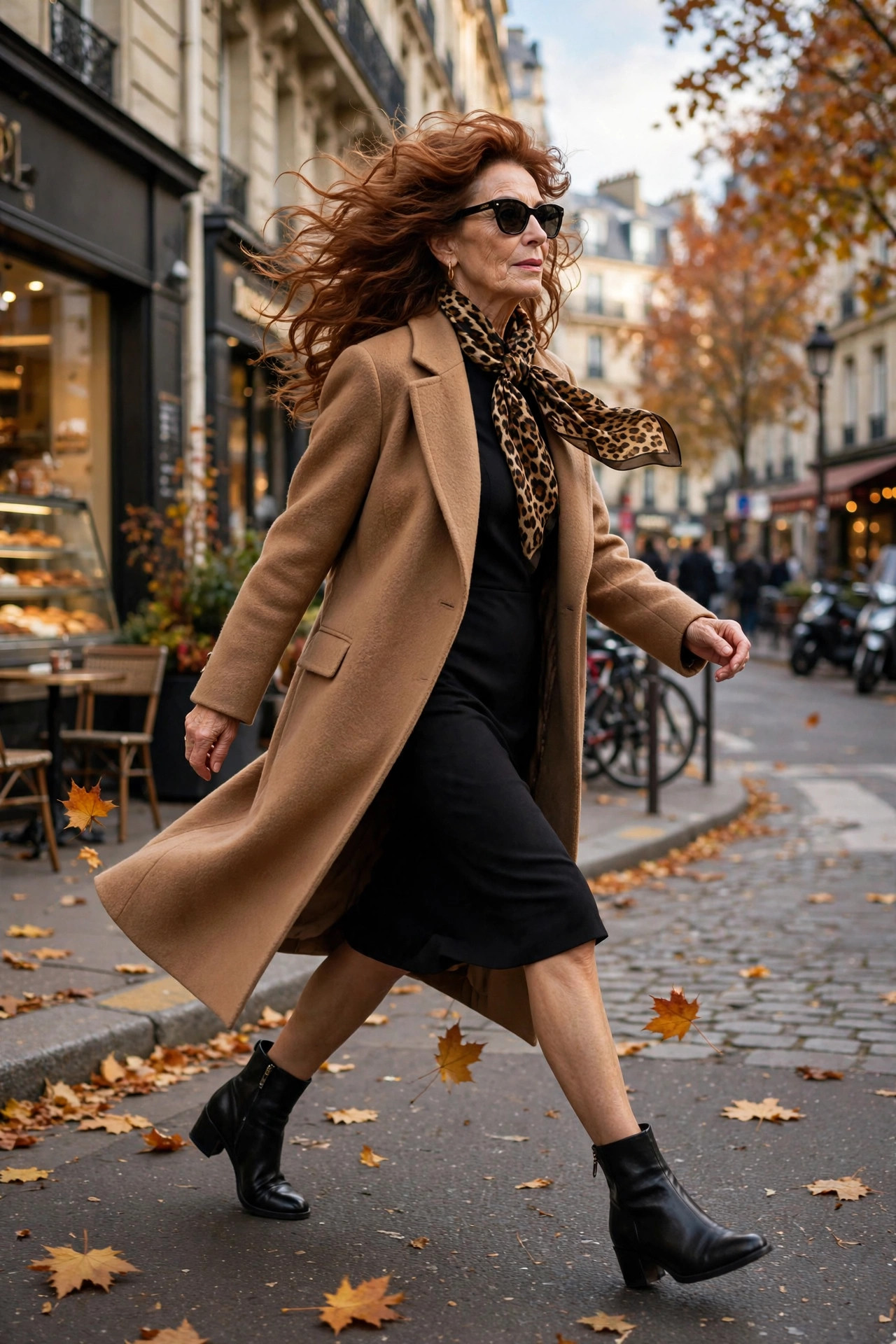
Here’s where camel gets fun. A camel coat over a simple black dress, finished with a leopard-print silk scarf. The leopard is the exclamation point; the camel is the sentence that makes it make sense.
Why it works after 50: leopard against warm camel reads sophisticated rather than loud — the tones are cousins, so the pattern feels integrated instead of pasted on. It’s the easiest way to wear animal print without ever worrying you’ve gone too far.
Buyer-level detail: one leopard piece only. Scarf, shoes, or bag — never two. And keep the leopard small-scale; oversized spots read costume, classic small spots read chic. This is the outfit that proves style doesn’t retire.
Camel Do’s and Don’ts
| DO | DON’T |
|---|---|
| Match your camel shade to your undertone — warm skin, warmer camel | Wear camel head-to-toe in one flat shade with no texture contrast |
| Use texture (wool, cashmere, suede, silk) to add richness | Pair camel with neon or jewel-bright colors — the contrast is jarring |
| Keep gold jewelry with camel — the warmth is harmonious | Default to silver — it cools the palette in the wrong way |
| Let one camel piece be the star (the coat, the blazer) | Mix three different camel shades — it reads accidental, not tonal |
| Try camel near your face — it’s the most flattering placement | Wear camel that’s an exact match to your skin tone — you’ll vanish |
Frequently Asked Questions
What colors go best with camel for women over 50?
Black, white, ivory, navy, denim, chocolate brown, olive, and burgundy are camel’s best partners. For the most flattering combinations after 50, lean toward ivory over stark white and navy over black — both are kinder to mature skin while keeping the outfit polished.
Can women over 50 wear camel if they have grey or silver hair?
Absolutely — it’s one of the best combinations in fashion. Camel’s warmth makes silver hair look luminous and deliberate. Just make sure your camel is rich enough: washed-out beige against silver hair can look pale, while true camel glows.
Is camel in style in 2026?
Camel never truly leaves — it’s a permanent neutral, not a trend. In 2026, tonal camel dressing and the camel coat are especially prominent, but honestly, a good camel piece has a decades-long life. It’s the opposite of fast fashion.
What’s the difference between camel and beige?
Camel is warmer, deeper, and richer — it has golden-brown undertones. Beige is cooler, paler, and flatter. On most women over 50, camel is far more flattering because its warmth brightens the skin, while beige can wash it out.
Can I wear camel in spring and summer, or is it only for fall?
Camel works year-round. In warmer months, switch to lighter camel shades in breathable fabrics — a sand-colored linen blazer, camel espadrilles, a tan leather bag. The color’s warmth is seasonless; only the weight of the fabric changes.
Here’s the real secret, the one I’d tell you over coffee: camel isn’t really about the color. It’s about what the color lets you stop worrying about. When you find your camel — the shade that lights up your face, the coat that fits like it was cut for you — getting dressed stops being a daily negotiation. You stop auditioning outfits. You just wear the camel, and the day bends around you instead of the other way around.
That’s not fashion advice. That’s fifteen years in fitting rooms talking. And it’s the best thing I can give you.