STYLE ADVICE • 8-MINUTE READ
Stop Doing These 10 Things After 60
If You Want to Keep Your Peace of Mind
Peace of mind isn’t found. It’s edited out of your life, one dropped habit at a time. Here are the ten things I stopped doing — and everything my sixties gave me back.
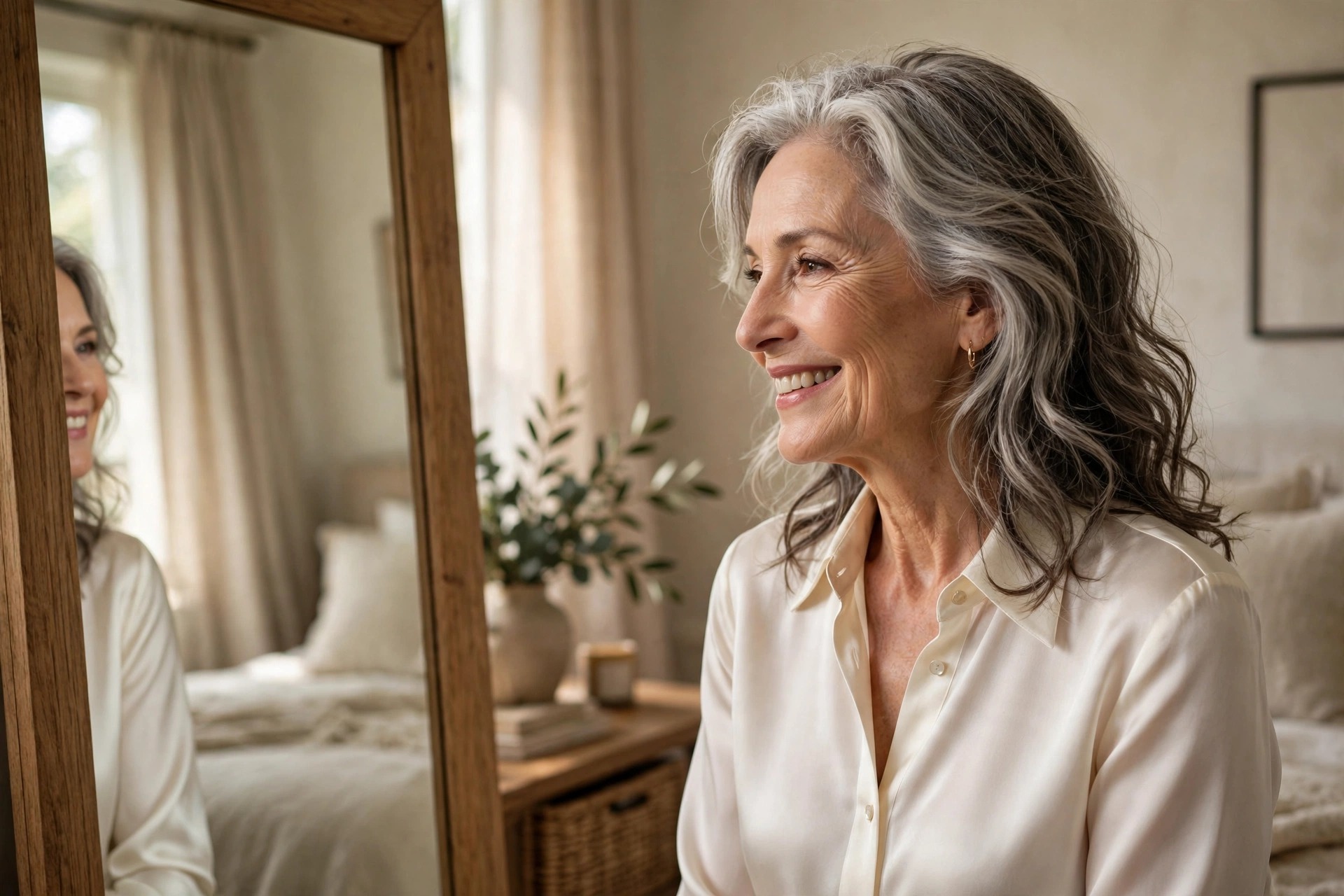
Coffee in the good cup, the morning entirely yours, and not a single apology scheduled. That’s what peace of mind looks like at sixty.
I spent my forties collecting obligations like they were loyalty points. Smile at the thing I hated. Keep the jacket that never fit right. Say yes, say yes, say yes — until the calendar was full and I was empty. Then sixty arrived, and something in me quietly put down the pen I had been using to sign away my own time.
Here’s what nobody tells you: peace of mind after 60 isn’t something you chase. It’s something you uncover, by stopping the ten habits that have been standing on it. A buyer spends her whole career learning what to keep and what to cut from a collection. At some point you turn that eye on your own life. These are my cuts — and every single one paid for itself within a week.
| # | Stop doing this | What it’s costing you | What you get back |
|---|---|---|---|
| 1 | Dressing for other people’s approval | Joy in your own mirror | Outfits that feel like you |
| 2 | Saving your best pieces for “someday” | The good years of the good clothes | Everyday luxury, right now |
| 3 | Keeping clothes that don’t fit your life | Closet guilt every morning | A wardrobe that starts the day well |
| 4 | Chasing trends that were never yours | Money and a sense of self | Signature style that ages beautifully |
| 5 | Comparing your 60s to someone’s 40s | Gratitude for your own story | Peace with exactly where you are |
| 6 | Saying yes when your body says no | Energy you’ll never get back | Time that is actually yours |
| 7 | Keeping score in relationships | Friendships that should be easy | People you actually enjoy |
| 8 | Explaining and apologizing for your choices | Your own authority | A spine of steel, worn lightly |
| 9 | Putting yourself last on your list | The best version of you | A woman with something to give |
| 10 | Acting like your story is over | Every future joy, pre-cancelled | A new chapter worth dressing for |
1. Stop Dressing for Other People’s Approval

The emerald blazer. The one “they” would never pick. That’s exactly why she wears it.
For thirty years I bought clothes with an imaginary committee in my head. Would the office approve? Would my mother-in-law raise an eyebrow? Would the other mothers at pickup think I’d tried too hard? That committee has been disbanded. They weren’t paying my bills and they certainly weren’t wearing my shoes.
Here’s the buyer truth: the women who look best after 60 are never the ones dressed for consensus. They’re the ones who dressed for themselves with total conviction. Conviction is the actual accessory. When you walk out in something you love — really love, not “it’s fine” — you carry it like it was made for you, because in the only way that matters, it was. Stop auditioning. The part is already yours.
2. Stop Saving Your Best Pieces for “Someday”
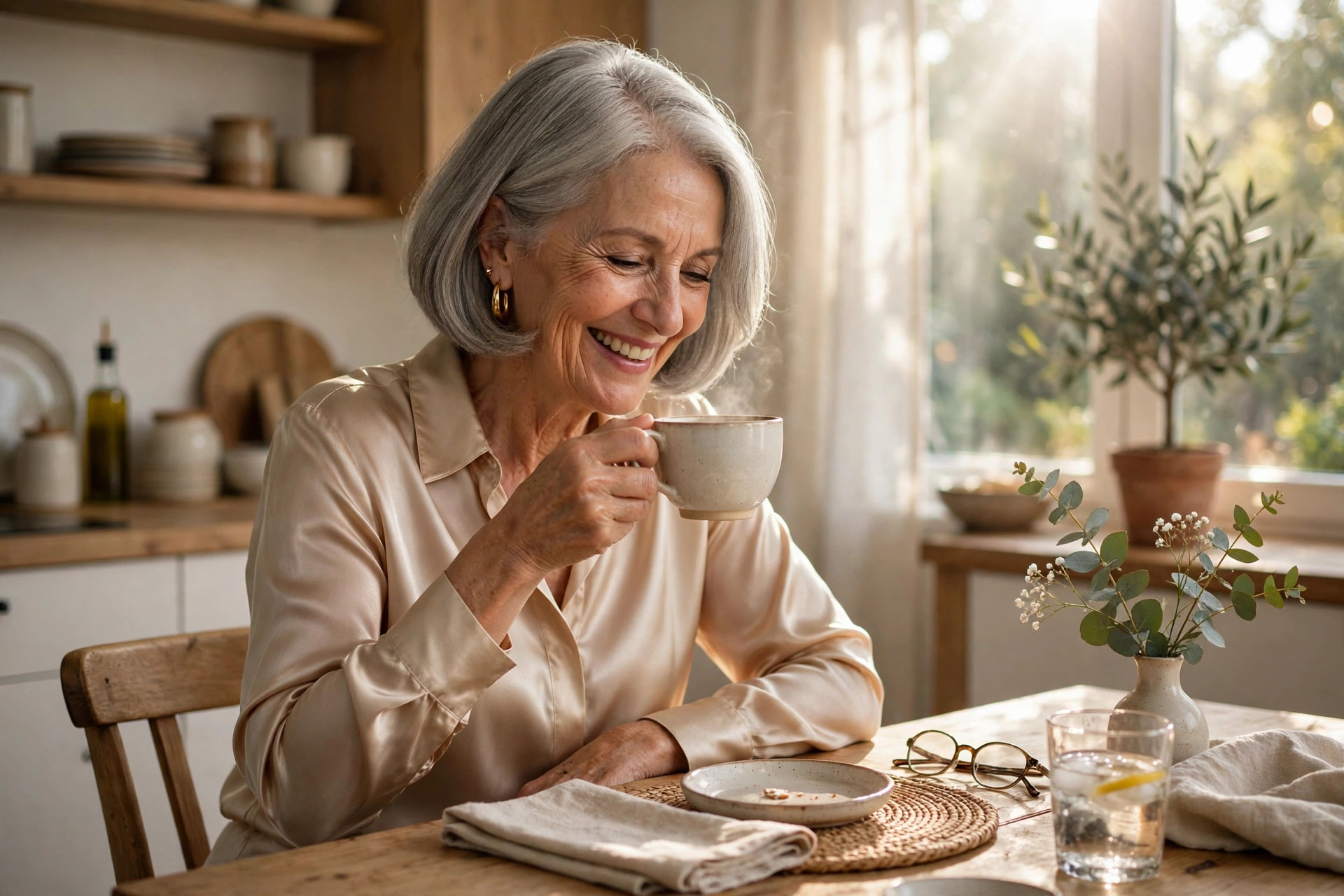
The silk blouse on a Tuesday. “Someday” kept cancelling — so she stopped waiting for it.
Every woman I know has a shelf of beautiful things waiting for an occasion important enough. The silk blouse. The good perfume. The earrings from the trip. Ladies, I am going to say this once: the occasion is that you are alive on a Tuesday.
I once interviewed a buyer who kept a “someday” drawer for eleven years. When she finally opened it, the silk had yellowed and the occasion had never come. Fabric ages whether you wear it or not — but only one of those options gives you the pleasure. Wear the silk to the grocery store. Light the good candle on a Wednesday. Your life is not a dress rehearsal, and the audience you’ve been saving it all for was always you.
3. Stop Keeping Clothes That Don’t Fit Your Life Anymore

Every “maybe someday” garment you donate is a small argument you stop having with yourself.
Open your closet and count the items that make you feel guilty: the jeans from the smaller era, the blazer from the job you left, the dress for the life you don’t live. Each one greets you every morning with a tiny lecture. That’s not a wardrobe — that’s a committee meeting, and you’re the only attendee.
A buyer’s closet rule that works at home too: if it doesn’t fit your body, your life, or your joy, it goes. Donate it, gift it, release it. What stays should earn its hanger by making you feel like the woman you are now. The morning you open a closet where everything fits, everything flatters, and nothing scolds you — that’s the morning getting dressed becomes a pleasure instead of a negotiation.
4. Stop Chasing Trends That Were Never Yours

She walked past six trends to get to the coat she’ll wear for the next ten years. That’s not behind — that’s ahead.
Every season, the industry invents a new silhouette and tells you your closet is suddenly wrong. Micro-shorts at 62? A trend built for a 22-year-old’s weekend? Chasing trends after 60 doesn’t make you look younger — it makes you look like you’re borrowing someone else’s personality.
What actually reads as modern at our age is conviction in a signature. The woman in the perfect camel coat, the crisp white shirt, the trousers that fit like they were cut for her — she doesn’t look dated, she looks decided. Trends are rented; style is owned. By sixty you should own yours outright. Let the twenty-somethings have their micro-trends. You’ve got something better: you know what you look like at your best, and nobody can sell it back to you.
5. Stop Comparing Your 60s to Someone Else’s 40s
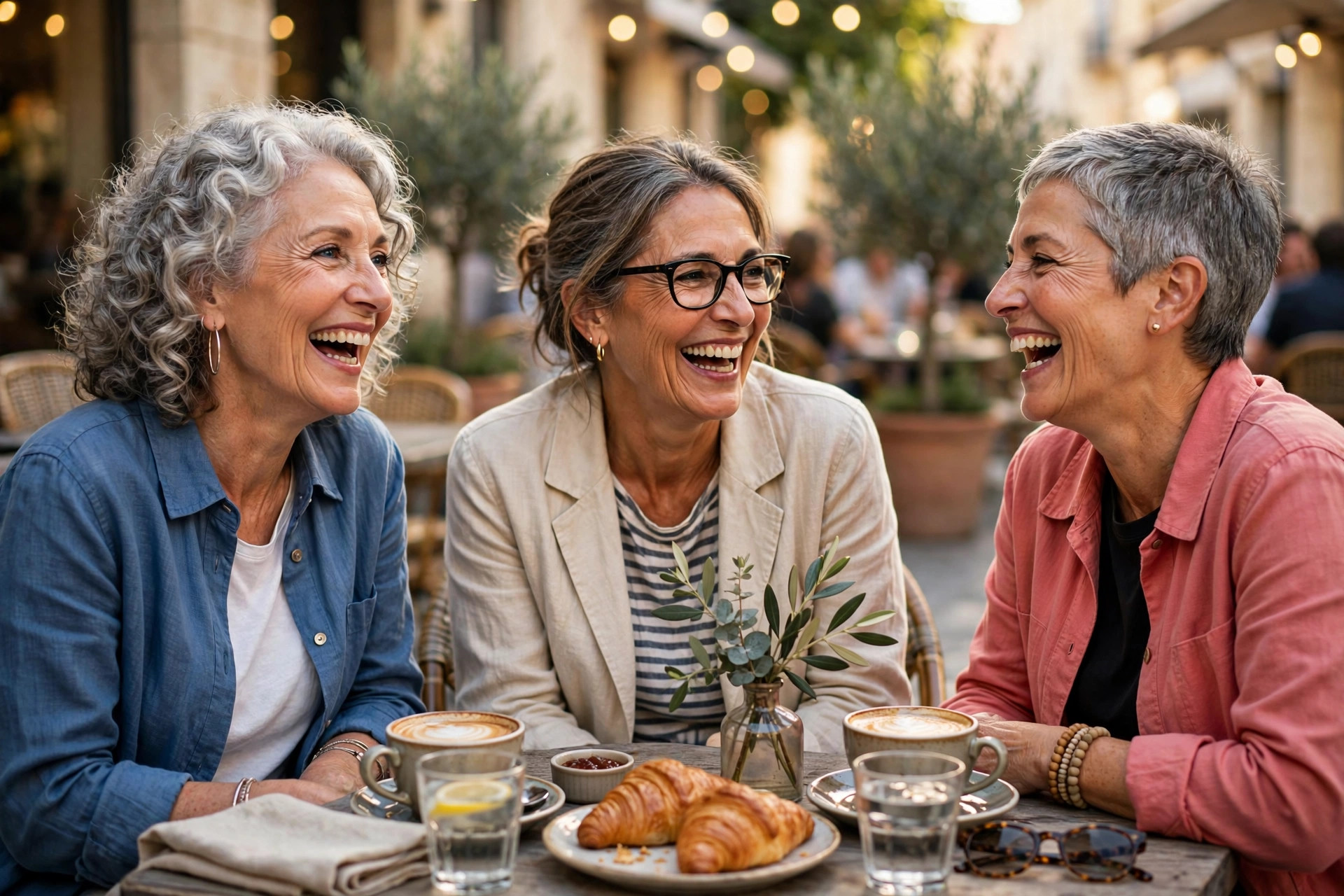
Her laugh lines are not a flaw in the photo. They are the photo.
Comparison is the thief of joy, and after 60 it gets sneakier: you stop comparing your body to models and start comparing your life to everyone’s highlight reel. Her retirement looks more glamorous. Her grandkids visit more. She still wears heels and you chose the loafers.
Here’s what I learned in fitting rooms decades ago: the garment always looks different on the hanger than on the body, and a life always looks different from the outside than from the inside. Nobody’s chapter reads the way their cover suggests. Your sixties were never supposed to look like her forties — they were supposed to look like yours, laugh lines and loafers and all. Put the measuring tape away. It was never calibrated for happiness anyway.
6. Stop Saying Yes When Your Whole Body Says No

“No” is a complete sentence. “No, and I’m staying in with my book” is a whole lifestyle.
The committee you chaired, the dinner you didn’t want to attend, the favor that cost you a Saturday — every yes you didn’t mean was a small loan taken out against your own energy, and the interest compounds. At 35 you could power through. At 60+, the bill arrives faster, and it’s itemized.
I’m not telling you to become a hermit. I’m telling you that “no, thank you” is the most elegant sentence in the English language, and it pairs beautifully with a quiet evening, a good novel, and tea in the good cup. The people who matter will adjust. The ones who don’t adjust were spending your energy, not appreciating it. Guard your calendar like you guard your good jewelry — not everything gets access.
7. Stop Keeping Score
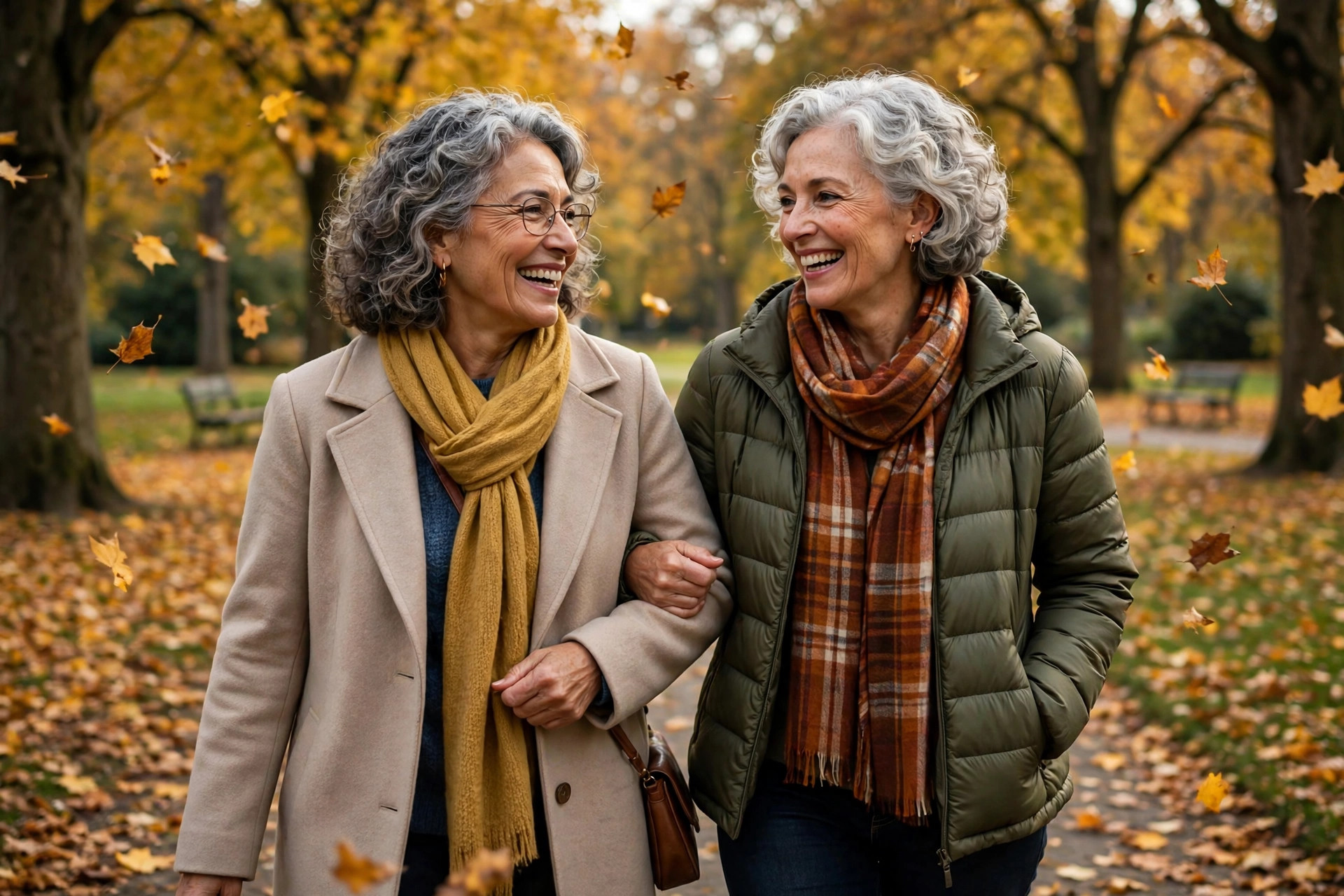
She called three times and I called twice. Nobody is counting except the one who’s ruining the friendship.
She didn’t text back for two days. You hosted last time, so it’s her turn. You remembered her birthday and she sent a card a week late. Keeping score turns friendship into bookkeeping, and bookkeeping is the opposite of joy.
After 60, your circle naturally gets smaller — and that’s a gift, not a loss, if you let the remaining friendships be easy. Call because you want to hear her voice, not because it’s her turn. Host because the table makes you happy, not because you hosted last. The women walking arm in arm in that photo? I guarantee neither of them knows who called last. That’s the whole secret. Drop the ledger and the friendship gets lighter overnight.
8. Stop Explaining and Apologizing for Your Choices

Red lipstick, red dress, zero disclaimers. She stopped narrating her choices years ago.
“I know it’s a lot, but—” “Sorry, I just felt like—” “It’s probably too much for my age, but—” Ladies. Every sentence you start with an apology teaches the room that your choices need defending. They don’t.
You want the red dress? Wear the red dress. You want the bold lipstick, the silver hair, the trip alone, the career change at 63? Do it, and let the choice stand on its own legs. A buyer never apologizes for a strong buy — she presents it with conviction and lets the room catch up. Your life works the same way. “Because I wanted to” is a complete explanation. Practice it in the mirror if you must. Then stop practicing and start living.
9. Stop Putting Yourself Last on Your Own List
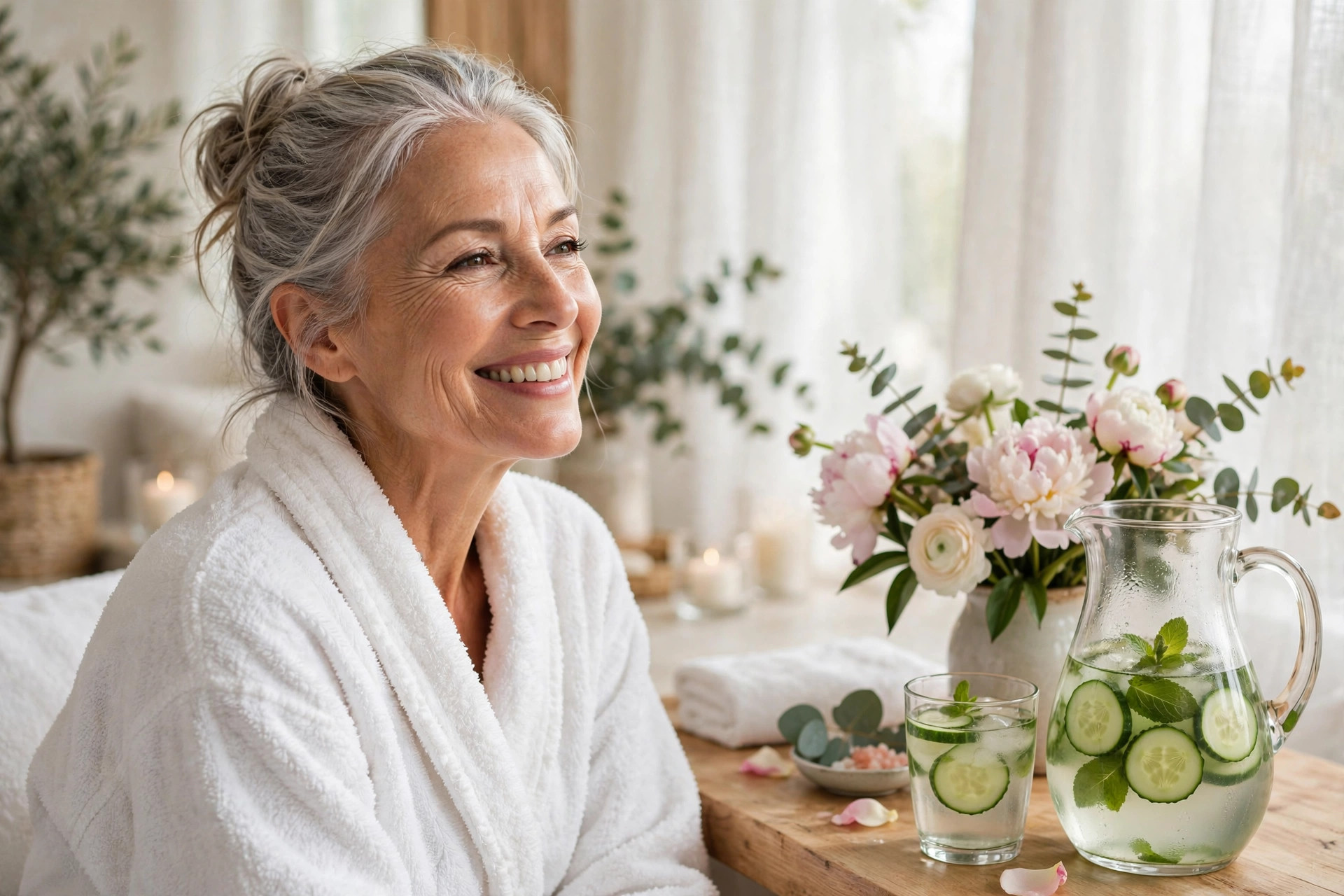
The spa day she used to feel guilty about. Now it’s just called Thursday.
You spent decades as everyone’s everything — the scheduler, the rememberer, the one who held it all together. And somewhere in there, you trained yourself to believe that tending to yourself was selfish. Let me correct the record, buyer to reader: you cannot pour from an empty cup, and you have been running on fumes since approximately 1998.
Putting yourself first isn’t vanity; it’s maintenance. The haircut that makes you feel like yourself. The walk you take alone. The cream that actually works instead of the one that’s merely cheap. The woman who takes care of herself isn’t neglecting her people — she’s making sure the person they love is still in the room, rested and radiant, instead of a depleted ghost who resents them. Self-care after 60 isn’t indulgence. It’s infrastructure.
10. Stop Acting Like Your Story Is Over

New canvas, new chapter. The best-dressed women over 60 are the ones still becoming.
This is the biggest one, so I saved it for last. Somewhere around 60, the world starts handing you an invisible script: slow down, fade out, be grateful for what was. Decline that script. Politely, firmly, permanently.
I know a woman who learned to paint at 64, sold her first canvas at 66, and now teaches a class full of women who all started “too late.” I know another who took her first solo trip at 61 and her fifth at 65. Your story isn’t over — it’s just changing genres, from the busy middle chapters to the ones where the heroine finally does what she wants. And every new chapter deserves a new outfit. Dress for the woman you’re becoming, not the one you were. She’s the most interesting version yet.
| Do | Don’t |
|---|---|
| Dress for the woman in your own mirror | Dress for an imaginary committee’s approval |
| Wear the good pieces on ordinary days | Save your best things for a “someday” that never comes |
| Keep only what fits your body, life, and joy | Keep guilt-garments that lecture you every morning |
| Own a signature style with conviction | Chase micro-trends built for someone else’s decade |
| Say a graceful, complete “no, thank you” | Say yes and pay for it with your energy |
| Let friendships be easy — drop the ledger | Keep score until the friendship feels like accounting |
| Let your choices stand: “because I wanted to” | Open every decision with an apology |
| Maintain yourself like the infrastructure you are | Run on fumes and call it virtue |
| Start the new chapter — paint, travel, begin | Accept the world’s “slow down and fade” script |
Frequently Asked Questions
Isn’t it selfish to stop saying yes to everyone after 60?
No — it’s honest. There’s a difference between generosity and self-erasure. Generosity is choosing to give; self-erasure is giving because you can’t say no. The first energizes you. The second empties you. After 60, choose the kind of giving you actually mean, and watch how much more you have to offer.
How do I stop caring what people think about how I dress?
Start small and private: wear the “too much” outfit to run errands where nobody knows you. Notice that the sky doesn’t fall. Then wear it to lunch with a friend who loves you. Each outing without catastrophe weakens the imaginary committee. Within a month, you’ll wonder why you ever let strangers vote on your wardrobe.
What if my family resists the “new me”?
They might, briefly — change unsettles people who benefited from the old arrangement. Stay kind, stay consistent, and don’t debate your right to your own time and style. Most families adjust within weeks once they see you’re happier, not angrier. You’re not abandoning them; you’re finally including yourself.
Is 60+ really a good time to start something new?
It’s the best time. You have experience, judgment, and — for the first time in decades — large stretches of unscheduled time. The learning curve is real but so is the payoff: new skills keep your brain sharp, and new chapters give you something to dress for. “Too late” is a story, not a fact.
How do I declutter without regret?
Use the buyer test: would you buy it again today, at full price, knowing what you know now? If not, it goes. Take a photo of sentimental pieces before donating if that helps — you keep the memory, lose the guilt. And never declutter when you’re tired or emotional; do it on a bright morning with good music.
What’s the single fastest way to feel more at peace this week?
Pick one “yes” you already regret and cancel it — kindly, completely, today. Then spend the freed hour doing something purely for yourself: the silk blouse, the walk, the bath, the chapter of the book. One reclaimed hour teaches your nervous system what peace feels like. It will ask for more.
The real secret? Peace of mind was never something you had to earn by doing more. It was waiting underneath everything you were willing to stop. Ten small surrenders — of approval, of someday, of score-keeping, of the script — and what’s left is the woman who was there all along, finally with room to breathe. She looks wonderful, by the way. She always did. She just stopped asking permission to believe it.