EVERYDAY STYLE • 8-MINUTE READ
Fall Outfits for Petite Women Over 50:
8 Formulas That Add Inches (No Heels Required)
Petite styling isn’t about dressing “short.” It’s about dressing smart — and these eight outfits are the smartest tricks I know.
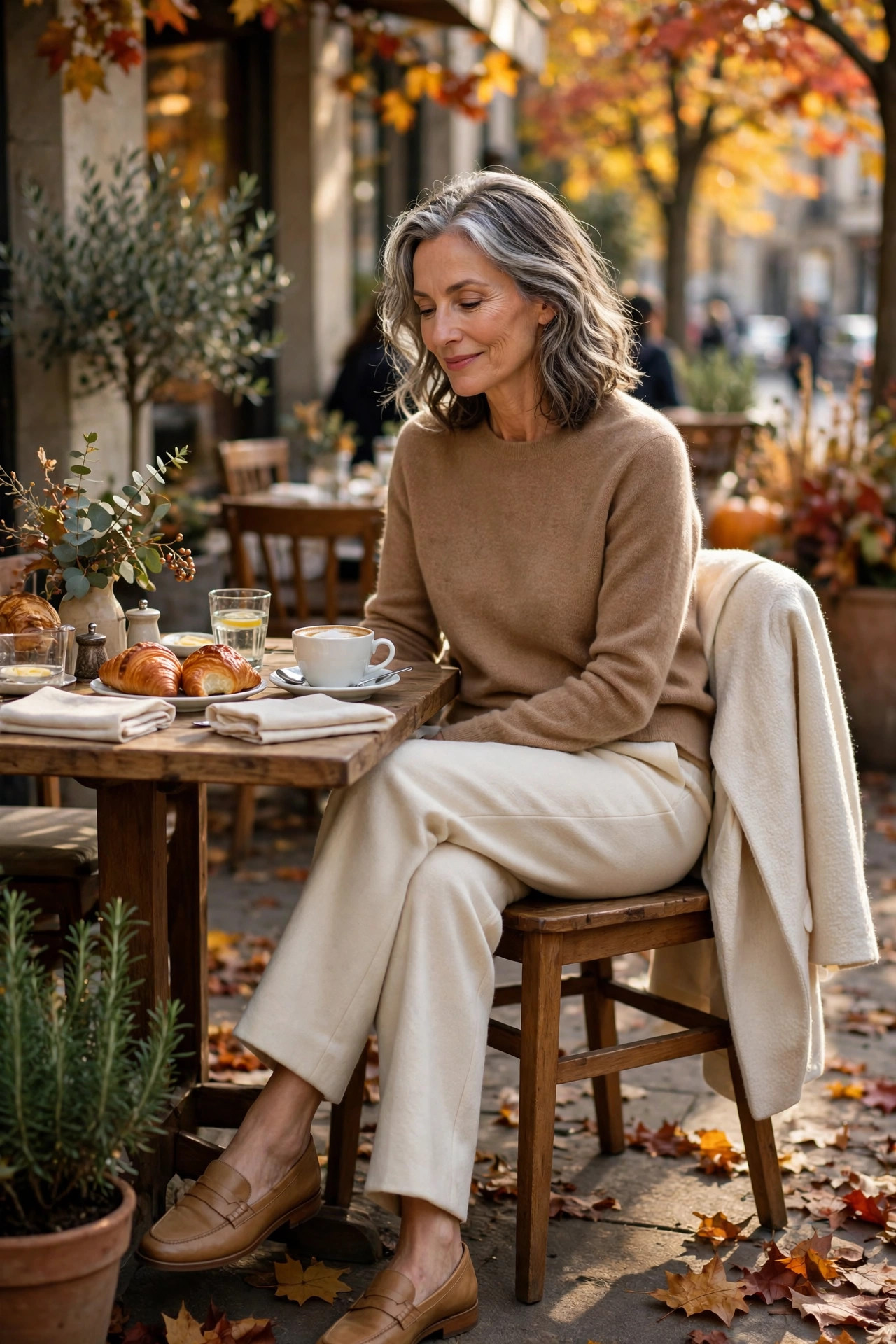
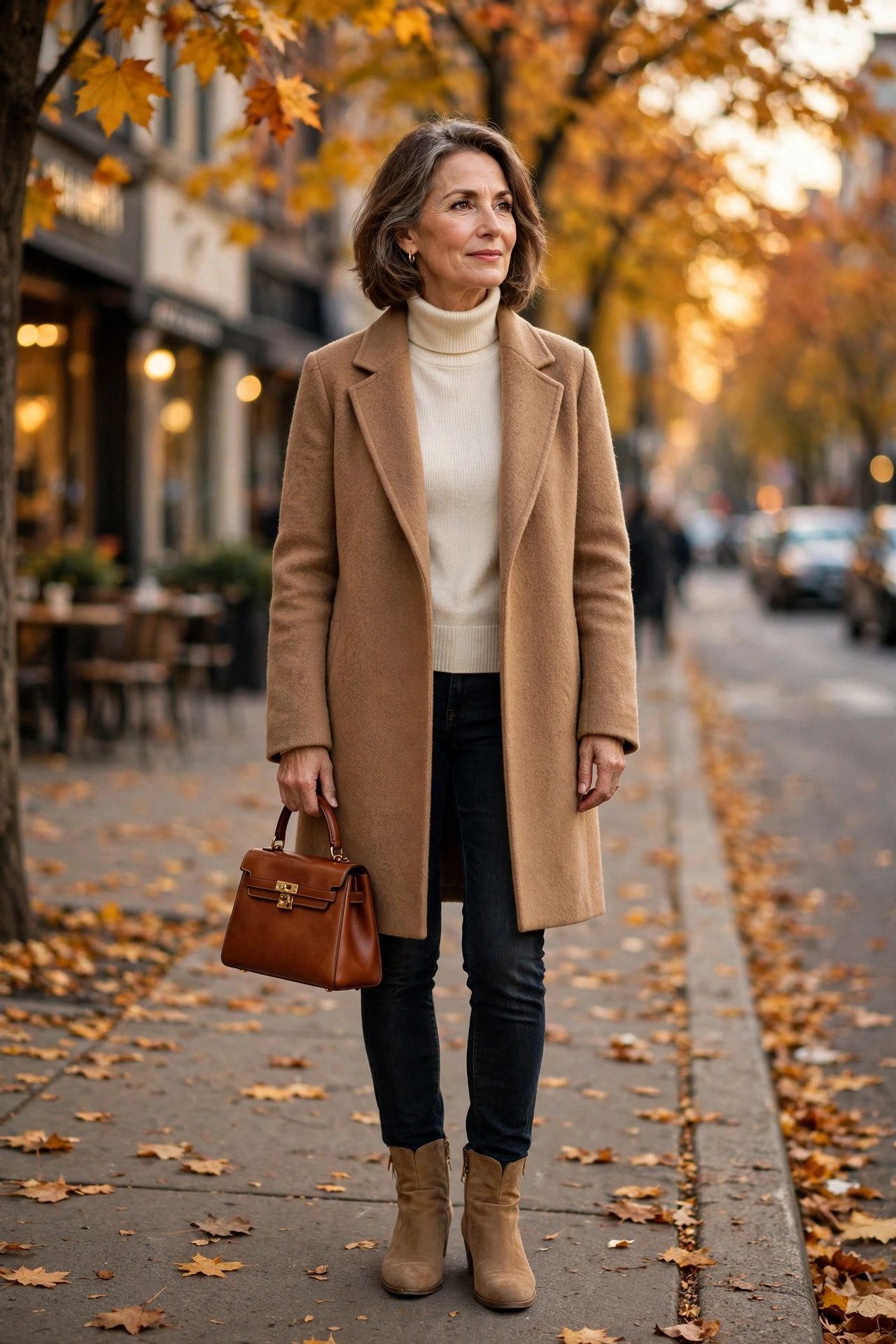
A camel coat worn open, one continuous line underneath, nude boots at the ankle — three inches of illusion before breakfast.
Here’s what thirty years of buying taught me: petite women don’t have a height problem. They have a proportion problem — and proportion is fixable with a mirror and five minutes. The fashion industry cuts for a 5’8″ sample size, so most of us are swimming in fabric the moment we step out of the petite section. But you don’t need to buy petite-only to look taller. You need to know where your lines break, where your waist actually sits, and which tricks the eye falls for every single time.
These eight fall outfits are built on geometry, not heels. Each one uses a specific lengthening trick — a column of color, a cropped hem, a nude boot, a revealed waistline — and each one is photographed on a real petite body, not a model with eight inches to spare. Bookmark this. Fall dressing just got easy.
| Formula | The lengthening trick | Best for |
|---|---|---|
| 1. Monochrome Column | One color, head to toe | Any occasion, every day |
| 2. Cropped Jacket | Hem hits at the waist | Work, lunches, events |
| 3. Nude Ankle Boot | Boot matches your skin | Dresses + skirts |
| 4. High-Rise + Front Tuck | Waistline revealed | Everyday errands |
| 5. Matching Knit Set | Unbroken vertical line | Travel, cozy weekends |
| 6. The Third-Piece Rule | Open jacket, two lines | City days, dinners |
| 7. Scaled Accessories | Small bag, small scarf | Finishing every outfit |
| 8. Small-Scale Prints | Prints that don’t swallow you | Weekends, markets |
1. The Monochrome Column
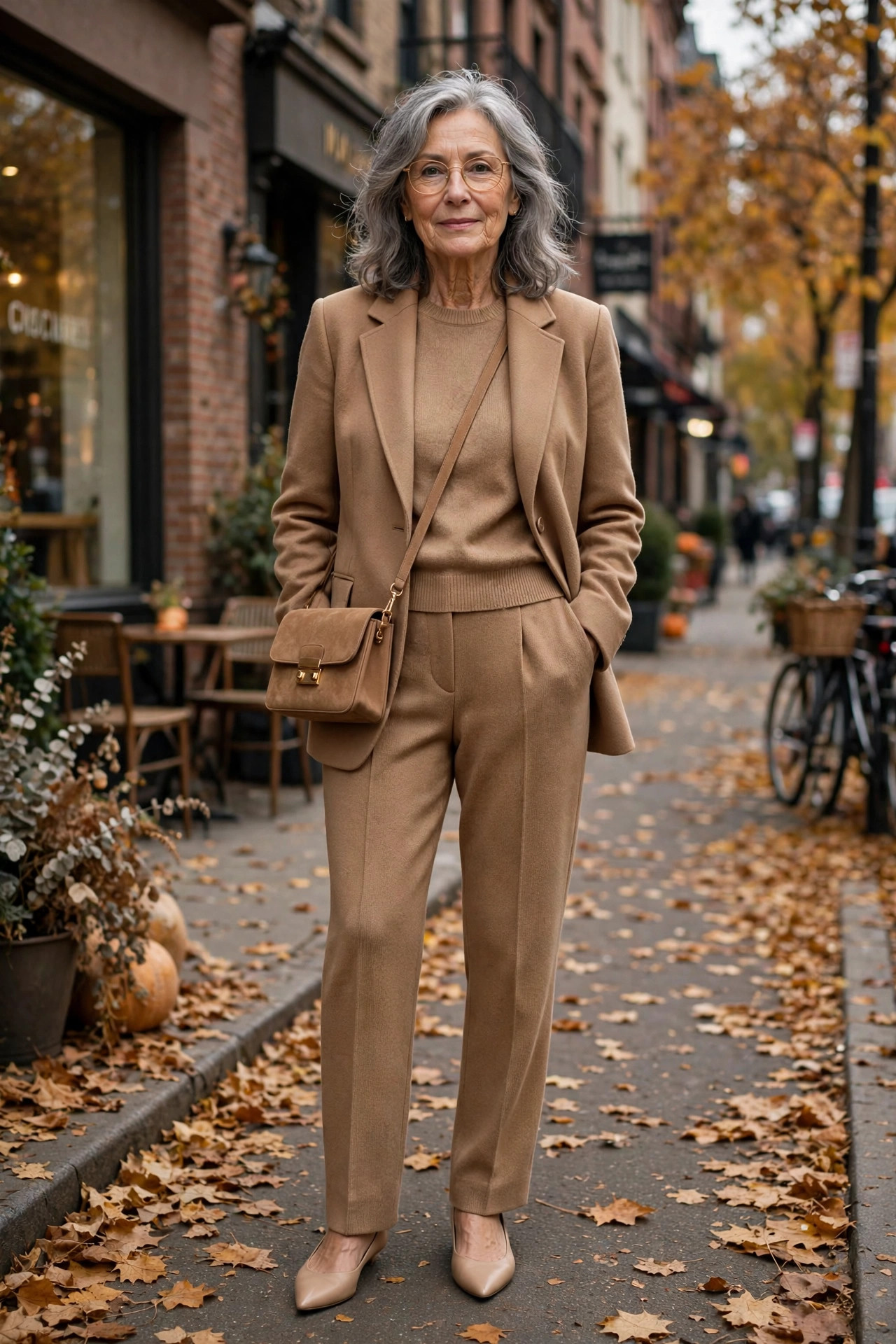
When the eye finds no break in the color, it reads the whole body as one long line. That’s free height.
This is the single most powerful petite trick in existence, and it takes zero skill: wear one color from shoulder to shoe. A camel blazer, a camel knit top, camel trousers — three pieces, one uninterrupted column. The eye travels straight down without stopping, and “straight down” reads as taller. It doesn’t have to be camel; navy, burgundy, charcoal, and cream all work. Keep the tones close together rather than exact-match — tonal dressing looks richer and more expensive than a uniform. One caveat from the buyer’s playbook: the pieces must skim, not hang. A monochrome outfit in sloppy cuts just makes a bigger blob. Tailored-ish wins.
2. The Cropped Jacket (Not the Boxy Blazer)
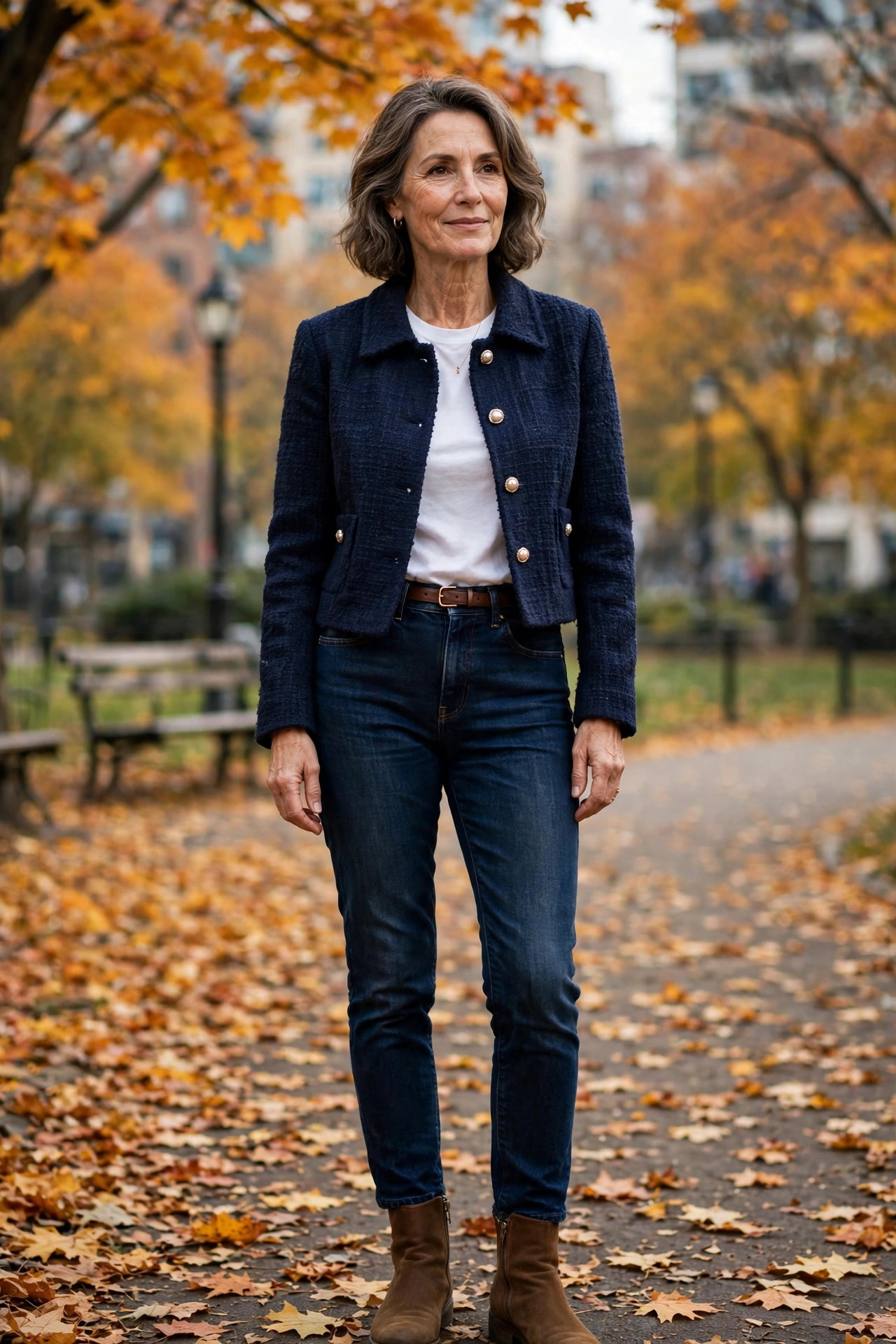
A jacket that ends at your waist tells the world where your waist is. A long one hides it — and hides you.
The number one offender in a petite closet is the oversized blazer that hits mid-thigh. On a tall frame it’s chic; on a petite one it erases the waistline and shortens the leg by a full hand’s width. Swap it for a cropped jacket that ends right at — or just above — your waistband. A navy tweed with pearl buttons over a white tee and high-waisted jeans shows the whole leg line starting from the true waist, which is the tallest version of you. Pearl buttons are my favorite detail here: they catch the light near the face and add polish without adding bulk. If your cropped jacket has pockets, keep them flat — flap pockets at the hip add visual weight exactly where you don’t want it.
3. Nude Ankle Boots Under Everything
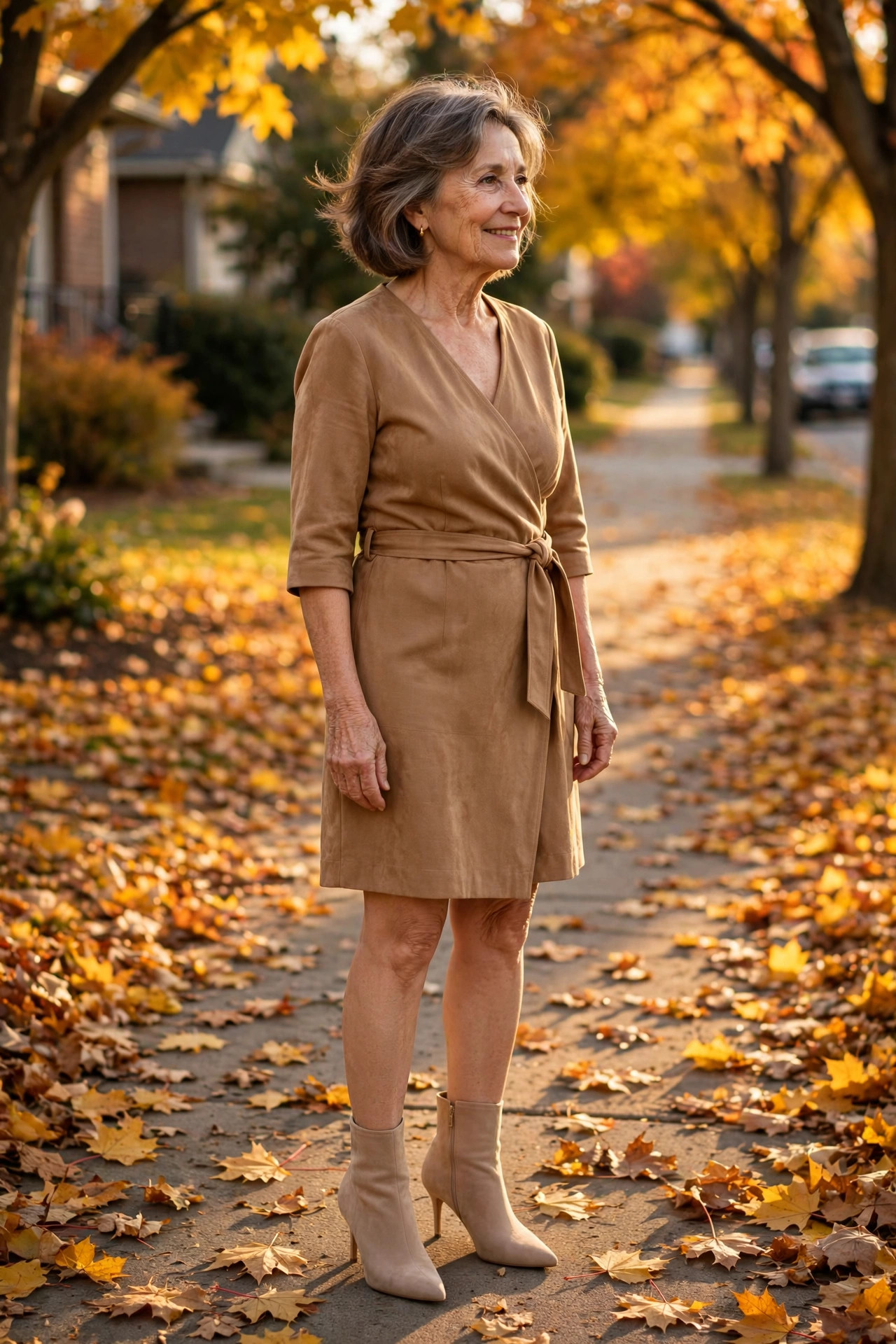
Match the boot to your skin tone and the leg doesn’t end at the ankle — it ends at the toe.
Every time you wear a dark boot with bare legs, you draw a hard horizontal line across your ankle — and every horizontal line costs you an inch of visual height. The fix is almost embarrassingly simple: boots in a nude tone close to your skin. Under a camel wrap dress, pointed-toe nude ankle boots extend the leg line all the way to the ground, no gap, no break. The pointed toe matters too — a round toe visually “stops” the foot, while a point keeps the eye moving forward. This trick works with skirts and dresses at any hemline above the ankle. Below the ankle, switch to boots that match your trousers instead — same principle, different shade.
4. High-Rise Jeans With a Real Front Tuck
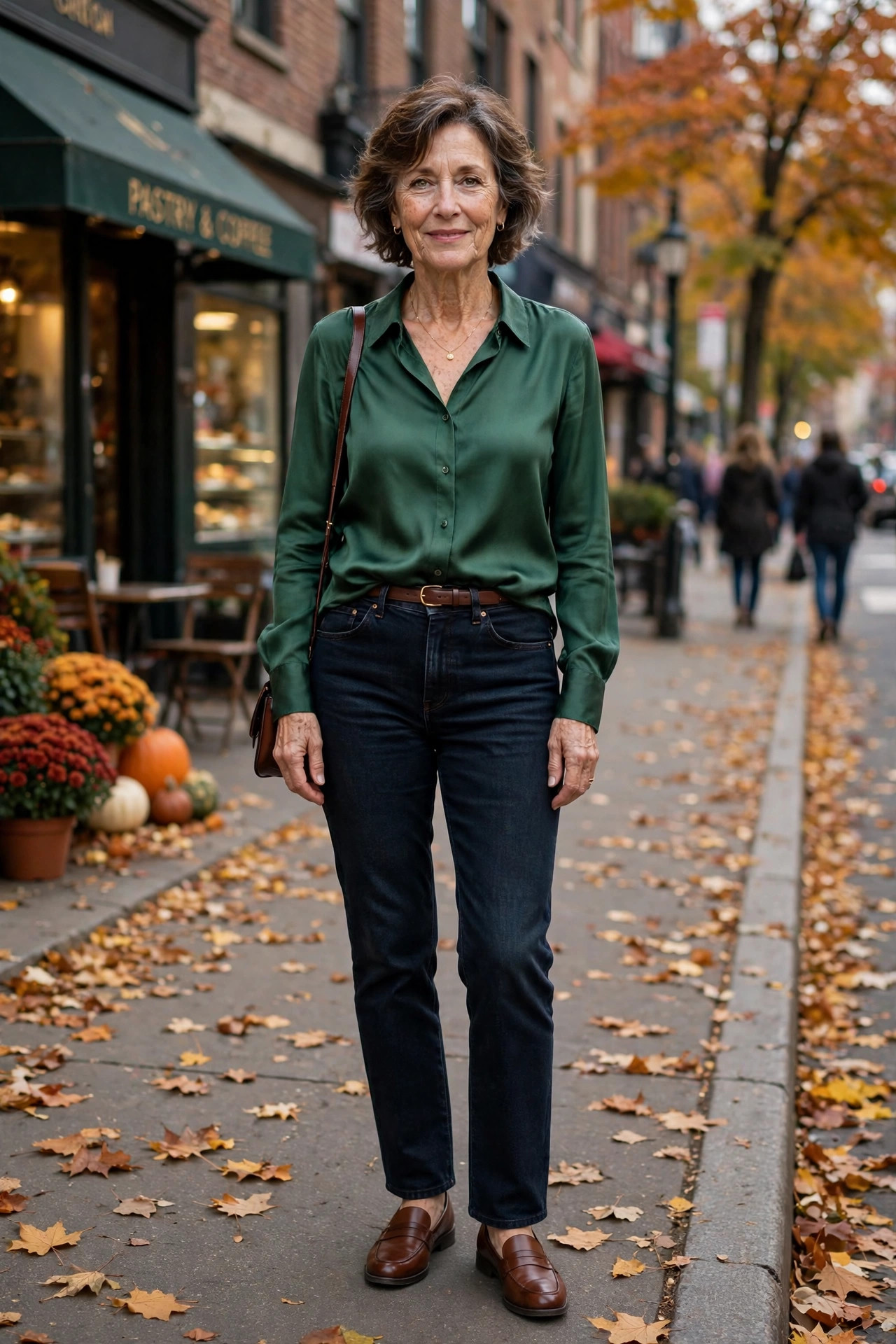
Your waist is higher than you think. Show it, and your legs start earlier.
Here’s a buyer secret: most petite women buy mid-rise jeans out of habit, and mid-rise is where legs go to look short. High-rise denim — a 10- to 11-inch rise — moves your visible waistline up by inches, and wherever the waistband sits is where your legs begin. Pair dark high-rise straight-legs with a silk blouse front-tucked into the waistband, add a slim belt to mark the spot, and you’ve manufactured longer legs with zero tailoring. The blouse must be tucked — even a half-tuck — because an untucked top drops the visual waist back down to your hips. Forest green against dark denim is my fall favorite: rich, seasonal, and far more interesting than black.
5. The Matching Knit Set
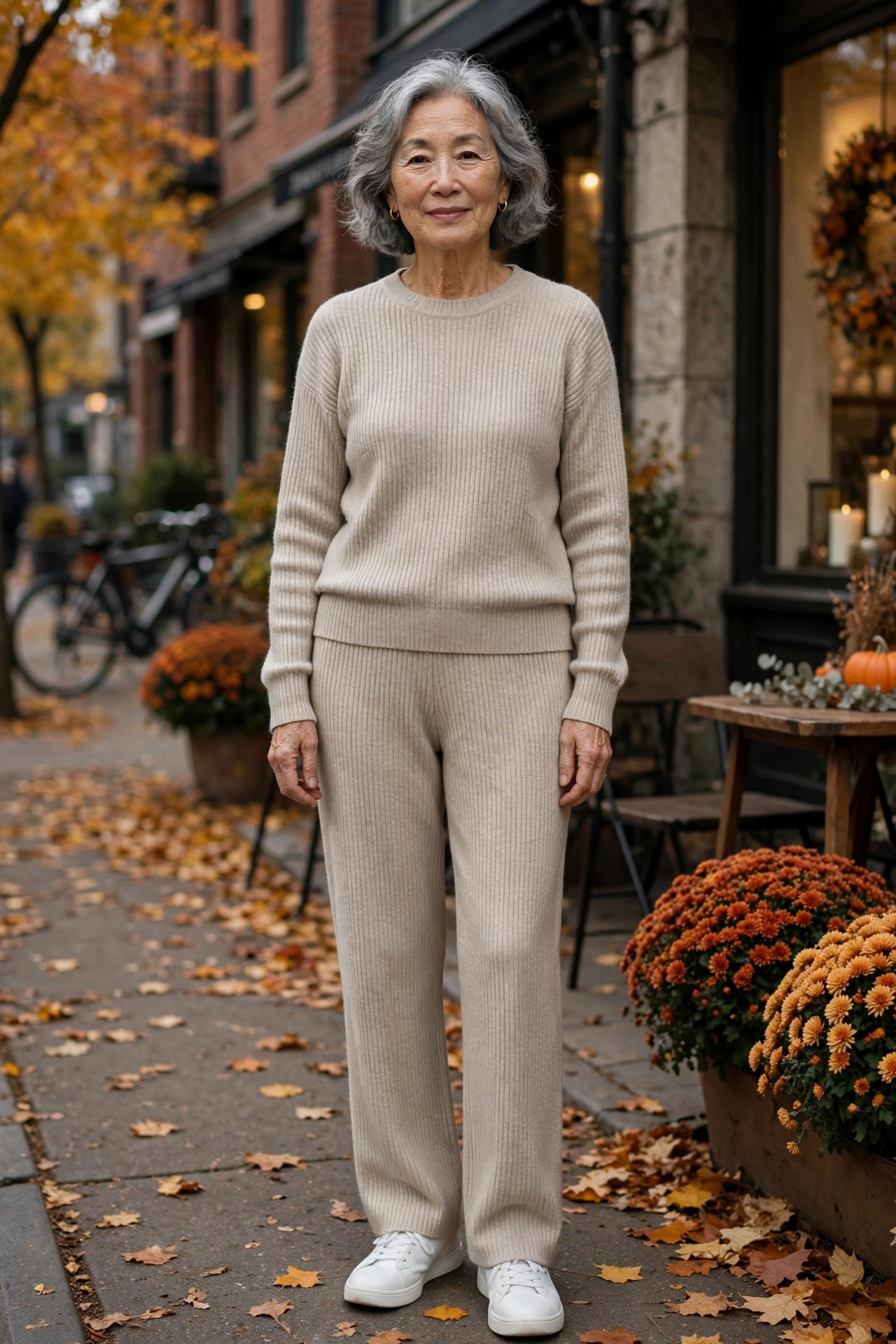
Two pieces, one color, zero decisions — the laziest way to look two inches taller.
A matching knit set is the monochrome column’s cozy cousin, and it’s tailor-made for petite frames. Because the sweater and trousers are the same ribbed oatmeal knit, there’s no waistband break to interrupt the line — the body reads as one continuous shape from shoulder to ankle. Ribbed knits are extra kind to petite figures: the vertical texture itself adds a subtle lengthening effect, like nature’s pinstripe. Keep the fit skimmy rather than slouchy — a set that pools at the ankle defeats the purpose, so petite or cropped inseams are worth seeking out. White sneakers keep it fresh for travel days and long walks; swap in loafers and small gold earrings and you’re lunch-ready.
6. The Third-Piece Rule (Worn Open)
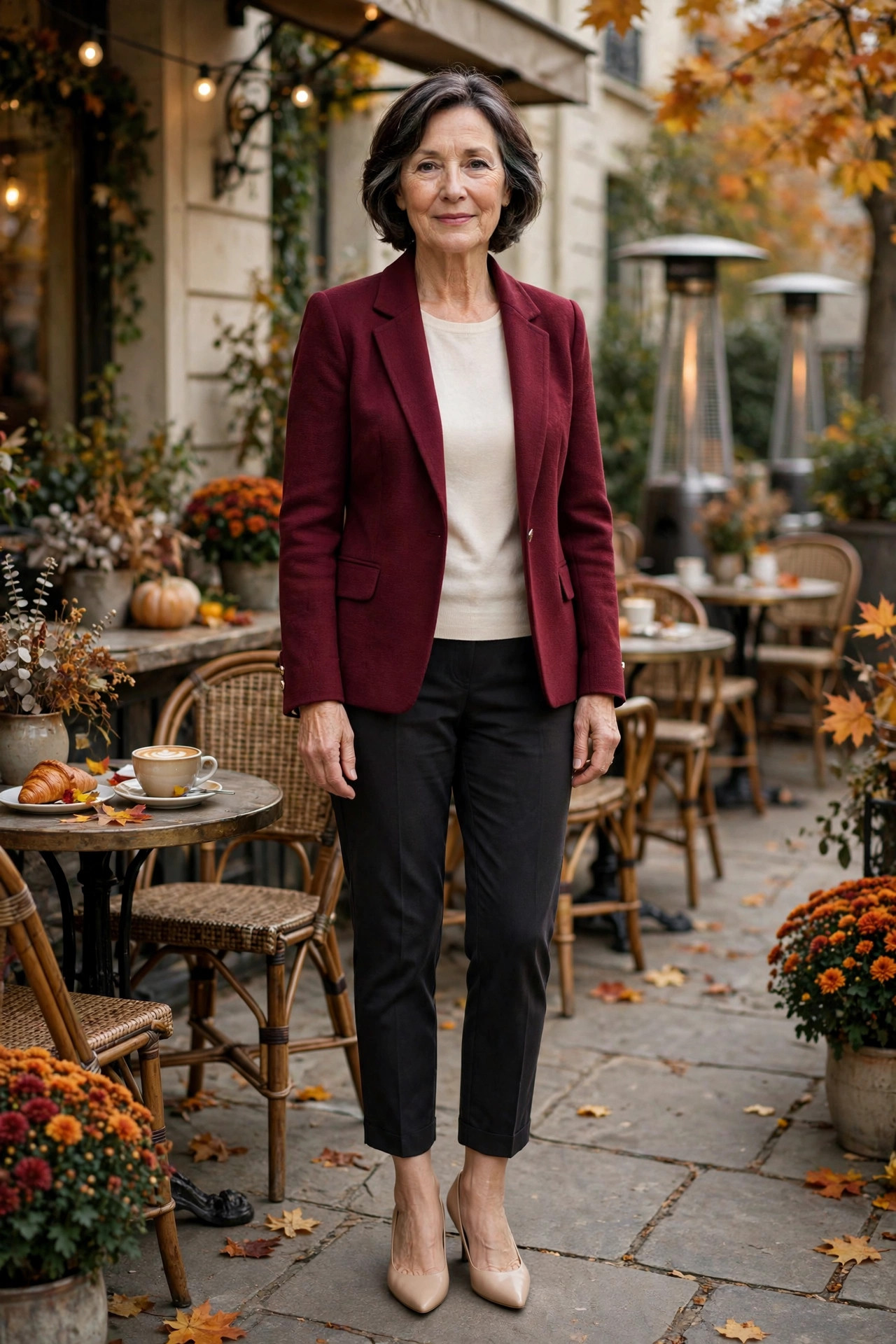
An open jacket creates two vertical lines down your body. That’s tailoring doing your styling for you.
Every stylist I ever worked with swore by the third piece — the blazer, the cardigan, the vest that finishes an outfit — and for petite women it has a secret superpower. Worn open, a hip-length jacket creates two unbroken vertical lines from shoulder to hem, framing the outfit inside like a picture. The lines draw the eye up and down, never across. The length is the whole game: it must end at the hip bone or above, never mid-thigh, or it chops the leg. A burgundy blazer over cream and dark trousers gives you the contrast that makes the lines visible — and a pair of nude pumps continues them to the floor.
7. Accessories Scaled to Your Frame

An oversized bag makes you look smaller by comparison. Scale everything down and you look in charge.
This is the trick petite women resist most, because big bags are convenient and blanket scarves are cozy. But proportion is ruthless: carry a tote the size of a carry-on and you look like a child borrowing mom’s purse. Swap it for a small structured crossbody — just big enough for the essentials — and suddenly you’re the one in charge of the outfit. Same with scarves: a small silk square tied at the neck adds a focal point near the face (where you want the attention), while a giant wrap buries your neckline and shortens your torso. Delicate gold jewelry over chunky statement pieces completes the scale-down. You don’t need less style. You need smaller canvases.
8. Petite-Friendly Prints (Small Scale Only)
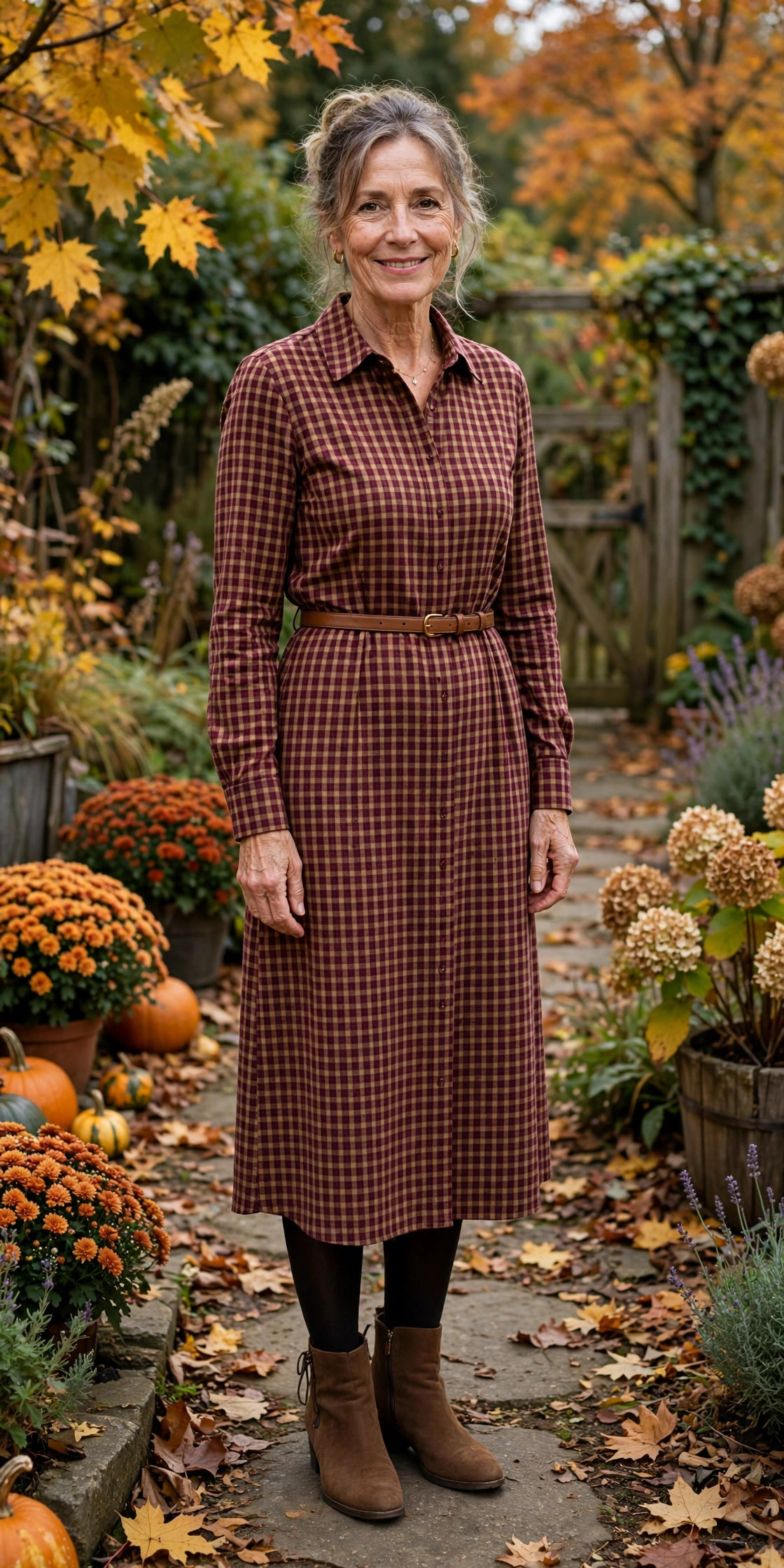
The rule is simple: the smaller the frame, the smaller the print. Let the pattern flatter you, not swallow you.
Big, bold prints on a petite frame are like loud wallpaper in a small room — they take over. But that doesn’t mean solids forever. Small-scale prints — a tight tartan, a mini floral, a narrow stripe — add all the visual interest of pattern without overwhelming your frame. A burgundy-and-camel tartan shirtdress with a slim belt is the perfect fall example: the print is busy enough to be interesting, small enough to stay in its lane, and the belt re-marks your waist so the dress doesn’t read as a sack. One more buyer tip: keep the rest of the outfit quiet. Dark tights, simple ankle boots, one small bag. When the print is the star, everything else is the supporting cast.
| Do | Don’t |
|---|---|
| Dress in one tonal column of color | Break the outfit into contrasting blocks |
| Show your waist — tuck, belt, crop | Let tops and jackets hang past the hip |
| Match boots to skin or trousers | Wear dark boots with bare legs |
| Choose cropped, hip-length jackets | Wear oversized blazers that hit mid-thigh |
| Scale bags and scarves down | Carry oversized totes and blanket scarves |
| Pick small-scale prints | Wear large, bold patterns head to toe |
| Pointed toes and V-necks (lines that move) | Round toes and boat necks (lines that stop) |
Frequently Asked Questions
Do I have to shop in the petite section to look taller?
No — but it helps enormously for trousers and coats, where inseam and sleeve length make or break the line. For tops, regular sizes often work fine if you tuck them. The real rule: buy for the line, not the label. If a regular jacket’s hem hits mid-thigh on you, it’s the wrong jacket no matter what the tag says.
Are heels really necessary for petite women over 50?
Not at all. Every trick in this article works in flats. A low block heel or a pointed flat adds a little lift, but the heavy lifting is done by proportions — waistlines, hemlines, and unbroken color. Comfort and height are not enemies.
What’s the single fastest fix if I only change one thing?
Tuck in your top. An untucked top drops your visual waist to your hips and shortens your legs instantly; a front tuck restores it in ten seconds. It’s free, it’s fast, and it works on literally every body.
Can petite women wear midi skirts and dresses?
Yes — the trick is the hemline. The most flattering midi on a petite frame ends just below the knee or at the slimmest part of the calf, never mid-calf where it chops the leg at its widest. Pair with nude or matching-toned shoes to keep the line going.
Are wide-leg trousers off-limits for petites?
They’re not off-limits, but they’re high-risk. If you love them, choose a high waist, a full tuck, and a cropped wide leg that shows the ankle — never a pooling hem. And keep the top fitted so the volume stays in one place.
What about long coats — are they forbidden?
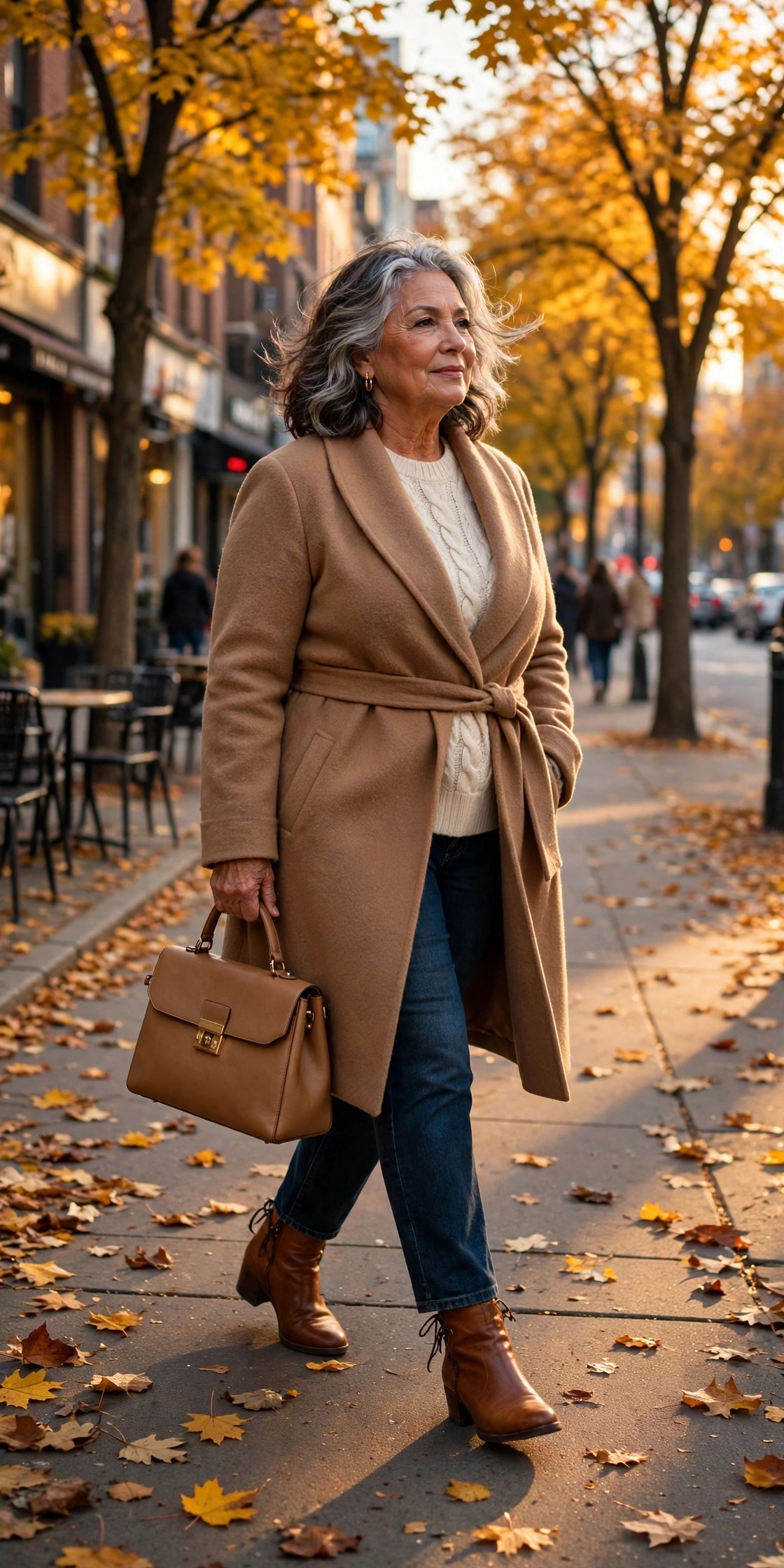
A long coat worn open is actually one of the best petite tricks there is, because the open front creates those two lengthening vertical lines. The danger is a long coat worn closed and belted, which turns you into one solid rectangle. Open good, closed risky.
The real secret? Petite style was never about adding inches to your body. It’s about removing the breaks in your silhouette — the untucked hem, the contrasting shoe, the jacket that hides your waist. Every break costs you a little height; every unbroken line gives it back. Get the lines right and nobody will ever guess your driver’s license says 5’2″. I know, because mine does.